Choreographer · Innovator · Teacher
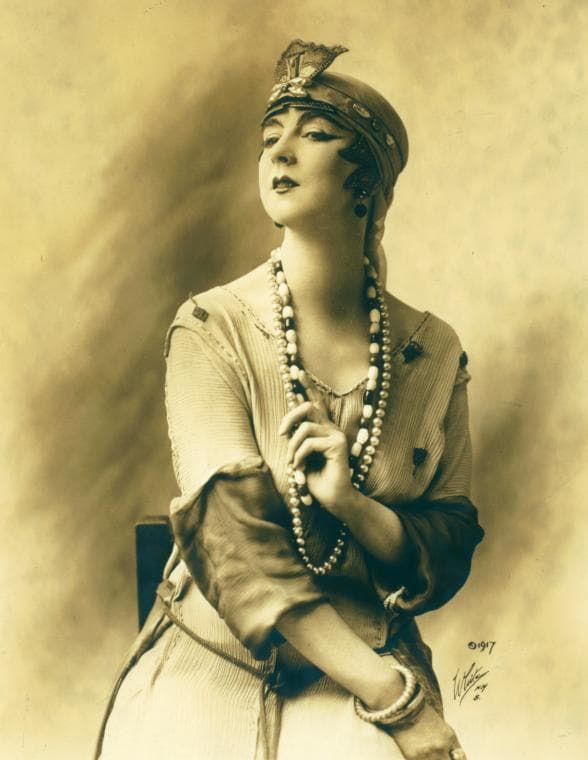
Ruth St. Denis
Modern Dance's Eastern Mystic
Why They Matter
She expanded the vocabulary of what Western dance could express, incorporating Asian and Egyptian movement aesthetics that directly influenced the generation of modern dance pioneers who followed — including Martha Graham.
Known For
Watch
Dance We Must: Treasures from Jacob's Pillow, 1906-1940
Williams College Museum of Art / Jacob's Pillow
Introduces St. Denis and Shawn through an institutionally curated exhibition and archival objects.
Dance We Must: Treasures from Jacob's Pillow, 1906-1940 — exhibition video
Williams College Museum of Art
Provides a museum-framed view of the exhibition and its documentary evidence.
PillowTalk: Dance We Must: Another Look
Jacob's Pillow
Curators revisit the St. Denis and Shawn legacy and model evidence-based historical interpretation.
Decades of Dance Exhibition Tour with Norton Owen
Jacob's Pillow
Connects the Pillow archive and exhibition practice to the longer history shaped by Shawn and St. Denis.
PillowTalk: Dance Scholar Paul Scolieri on Ted Shawn
Jacob's Pillow
Helps separate Ted Shawn's biography and authorship from simplified accounts that subsume Denishawn under St. Denis alone.
Ted Shawn: His Life, Writings, and Dances | Paul A. Scolieri
Jacob's Pillow
Provides collaborator-specific scholarship useful for responsible division of credit within Denishawn.
Biography
Ruth St. Denis, born Ruth Dennis on January 20, 1879, in Newark, New Jersey, was a formative figure in American modern dance who made the theatrical solo and spiritual inquiry central to her art. She grew up in an unconventional household that valued bodily exercise, religion, performance, and expressive ideas, and trained in François Delsarte's system of expressive gesture. Her professional debut came in 1894 at Worth's Family Theatre and Museum in New York, placing her in the variety-entertainment world rather than the European ballet academy tradition—a path that gave her an education in theatrical address, costume, pose, and the direct relationship between a solo performer and an audience.
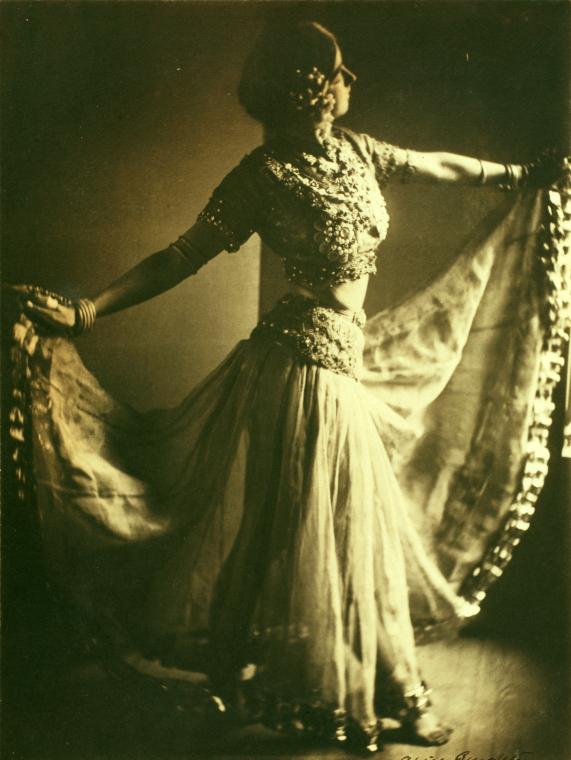
As a young performer working in musical theatre and touring under producer David Belasco, St. Denis became interested in creating dances around an imagined "East," sparked partly by an advertising image for Egyptian Deities cigarettes. Adopting the stage name Ruth St. Denis, she developed a repertory of solos that would define early American modern dance. Her 1906 *Radha*, constructed around the five senses and presented through Hindu imagery, became her signature work—a fusion of decorative spectacle, sensuality, devotional aspiration, and an American performer's theatrical vision of South Asia. The work's historical importance is inseparable from its cultural politics: it staged markers of racial and cultural difference through a white American body, representing not an authentic reproduction of Asian tradition but a theatrical construction filtered through U.S. Orientalism, popular entertainment, and St. Denis's own spiritual imagination. Subsequent works such as *The Incense*, *The Cobras*, and *Ishtar of the Seven Gates* similarly drew on Japanese, Chinese, Indian, Egyptian, and other sources as she understood and theatricalized them, placing religious longing beside stylized gesture, fabric, jewelry, and carefully held images.
In 1914, St. Denis married dancer Ted Shawn, beginning a partnership that joined two distinctive artists. The following year they founded the Denishawn School of Dancing and Related Arts in Los Angeles, later expanding to New York and touring widely. Denishawn combined concert performance, spectacle, training, repertory, and commercial touring at a scale unusual in American dance of the period. Its students and performers included Martha Graham, Doris Humphrey, Charles Weidman, and Louise Brooks. St. Denis was especially associated with theatrical and spiritual inspiration, while Shawn took a major role in systematic technique and administration, though that division should not be made absolute.
Denishawn's history involved changing locations, structures, and artistic priorities. A lengthy Asian tour began in 1925, but the partnership weakened around the turn of the 1930s. By 1931, St. Denis and Shawn had separated without divorcing, and Denishawn dissolved after years of shifting conditions. St. Denis increasingly pursued explicitly religious projects: she established the Society of Spiritual Arts in 1927 and the Church of Divine Dance in Los Angeles in 1934, treating dance as a vehicle for worship and spiritual inquiry.
Her later work extended into higher education and historical preservation. In 1938, she founded a dance program at Adelphi, among the earliest U.S. college dance departments. She continued to teach, lecture, perform, and revisit solos well beyond the age at which many stage careers ended. The surviving 1941 Jacob's Pillow film of the "Delirium of the Senses" section from *Radha* is valuable evidence of her later performance practice, though it was recorded thirty-five years after the work's 1906 debut and reflects later accompaniment information. St. Denis appeared at Jacob's Pillow across many seasons between 1940 and 1964, maintaining her relationship with the institution founded by Shawn. She died in Hollywood on July 21, 1968.
Career Highlights
Ruth Dennis was born on January 20 in Newark, New Jersey; the year remains a documented point of disagreement, so 1879 should be presented with a note rather than as uncontested. University of Washington
She made an early professional appearance at Worth’s Family Theatre and Museum in New York, part of the variety-stage environment that shaped her theatrical instincts. Jacob’s Pillow Dance Interactive
She premiered Radha, the solo that established her signature combination of spiral form, sensory theatricality, mysticism, and erotic charge. Jacob’s Pillow Dance Interactive
St. Denis and Ted Shawn married and began the personal and artistic partnership from which Denishawn emerged. UCLA/OAC finding aid
St. Denis and Shawn founded the Denishawn School of Dancing and Related Arts in Los Angeles. UCLA/OAC finding aid
Denishawn expanded its New York presence, strengthening its position as a school, company, repertory laboratory, and touring enterprise. UCLA/OAC finding aid
Denishawn embarked on a roughly fifteen-month tour in Asia, a major episode in the company’s international history and in the intercultural questions surrounding its repertory. UCLA/OAC finding aid
St. Denis established the Society of Spiritual Arts, formalizing her conviction that dance could function as religious practice. UCLA/OAC finding aid
St. Denis and Shawn separated without divorcing, and the Denishawn organization dissolved after years of changing artistic and institutional conditions. UCLA/OAC finding aid
She established the Church of Divine Dance in Los Angeles. UCLA/OAC finding aid
She founded Adelphi’s college dance program, an important early step in the institutionalization of dance study in U.S. higher education. University of Washington
At Jacob’s Pillow, she was filmed performing the “Delirium of the Senses” from Radha, creating a crucial but retrospective record of the 1906 work. Jacob’s Pillow Dance Interactive
Gallery
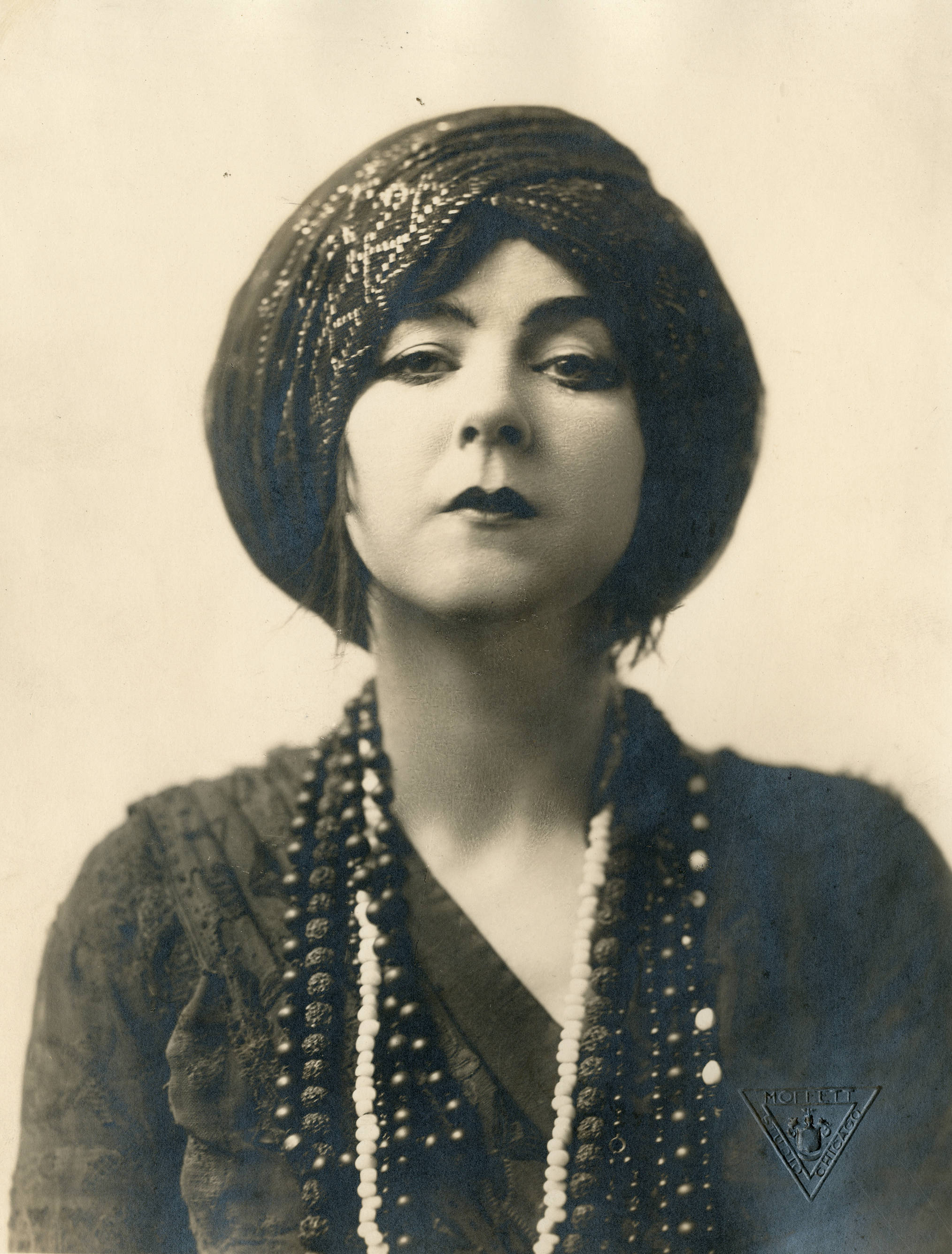
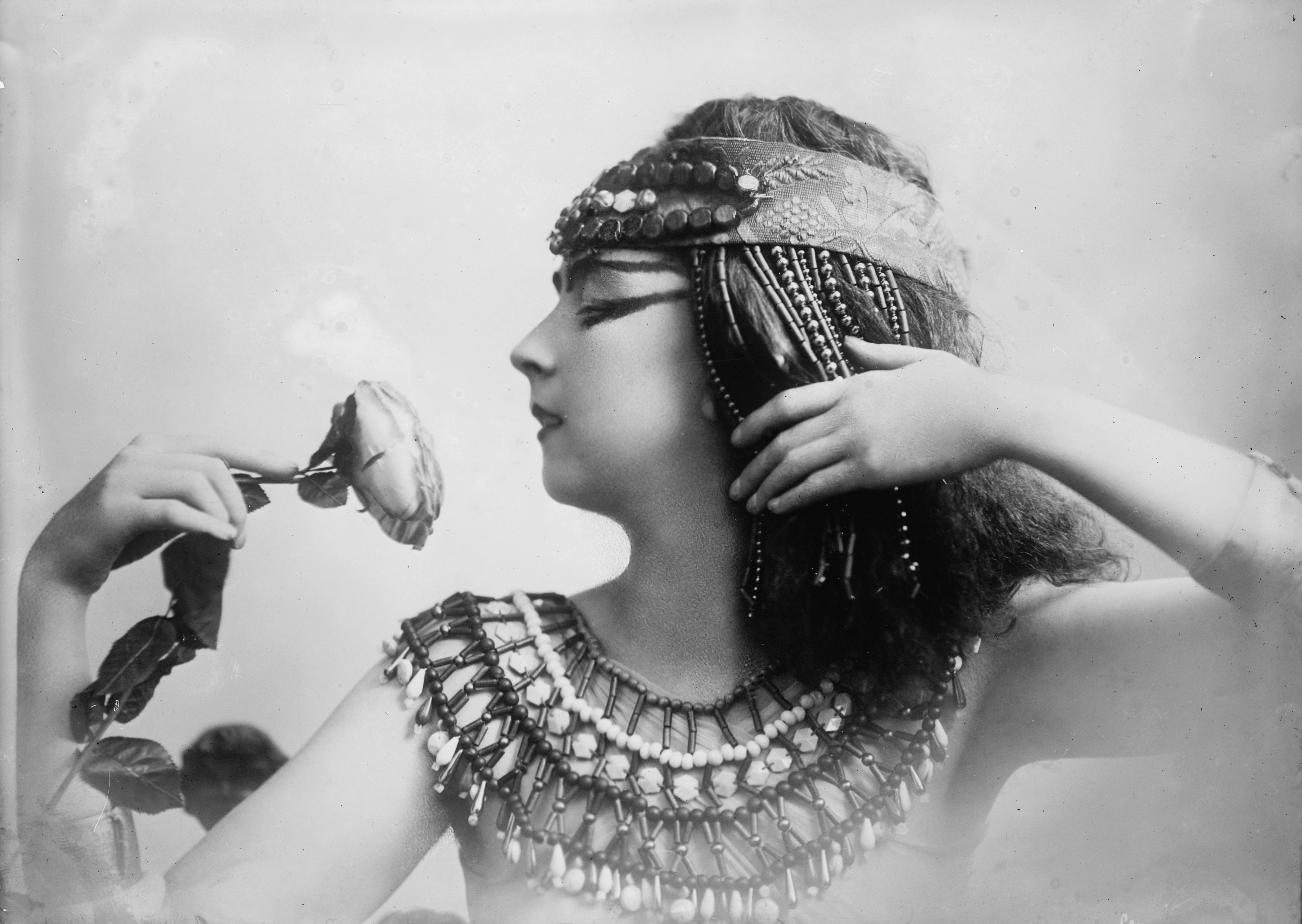
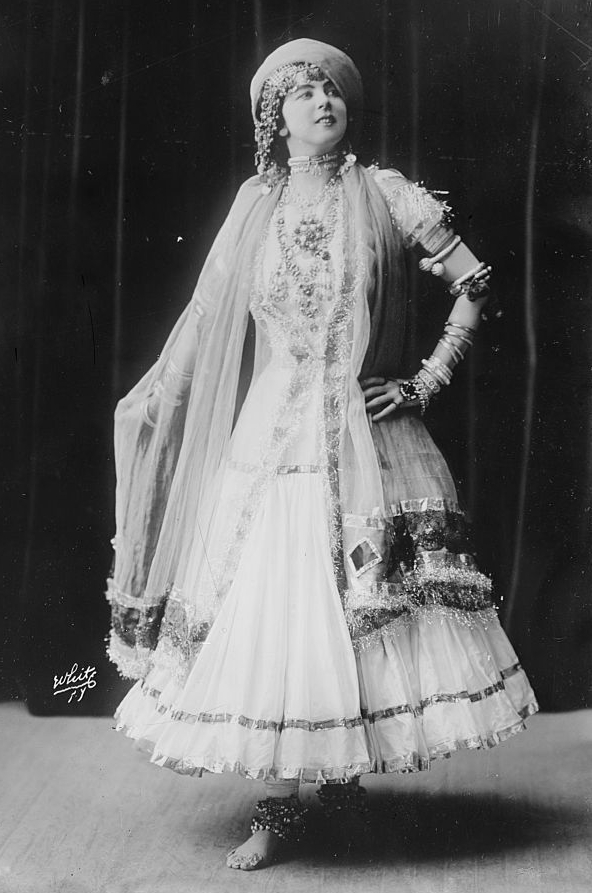
Legacy & Impact
Ruth St. Denis matters because she helped make the self-authored theatrical solo, spiritual investigation, and sustained dance training viable pillars of American concert dance. Denishawn gave a generation of artists professional experience and a platform from which several later rejected, revised, or transformed its values. Her legacy is therefore not a single codified technique but an institutional and imaginative inheritance: the conviction that dance could carry ideas, ritual aspiration, theatrical beauty, and personal authorship. Understanding her achievement requires equal attention to how those possibilities were built through Orientalist fantasies and unequal acts of cultural representation—a double history that is central to the field that followed.


Explore More Legends
Discover the dancers, teachers, choreographers, and cultural icons who shaped how the world moves.
Keep the thread going
Dance history, technique, and the occasional rabbit hole — in your inbox. Thoughtful, infrequent, unsubscribe anytime.
Free. No spam. One click to leave.