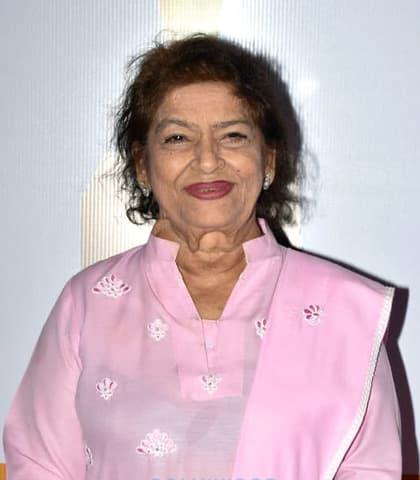
Choreographer · Innovator · Film / Screen Icon
Saroj Khan
Mother of Bollywood Dance
Why They Matter
She defined how an entire nation dances — her choreography for Bollywood's biggest stars became the template for Indian film dance, influencing billions of viewers and dancers.
Known For
Watch
Ek Do Teen — Tezaab
Tips Official
The breakthrough Madhuri Dixit collaboration and the work associated with Filmfare's first choreography prize.
Hawa Hawai — Mr India
Saregama Music
Shows Khan and Sridevi making comic acting, costume changes and dance punctuation operate as one screen performance.
Dhak Dhak Karne Laga — Beta
T-Series Bollywood Classics
A major Madhuri Dixit collaboration demonstrating how Khan calibrated sensuality for character and camera.
Nimboda Nimboda — Hum Dil De Chuke Sanam
T-Series Bollywood Classics
Documents Khan's late-1990s orchestration of a star, ensemble, costume and designed film space.
Yeh Ishq Hai — Jab We Met
T-Series
The song for which Khan received her third National Film Award for Best Choreography.
Barso Re — Guru
Sony Music India
Represents Khan's later work with Aishwarya Rai Bachchan and her eighth Filmfare choreography award.
Biography
Saroj Khan, born Nirmala Nagpal on November 22, 1948, in Bombay, was a defining author of late-twentieth-century Hindi film dance who made lyrics, characterization, facial expression and camera framing function as one choreographic system. She entered Indian cinema as a child artist in the 1950s and worked as a background dancer, learning how film movement is built for sets, lenses, stars and playback songs rather than for a proscenium stage. Under choreographer B. Sohanlal, she became an assistant with command of rehearsal, screen direction and the delegation of movement through ensembles. Her first widely documented independent choreography assignment was Sadhana's *Geeta Mera Naam* in 1974, though sustained industry prominence arrived later.
Khan's breakthrough as a major creative voice is closely tied to Sridevi. Numbers in *Nagina*, *Mr India* and *Chandni* allowed performer and choreographer to move between serpentine drama, comedy, sensuality and theatrical spectacle. "Hawa Hawai" in *Mr India* works because Sridevi's shifting characters, precise accents and facial play are woven into the film's comic plot, not pasted onto it as generic movement. Khan later explained that the sensuous "Kaate Nahin Kat Te" had to be created on set with censorship and camera framing in mind. These examples show her ability to make a star's acting choices inseparable from dance construction.
Her partnership with Madhuri Dixit became even more culturally dominant. "Ek Do Teen" in *Tezaab* turned counting, waiting and audience address into a complete screen persona for the character Mohini. Filmfare created its Best Choreography category in this period and named Khan its first recipient; she then won for three consecutive years. The collaboration continued through "Humko Aaj Kal Hai Intezaar," "Dhak Dhak Karne Laga," "Tamma Tamma Loge," "Choli Ke Peeche" and many other numbers. These works are collaborations among Khan, Dixit, directors, composers, lyricists, singers, cinematographers, costume teams, assistants and ensemble dancers—even when Khan's choreographic signature is unmistakable.
During the 1990s and early 2000s, Khan adapted her craft to changing musical production and star images. "Nimbooda Nimbooda" in *Hum Dil De Chuke Sanam* organizes folk-derived energy, circular group movement and Aishwarya Rai's expressive performance for a richly designed film world. "Dola Re Dola" in *Devdas* sets Madhuri Dixit and Aishwarya Rai Bachchan in a duet whose synchronized passages, contrasting character details and period spectacle support the dramatic encounter. She received three National Film Awards for Best Choreography: *Devdas*, the Tamil film *Sringaram*, and "Yeh Ishq Haaye" from *Jab We Met*.
Khan also became a public teacher and television personality through programs such as *Nachle Ve with Saroj Khan* and judging roles on dance competitions. The title "Masterji" reflected both authority and an apprenticeship-based production system: she composed, demonstrated, corrected expression and entrusted assistants to transmit ensemble material. Her 1999 interview with Nasreen Munni Kabir explains her method in her own terms: she began with the song, treated lyrics as narrative information, preserved room for improvisation, and changed movement when a close-up would crop a hand or gesture. The 2012 documentary *The Saroj Khan Story* extended that record beyond finished film clips and into rehearsal, home and teaching environments.
Her late credits included renewed work with Madhuri Dixit in *Gulaab Gang* and "Tabaah Ho Gaye" in *Kalank* in 2019. That year she also received an IIFA lifetime-achievement honor. Khan died in Mumbai on July 3, 2020, after hospitalization and a cardiac arrest. The breadth of her legacy is best measured not in disputed totals but in the breadth of performers, directors and audiences who learned to recognize a film character through her movement.
Career Highlights
Entered Indian cinema as a child artist and later worked as a background dancer, beginning the on-set education documented in The Saroj Khan Story. PSBT PSBT
Received her first widely documented independent choreography assignment on Sadhana’s Geeta Mera Naam. Scroll Scroll
Choreographed Sridevi in “Hawa Hawai” for Mr India, a landmark fusion of comic characterization and screen dance. Scroll Scroll
Choreographed Madhuri Dixit in “Ek Do Teen” for Tezaab, establishing one of Hindi cinema’s defining dancer-choreographer partnerships. Filmfare Filmfare
Became the first recipient of Filmfare’s Best Choreography award, for “Ek Do Teen.” Filmfare Filmfare
Won Filmfare’s choreography prize in three consecutive ceremonies, for work associated with Tezaab, ChaalBaaz and Sailaab. Filmfare Filmfare
Created “Dhak Dhak Karne Laga” for Madhuri Dixit in Beta, joining sensual characterization to controlled screen address. Filmfare Filmfare
Choreographed “Choli Ke Peeche” in Khalnayak; the number became a major popular-culture event and earned another Filmfare choreography award. Filmfare award record Filmfare award record
Choreographed “Nimbooda Nimbooda” in Hum Dil De Chuke Sanam and won Filmfare and IIFA recognition for the work in the following awards cycle. Filmfare award record Filmfare award record
Choreographed “Dola Re Dola” in Devdas and received the National Film Award for Best Choreography at the 50th ceremony. Government of India / Commons Government of India / Commons
Won two further National Film Awards, for Sringaram and “Yeh Ishq Haaye” from Jab We Met; her “Barso Re” work in Guru also brought an eighth Filmfare choreography award. National Film Award record Filmfare National Film Award record
Became the subject of Nidhi Tuli’s documentary The Saroj Khan Story, later returned to major film work, and received an IIFA lifetime-achievement honor in 2019. PSBT IIFA award record PSBT
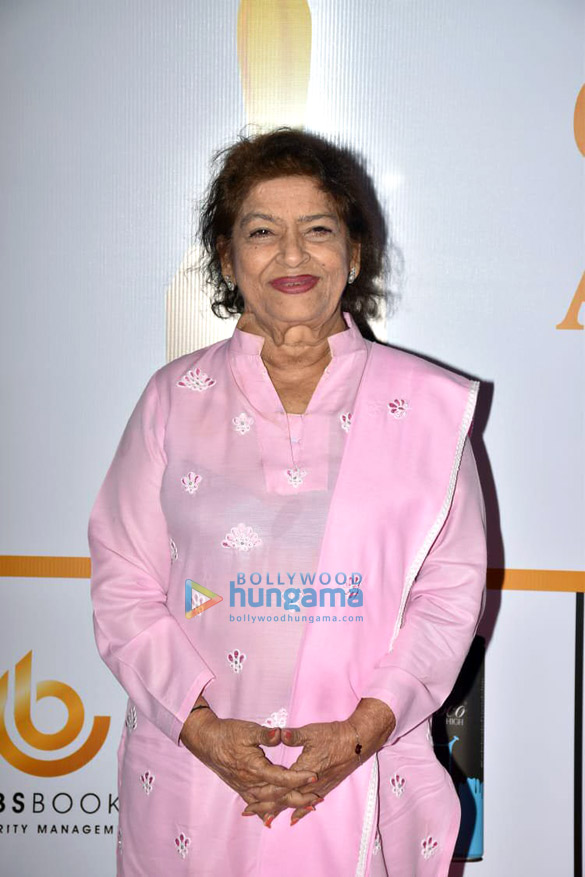
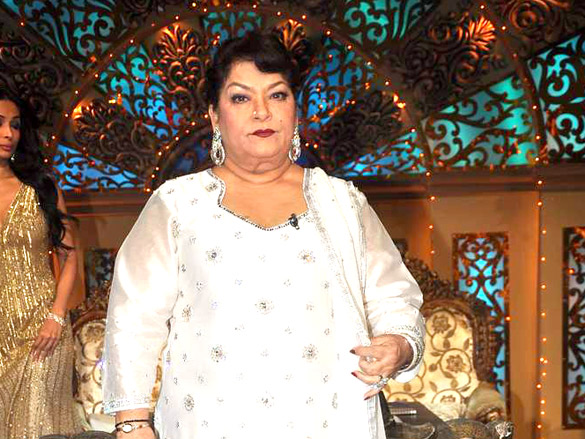
Saroj Khan on screen
Films and television featuring Saroj Khan, with the sequences we have indexed.
 This site uses TMDB and the TMDB APIs but is not endorsed, certified, or otherwise approved by TMDB.
Legacy & Impact
Saroj Khan matters because she made screen choreography a form of authored dramatic interpretation. Her best-known dances are memorable not as arrangements of steps but as compact stories: a performer looks, waits, teases, resists, remembers or commands the frame. She demonstrated that film movement could be legible to mass audiences while remaining specific to lyric, character, costume, set and camera. Her influence expanded the public idea of a choreographer in Hindi cinema—from an off-screen technician to a teacher and creative authority whose name could carry its own recognition. Dancers and filmmakers continue to study how her method weaves gesture, expression and camera scale together.


Explore More Legends
Discover the dancers, teachers, choreographers, and cultural icons who shaped how the world moves.
Keep the thread going
Dance history, technique, and the occasional rabbit hole — in your inbox. Thoughtful, infrequent, unsubscribe anytime.
Free. No spam. One click to leave.