
Scott Hamilton
Legend of Dance
Why They Matter
Hamilton matters to dance and skating because he connected elite singles technique to a direct, theatrical relationship with spectators. His competitive record established authority; his professional tours helped sustain ensemble ice entertainment; and his broadcasting and education work made skatin
Biography
Scott Scovell Hamilton was born in Toledo, Ohio, on August 28, 1958, and adopted by Dorothy and Ernest Hamilton, professors at Bowling Green State University. A childhood illness affected his growth; he began skating at nine, and the sport became central to his life. His mother's cancer treatment during his early competitive years shaped his resolve, and her death in 1977 marked a turning point in his drive to continue training despite financial hardship.
Hamilton won the U.S. junior championship in 1976 while his mother was undergoing treatment. After placing third at the 1980 U.S. Championships, he made the Lake Placid Olympic team, served as flag bearer at the opening ceremony, and finished fifth—a result that marked the beginning of his competitive ascent. From 1981 through 1984 he won four consecutive U.S. Championships and four consecutive World Championships. At the 1984 Sarajevo Olympics, where competition included compulsory figures, short program, and free skate, his accumulated placements earned him the gold medal in men's singles—the first U.S. men's Olympic figure-skating gold in 24 years.
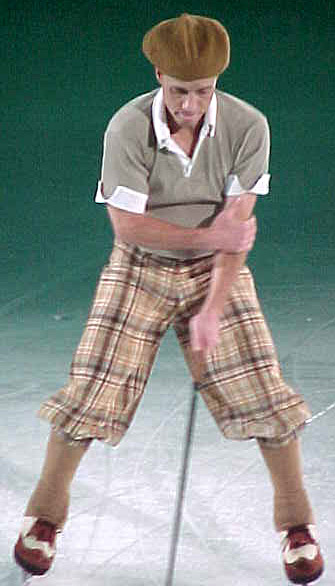
After the 1984 World Championships, Hamilton turned professional. He toured with Ice Capades for two years, then moved into the show that became Stars on Ice, where he performed for fifteen years. On professional ice, his compact frame and quick footwork became hallmarks, along with his signature backflip and direct rapport with audiences. His style emphasized speed, sharp articulation, and theatrical timing—the backflip punctuating programs built on masterful footwork and jumps rather than standing alone as his identity.
Beyond performance, Hamilton became a prominent broadcasting analyst, covering numerous competitions and nine Olympic Winter Games. U.S. Figure Skating inducted him into its Hall of Fame in 1990. In 1997 he was diagnosed with testicular cancer, an experience that redirected much of his public work toward patient support and research. He developed programs including Chemocare.com and 4th Angel mentoring before launching the Scott Hamilton CARES Foundation in 2014. His writing, speaking, academy work, and advocacy have sustained this mission for over a decade. In March 2025, the International Skating Union presented him its Lifetime Achievement Award, honoring his Olympic and World titles, professional show career, broadcasting legacy, foundation work, and service to Special Olympics.
Career Highlights
Won the U.S. junior figure-skating championship while his mother was undergoing cancer treatment. Scott Hamilton CARES Foundation Scott Hamilton CARES Foundation
Placed third at the U.S. Championships, made the U.S. Olympic team, served as opening-ceremony flag bearer, and finished fifth at Lake Placid. Scott Hamilton CARES Foundation Scott Hamilton CARES Foundation
Began a four-year run of consecutive U.S. and World senior titles. Team USA Team USA
Won Olympic men's singles gold in Sarajevo and completed a fourth consecutive World championship. Olympics.com ISU Olympics.com
Turned professional after the World Championships, beginning a show-skating phase that included Ice Capades and the tour that became Stars on Ice. Scott Hamilton CARES Foundation Scott Hamilton CARES Foundation
Inducted into the U.S. Figure Skating Hall of Fame. U.S. Figure Skating U.S. Figure Skating
A U.S. Figure Skating account described his professional programs as combining masterful footwork, jumps, and his trademark backflip. SKATING Magazine archive SKATING Magazine archive
Diagnosed with testicular cancer; later survivorship work became a major part of his public mission. Scott Hamilton CARES Foundation Scott Hamilton CARES Foundation
Launched the Scott Hamilton CARES Foundation after earlier patient-education and mentoring programs. Scott Hamilton CARES Foundation Scott Hamilton CARES Foundation
Received the International Skating Union's Lifetime Achievement Award. ISU ISU


Legacy & Impact
Hamilton matters to figure skating and dance because he connected elite competitive technique to an accessible, theatrical relationship with spectators. His four consecutive U.S. and World titles and Olympic gold established technical authority; his professional tours helped sustain ice entertainment as a form; his broadcasting made skating legible to audiences beyond competition. The CARES Foundation demonstrates how a performer can translate celebrity into durable institutional work without treating survival as the sole measure of artistic achievement.


Explore More Legends
Discover the dancers, teachers, choreographers, and cultural icons who shaped how the world moves.
Keep the thread going
Dance history, technique, and the occasional rabbit hole — in your inbox. Thoughtful, infrequent, unsubscribe anytime.
Free. No spam. One click to leave.