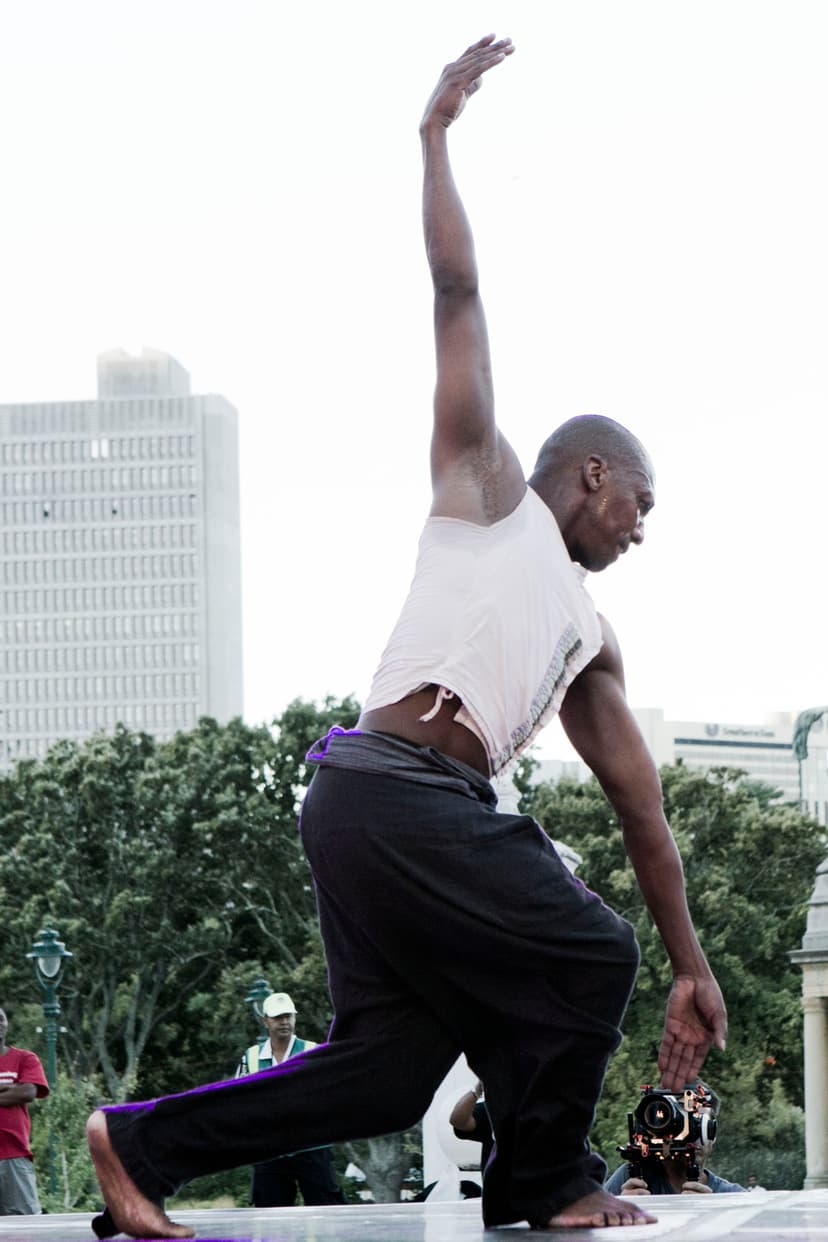
Vincent Sekwati Koko Mantsoe
Legend of Dance
Why They Matter
Mantsoe matters because his career rejects a false choice between inherited practice and contemporary invention. His work demonstrates how a choreographer can treat ritual, street and social movement as living sources while using the framing, timing and spatial intelligence of concert dance. That…
Biography
Vincent Sekwati Koko Mantsoe is a South African choreographer whose work synthesizes ritual knowledge, street-dance experience and contemporary concert-dance craft into a spiritually grounded stage language. Born in 1971 in Soweto, Johannesburg, Mantsoe grew up in an environment where ritual song, dance and drumming were part of spiritual practice, alongside the movement vocabulary of township street dance. At nineteen, he entered formal training at Moving Into Dance Mophatong in Johannesburg, the influential company and school founded by Sylvia Glasser, where he encountered Afrofusion practice and broader contemporary-dance techniques alongside his earlier lived knowledge.
Mantsoe's early choreography attracted rapid recognition. Moving Into Dance documented *African Soul* in 1992, which received a Pick of the Fringe distinction at Dance Umbrella, followed by *Gula* in 1993, for which he was named Most Promising Male Dancer. In 1994 he received an FNB Young Choreographers Grant and created *Hanano*. He was recognized as a Standard Bank Young Artist for Dance in 1996, an honor that marked his emergence as a significant voice in South African contemporary dance.
His repertory expanded through works including *Phokwane* (1998), *Barena* (2000), *Men-Jaro* (2006), *Ntu* (2005), *Motswa-Hole*, *Ndaa*, and *Lefa*. These pieces circulated his inquiry internationally through residencies, performances and teaching. In workshops, Mantsoe identifies his evolving approach as KOBA, a method that uses breath, cyclic energy, grounded natural positions and an inside-to-outside progression rather than a fixed vocabulary of decorative steps. He has sustained a presence in South African contemporary-dance history while building an international career, and was honored as JOMBA!'s Legacy Artist in 2022 in recognition of his contribution to African contemporary dance.
Career Highlights
Began formal training with Moving Into Dance Mophatong in Johannesburg. JOMBA!/UKZN
African Soul received a Pick of the Fringe distinction at the Dance Umbrella according to Moving Into Dance’s award chronology. Moving Into Dance
Gula received festival recognition, and Mantsoe was named Most Promising Male Dancer in the same institutional chronology. Moving Into Dance
Received an FNB Young Choreographers Grant and created Hanano. Moving Into Dance
Listed as a Standard Bank Young Artist for Dance by the National Arts Festival. National Arts Festival
Created Phokwane, part of the repertory through which his ritual-contemporary language circulated internationally. Numeridanse
Barena entered his documented repertory and was later preserved in the Jacob’s Pillow Dance Interactive archive. Jacob’s Pillow
Created Ntu, later revisited as NTU///. Numeridanse
Created Men-Jaro, a work whose title and movement concept center friendship and cultural exchange. Dance Umbrella
Honored as JOMBA!’s Legacy Artist in recognition of his sustained contribution to African contemporary dance. JOMBA!/UKZN
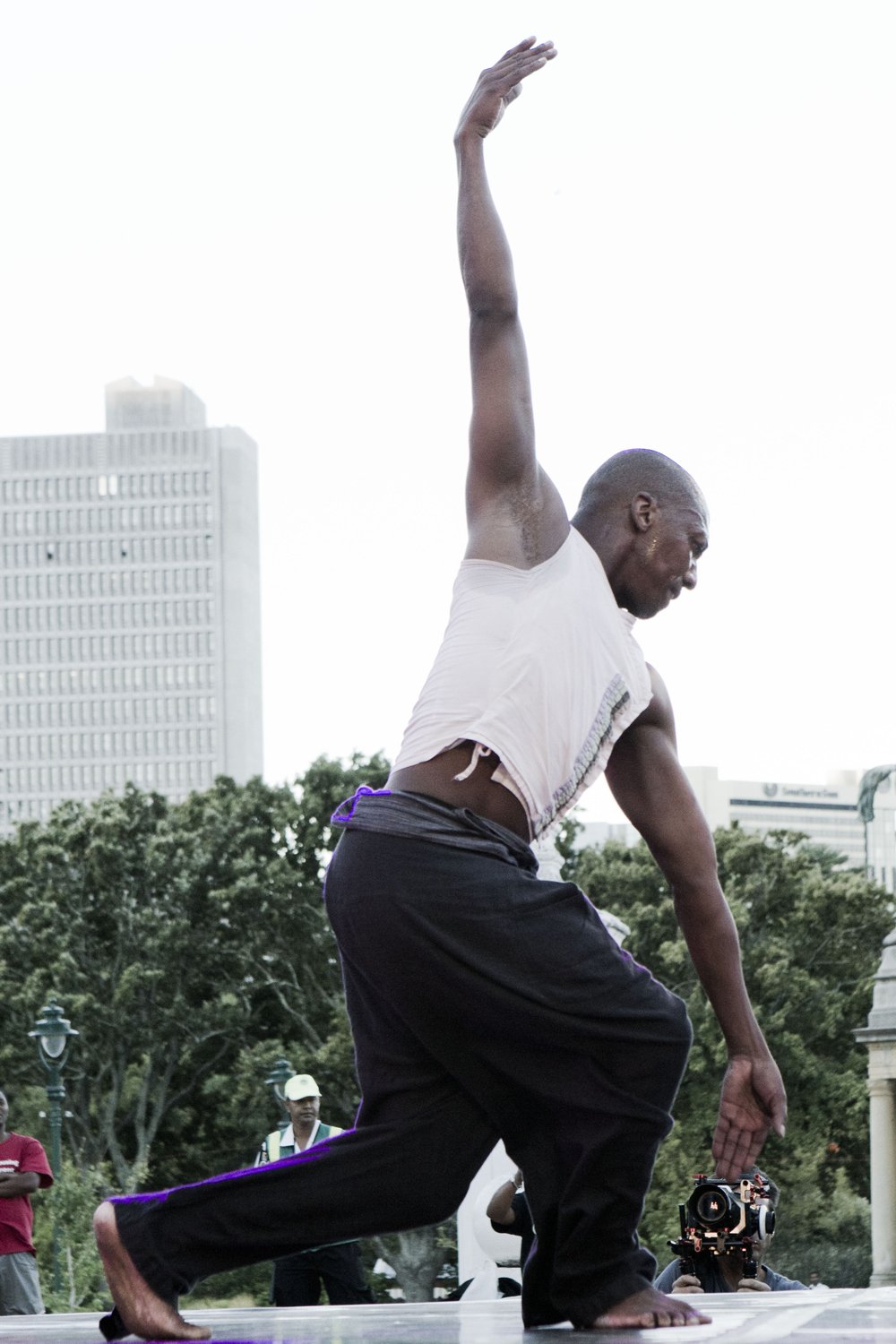
Gallery
Legacy & Impact
Mantsoe demonstrates how a choreographer can treat ritual, street and social movement as living sources while using the framing, timing and spatial intelligence of concert dance. His synthesis of inherited practice and contemporary invention has influenced how international audiences understand South African contemporary choreography and created a teachable movement practice—KOBA—that does not reduce culture to steps. Dancers and choreographers continue to study his work because it shows how to honor multiple movement lineages without falsely separating them.

Explore More Legends
Discover the dancers, teachers, choreographers, and cultural icons who shaped how the world moves.
Keep the thread going
Dance history, technique, and the occasional rabbit hole — in your inbox. Thoughtful, infrequent, unsubscribe anytime.
Free. No spam. One click to leave.