Dada Masilo
Legend of Dance
Why They Matter
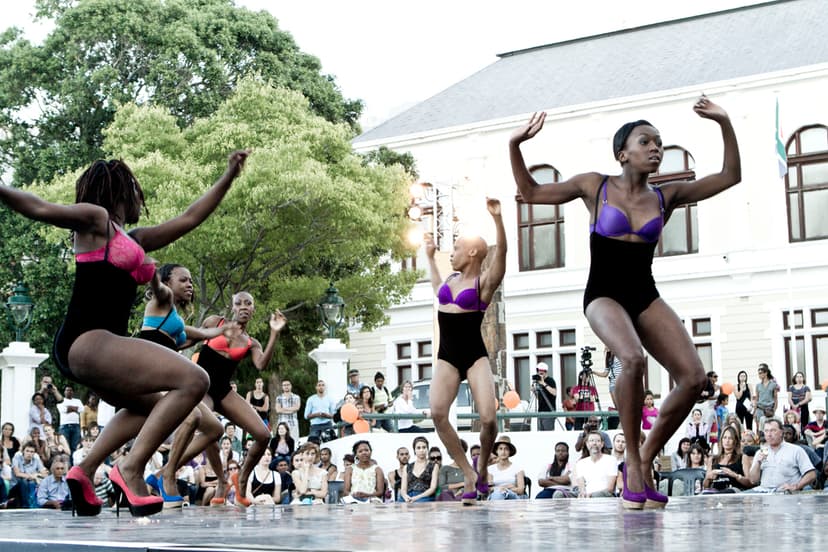
Masilo matters because she demonstrated that the ballet canon could be contested from inside performance—through casting, speed, gesture, music, humor, ritual, and dramaturgy—without treating either ballet or African forms as static property. Her works reached large international audiences while rem
Styles Dada Masilo shaped
Each one links to the style’s own page — its origins, music, tempo and video.
Watch
Dada Masilo - Swan Lake - Sadler's Wells is Dance
Sadler's Wells
Official venue footage introduces the production's kinetic and theatrical language
Dada Masilo — Giselle - Trailer
Sadler's Wells
A concise visual reference for Masilo's reworking of Giselle
Dada Masilo - The Sacrifice
Sadler's Wells
Shows the production for which the venue explicitly identifies Tswana movement and live music
In conversation with Dada Masilo | Dada Masilo's The Sacrifice
Sadler's Wells
First-person context supports interpretation without substituting for movement footage
Dada Masilo - The Dance Factory – Dada Masilo's HAMLET
Sadler's Wells
Documents Masilo's late-career expansion of her adaptation practice
Biography
Dada Masilo was born on 21 February 1985 in Soweto, Johannesburg, South Africa, and became one of the most consequential choreographers of her generation. At eleven, she entered formal training at Johannesburg's Dance Factory, an institution that shaped her early artistic formation. At nineteen, she studied for two years at P.A.R.T.S. in Brussels, the school founded by Anne Teresa De Keersmaeker, before returning to Johannesburg to build work from her own artistic and social context.
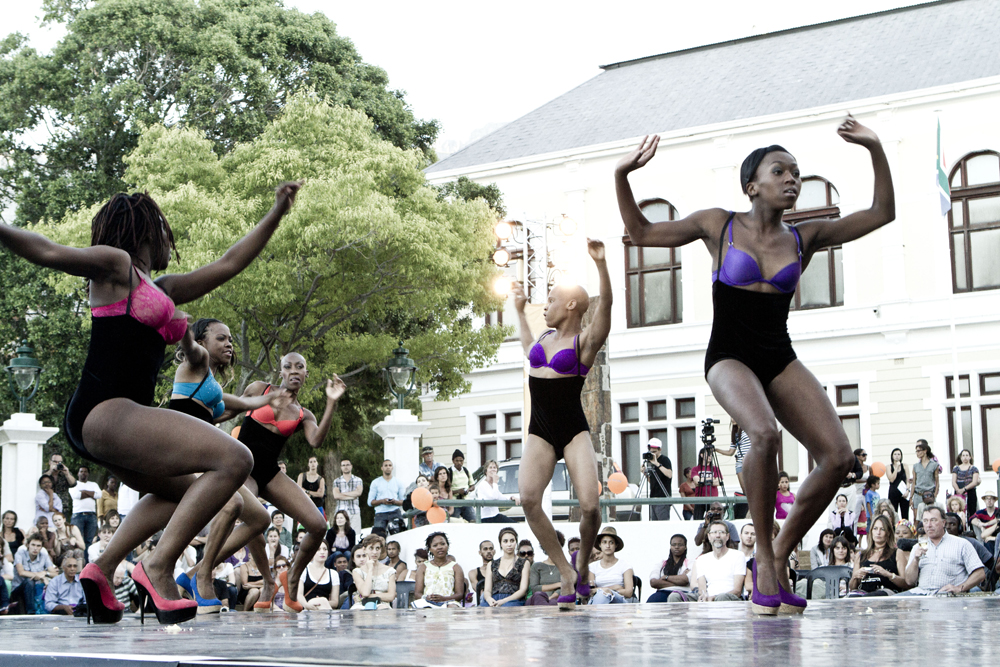
Masilo's national breakthrough came in 2008 when she received the Standard Bank Young Artist Award and created *Romeo and Juliet* for South Africa's National Arts Festival. *Carmen* followed in 2009 and *Swan Lake* in 2010. These were not decorative updates to familiar ballets; Masilo used their narratives as structures through which to recast character, power, sexuality, violence, and belonging. Her *Swan Lake* combined ballet and contemporary dance with South African vocabularies while openly addressing homophobia and domestic violence, reaching international audiences through touring.
Her 2017 *Giselle* turned another nineteenth-century ballet toward questions of betrayal, ritual, revenge, and healing. Dance Consortium brought it to UK audiences in 2019, expanding her reach across continents. Each work treated adaptation as a living conversation rather than a fixed formula. In *The Sacrifice*, inspired by *The Rite of Spring* and presented by Sadler's Wells in London in February 2023, she worked with live music and the rhythmic and expressive movement of Tswana dance. The production demonstrated that her practice could not be reduced to a single approach: each project selected different movement, musical, and ritual resources tailored to its dramaturgical vision.
Masilo's achievements were recognized with the 2018 Prince Claus Next Generation Award and, in September 2024, a lifetime-achievement award at the Premio Positano Léonide Massine. She died on 29 December 2024 after a brief illness, aged thirty-nine.
Career Highlights
At age eleven, Masilo entered formal training at Johannesburg’s Dance Factory. Quaternaire
At nineteen, she began two years of study at P.A.R.T.S. in Brussels; the year is derived from her documented age and 1985 birth year and should be presented as approximate unless a school record is obtained. Festival de Marseille
She received a Standard Bank Young Artist Award. National Arts Festival
Her Romeo and Juliet was commissioned for the National Arts Festival. Belgrade Dance Festival
She followed with her reworking of Carmen. Belgrade Dance Festival
She created Swan Lake, later toured internationally. Belgrade Dance Festival
Giselle became the fourth of her major classical reinterpretations to receive a South African National Arts Festival presentation. National Arts Festival programme
She received the Prince Claus Next Generation Award. Quaternaire
Dance Consortium toured Giselle in the United Kingdom. Dance Consortium
Sadler’s Wells presented the London premiere of The Sacrifice, with live music and Tswana dance central to its movement language. Sadler’s Wells
She accepted a lifetime-achievement award at the Premio Positano Léonide Massine. Quaternaire
Masilo died on 29 December after a brief illness, aged thirty-nine. South African Department of Sport, Arts and Culture
Gallery
Legacy & Impact
Masilo demonstrated that the ballet canon could be contested from inside performance—through casting, speed, gesture, music, humor, ritual, and dramaturgy—without treating either ballet or African forms as static property. Her works reached large international audiences while remaining rooted in Johannesburg and in South African questions. They expanded the repertoire available to touring contemporary companies and offered a model of adaptation in which inherited stories become accountable to the bodies, histories, and politics of the artists retelling them.


Explore More Legends
Discover the dancers, teachers, choreographers, and cultural icons who shaped how the world moves.
Keep the thread going
Dance history, technique, and the occasional rabbit hole — in your inbox. Thoughtful, infrequent, unsubscribe anytime.
Free. No spam. One click to leave.