Willi Ninja
Legend of Dance
Why They Matter
Willi Ninja matters because he joined virtuoso movement practice to community authorship. His international visibility made old-way vogue’s formal discipline legible to audiences far beyond New York, yet his deepest contribution was the social and pedagogical system around the dancing: a house, a ch
Biography
William Roscoe Leake, known professionally as Willi Ninja, was born on April 12, 1961, in New Hyde Park, New York. He emerged as a self-taught dancer within New York's ballroom scene, a Black and Latino LGBTQ+ cultural world where competition, chosen family, fashion, gender presentation and movement practice were inseparable. Rather than training through conventional conservatory routes, Ninja developed his artistry within the social networks and competitive culture of the balls.
In 1982, he founded the House of Ninja, which functioned simultaneously as a competitive unit, a creative identity and a chosen-family structure. As founder and parent of the house, Ninja trained and supported younger participants while establishing a recognizable house standard. Ballroom houses operate as chosen families and creative collectives distinct from both biological kinship and commercial fashion houses.
Ninja became especially associated with old-way voguing, refining the form's geometric precision, abrupt stops, controlled transitions and commanding runway intelligence. He did not originate voguing, but he pushed its formal clarity through long lines, photographic poses and expressive hands. A 1982 New York ball attended by Malcolm McLaren became one route through which this underground practice reached a broader audience; Ninja subsequently appeared and contributed vocals to McLaren's 1989 track "Deep in Vogue."
Jennie Livingston's documentary *Paris Is Burning* (1990) made Ninja one of the most internationally recognizable figures from the ball scene it documented. The film widened public knowledge of houses, categories, realness and voguing while generating lasting debates about authorship, compensation and the documentary gaze. The Library of Congress selected the film for the National Film Registry in 2016, confirming its historical significance.
Ninja translated ballroom expertise into fashion, choreography and coaching. He modeled for designers including Thierry Mugler and Jean-Paul Gaultier and coached runway presentation for models including Naomi Campbell and Tyra Banks. He provided choreography for Malcolm McLaren and built a visible bridge between club-floor technique, camera performance and high-fashion display.
He remained a teacher and house leader through the end of his life and appeared in Wolfgang Busch's 2006 documentary *How Do I Look*, which revisited ballroom culture from within its community networks. Ninja died on September 2, 2006, aged 45. His legacy continues through the House of Ninja, through dancers who inherited his standards of line and presence, and through the wider recognition that voguing is a rigorous dance language rooted in ballroom communities.
Career Highlights
Born William Roscoe Leake on April 12 in New Hyde Park, New York. OutHistory OutHistory
Founded the House of Ninja as a ballroom house, performance identity and chosen-family structure. OutHistory OutHistory
Judged a New York voguing ball attended by Malcolm McLaren, a documented encounter preceding McLaren’s ballroom-influenced recording project. The Guardian The Guardian
Appeared and contributed vocals to Malcolm McLaren’s “Deep in Vogue,” an early commercial recording that foregrounded ballroom vocabulary. Spotify release record Spotify release record
Featured prominently in Jennie Livingston’s documentary Paris Is Burning. Library of Congress Library of Congress
Released “Hot,” credited on contemporary releases as Willie Ninja; catalogues identify house/deep-house versions including the “Ninja Mix.” Discogs release Discogs release
Appeared in Wolfgang Busch’s ballroom documentary How Do I Look. How Do I Look NYC How Do I Look NYC
Died on September 2 at age 45 after a heart-related AIDS illness. The Guardian obituary The Guardian obituary
Paris Is Burning was added to the United States National Film Registry. Library of Congress Library of Congress
Willi Ninja on screen
Films and television featuring Willi Ninja, with the sequences we have indexed.
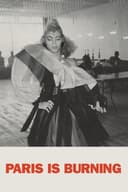
Poster artwork from TMDB.
 This site uses TMDB and the TMDB APIs but is not endorsed, certified, or otherwise approved by TMDB.
Legacy & Impact
Willi Ninja matters because he joined virtuoso movement practice to community authorship. His international visibility made old-way vogue's formal discipline legible to audiences far beyond New York, yet his deepest contribution was the social and pedagogical system around the dancing: a house, a chosen family, a training culture and a model for converting ballroom knowledge into choreography, fashion work and teaching. He demonstrated that ballroom expertise could sustain and extend itself through multiple platforms while remaining rooted in its originating communities.


Explore More Legends
Discover the dancers, teachers, choreographers, and cultural icons who shaped how the world moves.
Keep the thread going
Dance history, technique, and the occasional rabbit hole — in your inbox. Thoughtful, infrequent, unsubscribe anytime.
Free. No spam. One click to leave.