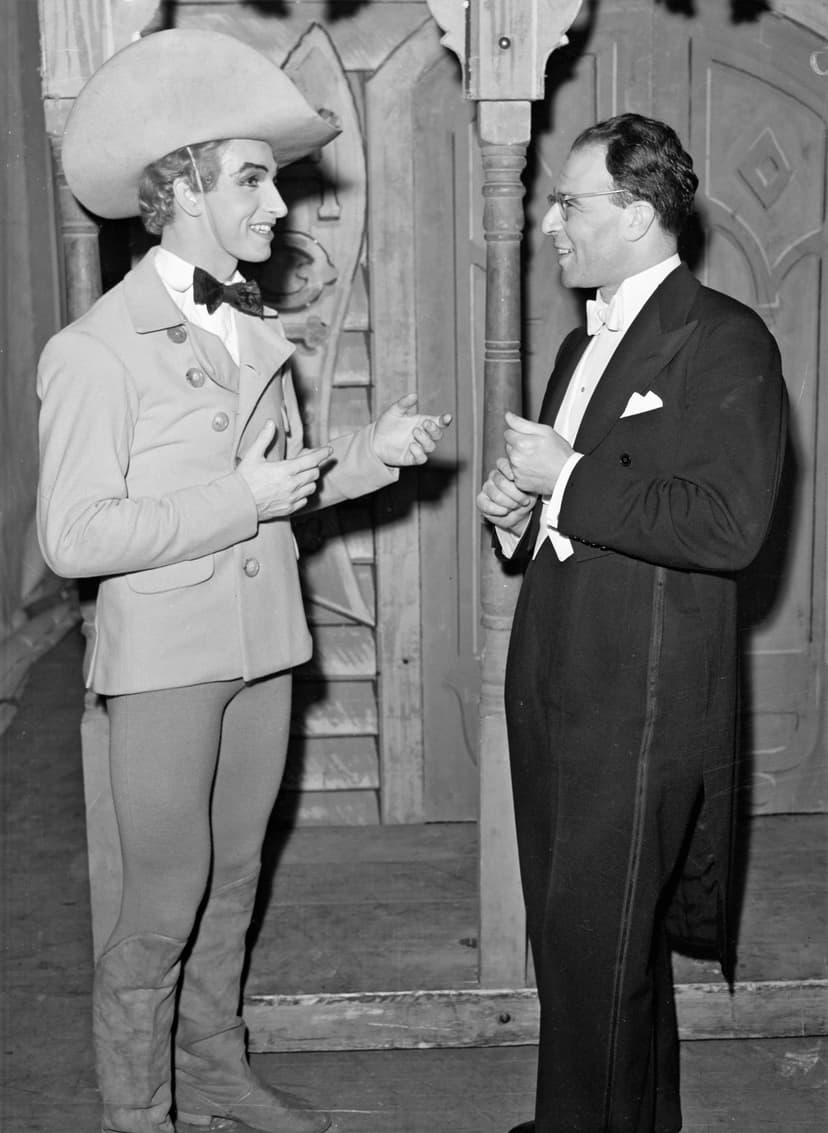
Frederic Franklin
Legend of Dance
Why They Matter
Franklin’s legacy is the combination of performance charisma and repertory stewardship. He was a central male star of the post-Diaghilev Ballets Russes, an unusually responsive partner, and an originator in works that became American classics. Later, his embodied memory helped companies recover ball
Biography
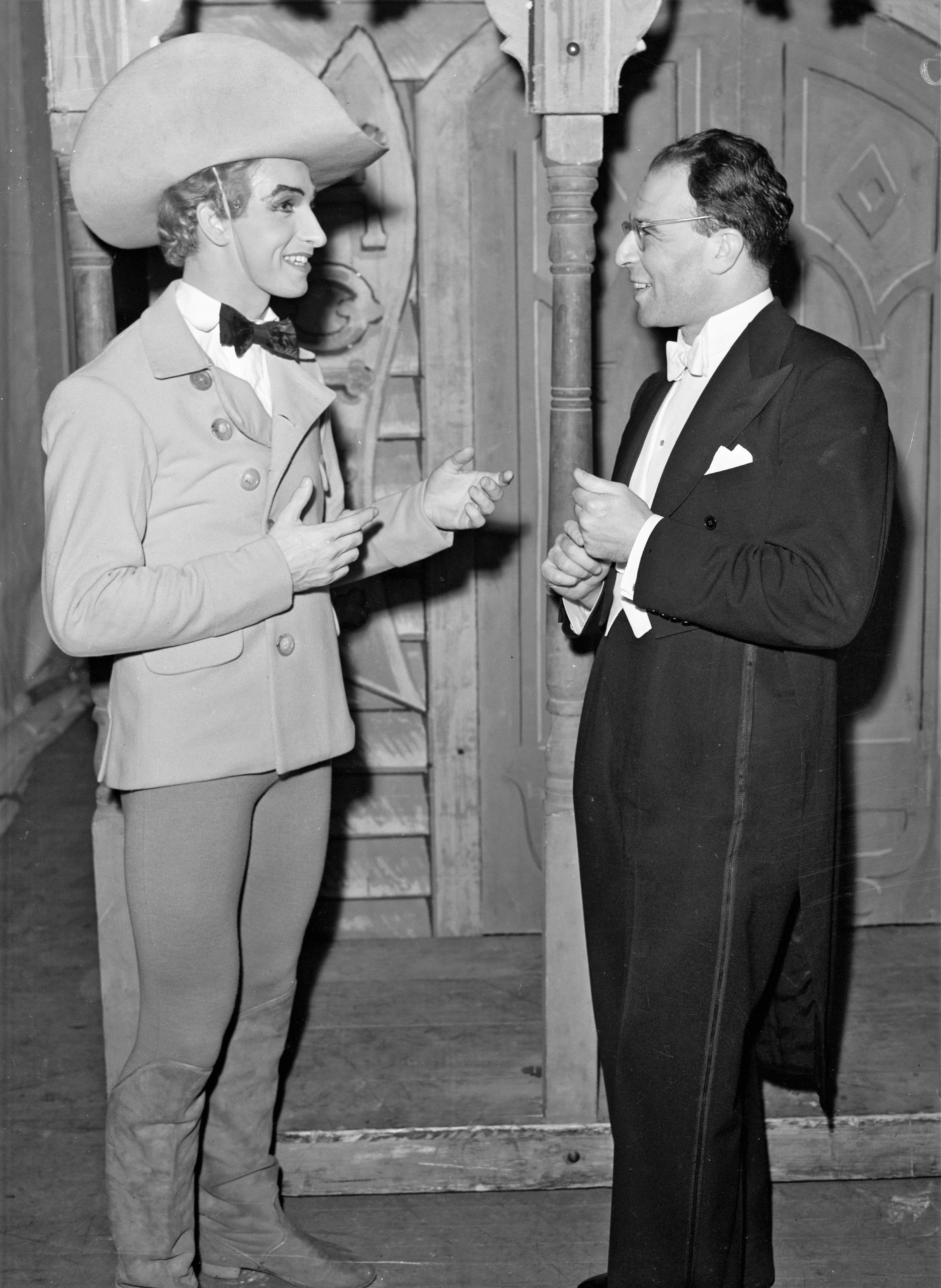
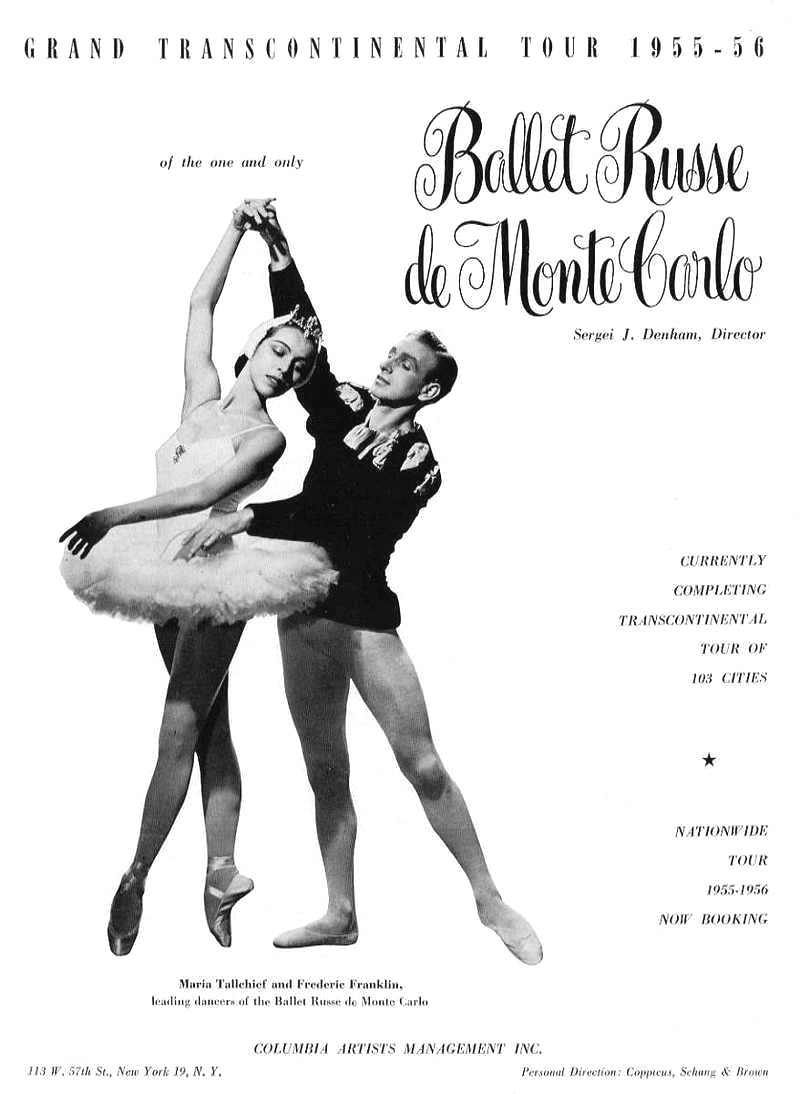
Frederic Franklin was born in Liverpool on June 13, 1914, and became one of the twentieth century's most durable carriers of classical ballet repertory. He began professional work in 1931 in Paris, performing in music-hall productions alongside Josephine Baker and Mistinguett before returning to Britain, where he danced in theatrical settings and with the Markova–Dolin organization. In 1938, Léonide Massine recruited him to the Ballet Russe de Monte Carlo, where he rose to prominence as a principal dancer and, from 1944, as ballet master. Over his years with the company, Franklin danced more than forty-five leading roles created by choreographers including Massine, George Balanchine, Michel Fokine, Bronislava Nijinska, Frederick Ashton, Agnes de Mille, Ruth Page, and Valerie Bettis. He originated the Champion Roper in Agnes de Mille's *Rodeo* in 1942 and appeared in Balanchine's *Danses Concertantes*. His most celebrated partnership was with Alexandra Danilova; their stage work together lasted from the mid-1940s until her 1957 retirement, with documented appearances at Jacob's Pillow in 1946, 1948, and 1952. Their 1948 film of *Gaîté Parisienne* preserves their buoyant dramatic exchange and the attentive partnering that made them memorable.
When the Ballet Russe organization weakened in the 1950s, Franklin co-founded the Slavenska–Franklin Ballet with Mia Slavenska, which presented Valerie Bettis's ballet adaptation of *A Streetcar Named Desire*, with Franklin dancing Stanley. He then entered a second career in company leadership, co-directing the Washington Ballet and helping to found and direct the National Ballet of Washington. His work crossed major American institutions: he served as an adviser to Dance Theatre of Harlem, led Cincinnati Ballet, and staged repertory for companies across the country. His particular value lay in his embodied memory of twentieth-century ballets. In 2002, he reconstructed episodes from Frederick Ashton's 1939 *Devil's Holiday*, work that depended on dancers, coaches, designers, archives, and company resources alongside his own recollection.
Franklin remained active into his nineties, performing character and mime roles with American Ballet Theatre—including Friar Laurence in *Romeo and Juliet* and Madge in *La Sylphide*—while continuing to coach and tell the history of the repertory through interviews. He appeared in the 2005 documentary *Ballets Russes* and was appointed Commander of the Order of the British Empire in 2004. He died in New York on May 4, 2013, at ninety-eight.
Career Highlights
Began his professional stage career in Paris, appearing in music-hall productions with artists including Josephine Baker and Mistinguett. The Guardian obituary
Joined the Ballet Russe de Monte Carlo as a leading dancer under Léonide Massine. Jacob’s Pillow oral-history transcript
Created the role of the Champion Roper in Agnes de Mille’s Rodeo. The Guardian obituary
Became ballet master of the Ballet Russe de Monte Carlo. Dance Magazine memorial
Appeared with Alexandra Danilova at Jacob’s Pillow in 1946, 1948, and 1952. Jacob’s Pillow Dance Interactive
Co-founded the Slavenska–Franklin Ballet with Mia Slavenska. Dance Magazine memorial
Helped found and direct the National Ballet of Washington after work with the Washington Ballet. Dance Magazine memorial
Staged and advised repertory for Dance Theatre of Harlem, including its Creole-setting Giselle. The Guardian obituary
Reconstructed episodes from Frederick Ashton’s 1939 Devil’s Holiday. The Guardian obituary
Was appointed Commander of the Order of the British Empire. The Guardian obituary
Continued performing with American Ballet Theatre in his mid-nineties, including Friar Laurence in Romeo and Juliet. Vogue, “Happy Birthday, Mr. Franklin”
Legacy & Impact
Franklin's legacy rests on the combination of performance charisma and repertory stewardship. He was a central male star of the post-Diaghilev Ballets Russes, an unusually responsive partner to Alexandra Danilova, and an originator in works that became American classics. Later, his embodied memory helped companies recover ballets that notation and film had only partially preserved. Because he remained active as a director, stager, coach, and character performer into his nineties, he directly connected the touring ballet culture of the 1930s and 1940s to dancers and audiences of the twenty-first century.


Explore More Legends
Discover the dancers, teachers, choreographers, and cultural icons who shaped how the world moves.
Keep the thread going
Dance history, technique, and the occasional rabbit hole — in your inbox. Thoughtful, infrequent, unsubscribe anytime.
Free. No spam. One click to leave.