Dance in Film · 1963
Los Tarantos (1963)
Rovira Beleta sets Romeo-and-Juliet tragedy inside Barcelona’s Somorrostro and lets Carmen Amaya, Sara Lezana, and Antonio Gades carry the social drama through flamenco, preserving Amaya’s final screen performance and a distinctly Catalan Romani dance world.
Los Tarantos is a 1963 dance feature film centred on ballroom and social dance. For dancers, it's a chance to see the style performed on screen — the phrasing, partnering, and musicality that the same dances carry onto a real floor.
Jump to the 5 indexed dance sequences ↓
Where to watch: No current U.S. streaming, rental, or purchase source was verified on 2026-08-09; Reelgood and Plex listed no viewing location, while Filmoteca de Catalunya provides archival programming information. Availability may change.
The dance sequences in Los Tarantos
5 sequences — what is danced, by whom, and where to find it.
Carmen Amaya's family-circle taranto
TarantoDanced by Carmen Amaya (Angustias / La Taranta)
A compact, solemn solo surrounded by her people, built from pitos, grounded bends, footwork, and desplantes.
This brief taranto places Amaya inside the family circle and preserves a historically significant form that she and Sabicas helped establish as dance.
Not currently available to stream; timestamp is for reference. The paper places the taranto at 41:40–42:55 and reports a duration of about 1:15. Timestamp omitted because the referenced edition is not named and institutional runtimes conflict.
Carmen Amaya's Ritmos Amaya bulerías
BuleríasDanced by Carmen Amaya (Angustias / La Taranta)
Amaya's feet and hands driving the rhythm while she sings between Pucherete and Andrés Batista's guitars.
Amaya compresses cante, zapateado, tabletop knuckle percussion, and high-speed footwork into the film's most concentrated star showcase.
Not currently available to stream; timestamp is for reference. The paper places this number at minutes 30–32 and identifies it as Ritmos Amaya, with Pucherete and Andrés Batista on guitar. Timestamp omitted because the referenced edition is not named and institutional runtimes conflict.
Gypsy wedding bulerías — Juana seduces Rafael
BuleríasDanced by Sara Lezana (Juana); Daniel Martín (Rafael)
The lovers first seeing one another across palmas before Juana dances directly to Rafael.
At the wedding, clapped bulerías becomes dialogue: Juana's dancing seduces Rafael and establishes the romance through compás before either learns the other's family.
Not currently available to stream; timestamp is for reference. The academic paper identifies the wedding encounter but supplies no edition-specific start. Film at Lincoln Center lists 92 minutes while Cinémathèque suisse lists 112; no current legitimate public viewing source was confirmed.
Juana's reconciliation bulerías
BuleríasDanced by Sara Lezana (Juana); Carmen Amaya (Angustias / La Taranta)
Angustias visibly softening as Juana's dancing overcomes the clan boundary.
Juana answers inherited hostility through dancing; her bulerías persuades Angustias to recognize a shared flamenco identity and accept the young woman.
Not currently available to stream; timestamp is for reference. The paper places the narrative pivot after minute 28:28 but does not specify the dance start. Timestamp omitted because the cited edition is unnamed and institutional runtimes conflict.
Mojigondo's farruca on Las Ramblas
FarrucaDanced by Antonio Gades (Mojigondo)
The nighttime boulevard, passing traffic, and arcs of water framing Gades's solitary dance.
Gades turns the wet Las Ramblas into a moving stage, maintaining the farruca's controlled line while threading between cars and irrigation water.
Not currently available to stream; timestamp is for reference. The paper places the farruca at 34:07–36:24. Timestamp omitted because the referenced edition is not named and institutional runtimes conflict.
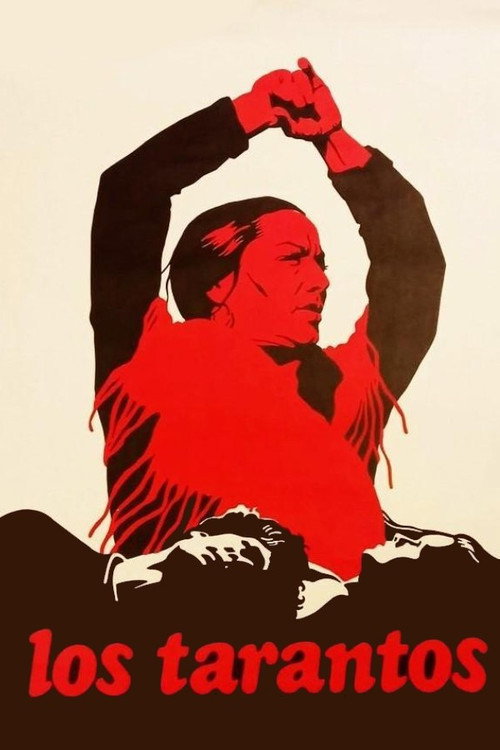
Poster artwork from TMDB.
 This site uses TMDB and the TMDB APIs but is not endorsed, certified, or otherwise approved by TMDB.