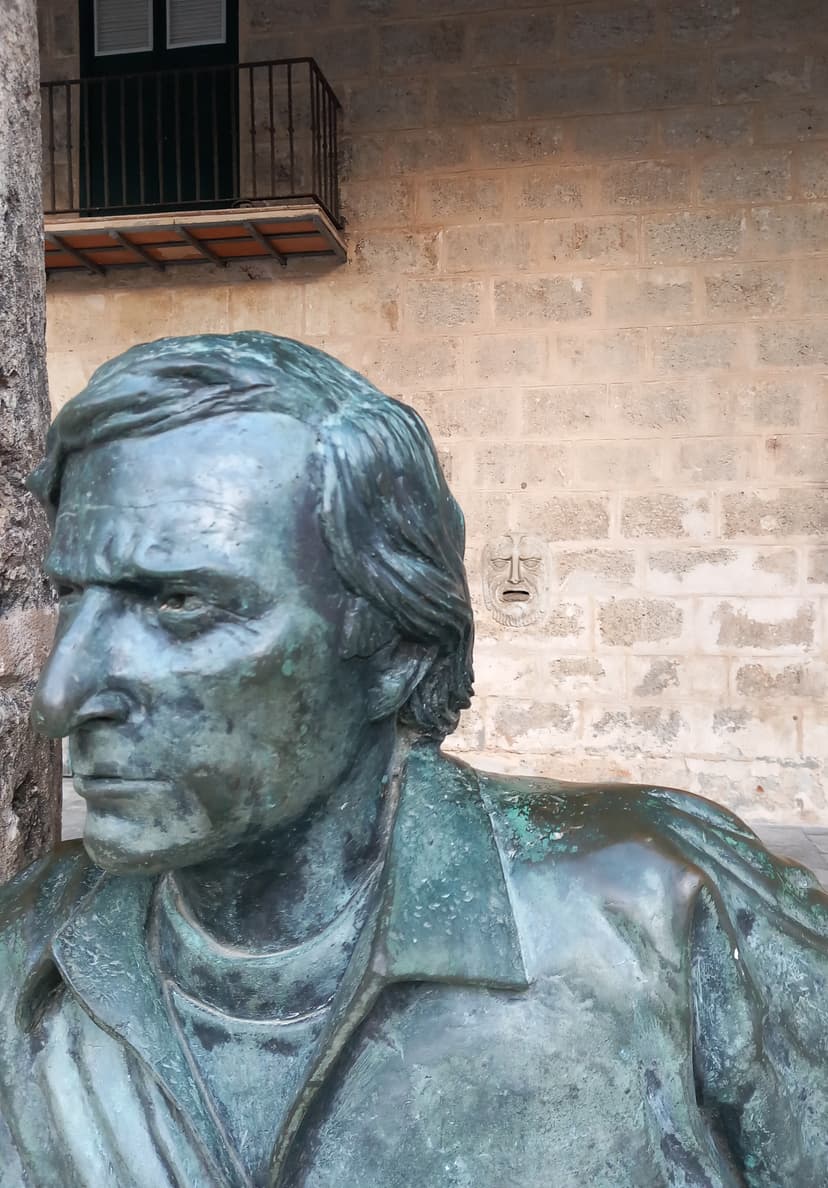
Performer · Choreographer · Stage Icon · Innovator
Antonio Gades
Flamenco's Revolutionary
Why They Matter
He modernized flamenco presentation for the stage and screen without sacrificing its emotional depth, making it accessible to international audiences.
Watch
Retratos: Antonio Gades | Primera parte
Fundación Antonio Gades
Foundation-published biographical context and archival material on Gades's formation and career.
Retratos: Antonio Gades | Segunda parte
Fundación Antonio Gades
Extends the Foundation's account into the mature repertory and legacy.
Bodas de Sangre y Suite Flamenca | Compañía Antonio Gades
Fundación Antonio Gades
Shows the continuing company repertory and allows comparison between concert flamenco materials and narrative theatre.
Carmen | Compañía Antonio Gades, Gala 2010
Fundación Antonio Gades
Documents how the Foundation company transmits Gades's Carmen repertory.
Fuenteovejuna | Compañía Antonio Gades
Fundación Antonio Gades
Makes the collective construction of Gades's final full-length work visible.
Clase abierta del tercer adagio de Carmen
Fundación Antonio Gades
Useful for explaining how the choreography is taught and maintained beyond a finished-stage extract.
Biography
Antonio Gades was a major twentieth-century Spanish dancer, choreographer and company director who forged spare, dramatic theatre from Spanish dance, flamenco and literary sources, bringing the work to international stage and film audiences. Born Antonio Esteve Ródenas in Elda, Alicante, on 14 November 1936, he moved to Madrid as a child and entered paid work at an early age—a working-class beginning that later shaped his plainspoken public identity.
Gades's professional formation accelerated when he joined Pilar López's company in the early 1950s. López gave him his stage surname and exposed him to a broad theatrical conception of Spanish dance—ballet discipline, escuela bolera, regional forms and flamenco together. From 1952 to 1961 he developed through the company's repertory and rose to first-dancer responsibilities, acquiring the controlled stage presence that became his hallmark.
After leaving López, Gades assembled his own groups and developed repertory that moved between concert suites and dramatic works. *Suite Española* and *Suite de Flamenco* gathered and reframed existing Spanish-dance materials; *Don Juan* (1965) signalled his appetite for literary theatre. A 1970 Madrid programme opposite Cristina Hoyos received Spain's National Theatre Prize for best ballet, and Hoyos became one of the most important dancers and creative presences in the next phase of his work.
The decisive theatrical breakthrough was *Bodas de Sangre* (*Blood Wedding*), premiered in 1974 and based on Federico García Lorca's tragedy through an adaptation by Alfredo Mañas. Gades compressed the story into concentrated movement drama, using ensemble geometry, gesture, silence and rhythmic escalation to make narrative legible without spoken theatre. The work later entered the Ballet Nacional de España repertory and became the first of his major stage works adapted for film by director Carlos Saura.
In 1978 Gades became the first director of the newly created Ballet Nacional Español, now Ballet Nacional de España, serving until 1980. His tenure helped establish the state ensemble's public identity and carried *Bodas de Sangre* into its repertory. After leaving, he worked with the cooperative Grupo Independiente de Artistas de la Danza before rebuilding his company.
Gades's collaboration with filmmaker Carlos Saura created an unusually influential bridge between dance theatre and cinema. Saura's *Bodas de Sangre* opened in 1981. Their *Carmen* followed in 1983, with Gades and Cristina Hoyos central to its rehearsal-room interplay between Mérimée's story, Bizet's music and flamenco performance. *El amor brujo* (1986), rooted in Manuel de Falla's music, completed the screen trilogy, while Gades reworked the material for the stage as *Fuego* in 1989.
Gades's last new full-length stage work was *Fuenteovejuna*, based on Lope de Vega's play and premiered at Genoa's Teatro Carlo Felice on 20 December 1994, with script adaptation by José Manuel Caballero Bonald and choreography emphasizing collective action. He continued to tour before withdrawing from the stage; after a cancer diagnosis he established the Fundación Antonio Gades to preserve, document and transmit his repertory. He died in Madrid on 20 July 2004.
Career Highlights
Joined Pilar López’s company, beginning the formative period in which he acquired the professional name Antonio Gades and developed across Spanish-dance forms. Fundación
Left Pilar López’s company after rising to first-dancer responsibilities and began building an independent performing career. Fundación
Began shaping the concert materials later gathered as Suite Española and Suite de Flamenco. Fundación — The Works
Created Don Juan, an early major experiment in literary dance theatre. Fundación — The Works
Presented a Madrid programme opposite Cristina Hoyos that received the National Theatre Prize for best ballet. Fundación
Premiered Bodas de Sangre, adapted by Alfredo Mañas from Federico García Lorca’s tragedy. Fundación
Became the first director of the new Ballet Nacional Español, now Ballet Nacional de España. BNE
Appeared in Carlos Saura’s film Bodas de Sangre, the first of their three landmark dance films. Fundación timeline
Saura’s Carmen premiered, and Gades’s theatrical Carmen received its world premiere in Paris, with Cristina Hoyos a central collaborator and performer. Fundación timeline
Saura’s El amor brujo premiered, completing the Gades–Saura screen trilogy. Fundación timeline
Premiered Fuego, his stage reworking of El amor brujo, at the Théâtre du Châtelet in Paris. Fundación timeline
Premiered Fuenteovejuna at Teatro Carlo Felice in Genoa, with a script adapted by José Manuel Caballero Bonald from Lope de Vega. CDAEM/INAEM
Antonio Gades on screen
Films and television featuring Antonio Gades, with the sequences we have indexed.
 Blood Wedding (1981)3 sequences indexedDress rehearsal becomes the danced tragedy · chor. Antonio GadesBride and Leonardo flee the wedding · chor. Antonio GadesClimactic slow-tempo knife duel · chor. Antonio Gades
 Carmen (1983)3 sequences indexedFlamenco class: Carmen is discovered · chor. Antonio Gades; Carlos SauraTobacco-factory dance battle · chor. Antonio Gades; Carlos SauraFarruca rehearsal · chor. Antonio Gades; Carlos Saura
 El amor brujo (1986)3 sequences indexedCandela's nightly dance with José's specter · chor. Antonio GadesDanza del fuego: Carmelo joins Candela · chor. Antonio GadesWedding rumba · chor. Antonio Gades
 Los Tarantos (1963)1 sequence indexedMojigondo's farruca on Las Ramblas
Poster artwork from TMDB.
 This site uses TMDB and the TMDB APIs but is not endorsed, certified, or otherwise approved by TMDB.
Legacy & Impact
Gades matters because he made Spanish dance function as rigorous dramatic architecture. His works travelled internationally without surrendering their literary, musical and social sources, and the Saura films gave viewers an unusually intimate look at rehearsal, ensemble relationships and the friction between theatrical illusion and the working body. His institutional legacy—an early national-company directorship, a durable independent repertory and a foundation devoted to transmission—has endured through the network of dancers, musicians, filmmakers, writers and institutions that shaped his works alongside him.


Explore More Legends
Discover the dancers, teachers, choreographers, and cultural icons who shaped how the world moves.
Keep the thread going
Dance history, technique, and the occasional rabbit hole — in your inbox. Thoughtful, infrequent, unsubscribe anytime.
Free. No spam. One click to leave.