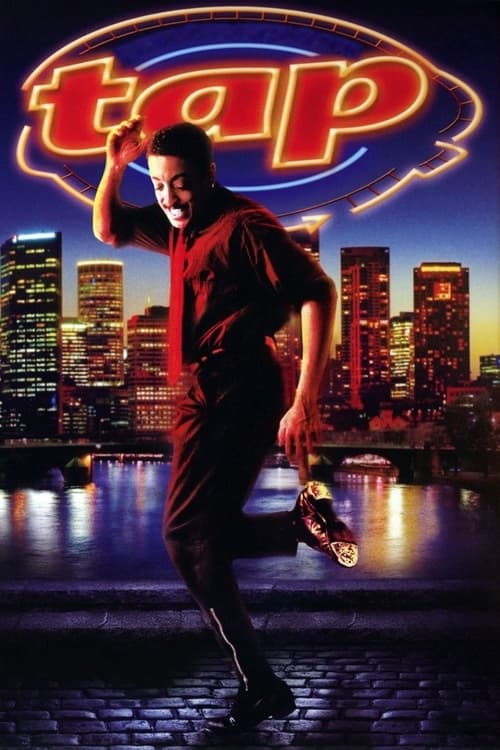
Dance in Film · 1989
Tap (1989)
Gregory Hines plays an ex-con torn between crime and the tap tradition he was born into, sharing the floor with a lineup of legendary hoofers including Sammy Davis Jr.
Tap is a 1989 dance feature film centred on ballroom and social dance. For dancers, it's a chance to see the style performed on screen — the phrasing, partnering, and musicality that the same dances carry onto a real floor.
Jump to the 4 indexed dance sequences ↓
Where to watch: Streaming (various)
The dance sequences in Tap
4 sequences — what is danced, by whom, and where to find it.
“Can’t Escape the Rhythm” city-sound number
Rhythm Tap (Hoofing)Danced by Gregory Hines · Choreography Henry LeTang; Gregory Hines (improvography)
Max matching tap phrases to a taxi’s steel-cover beat before the whole crowd joins the city’s machinery.
Hines makes the street an accompanist, answering taxis over a steel cover and construction machinery with amplified footwork. The Tap-Tronics concept extends hoofing’s call-and-response logic into an electronic urban soundscape without separating rhythm from character.
Open the film at this point · Stream or rental only — the timestamp is for when you have it playing. No edition-specific timestamp used. Sony lists the 1989 TriStar film on Digital and links to the opened U.S. Apple TV page; AFI lists 111 minutes while Apple lists 1h 50m. Availability checked 2026-08-12.
Bob Wythe’s Broadway solo audition
Broadway TapDanced by Gregory Hines · Choreography Henry LeTang; Gregory Hines (improvography)
Max abandoning his own variation, grinding through the imposed routine and finally hurling the choreographer aside.
The audition stages a direct collision between personal hoofing voice and Broadway line discipline: Max changes the choreography, then is ordered back into prescribed steps. Hines lets restraint turn visibly sullen, so artistic control becomes the dramatic conflict.
Open the film at this point · Stream or rental only — the timestamp is for when you have it playing. No edition-specific timestamp used. Sony lists the 1989 TriStar film on Digital and links to the opened U.S. Apple TV page; AFI lists 111 minutes while Apple lists 1h 50m. Availability checked 2026-08-12.
Max’s prison-cell tap solo
Rhythm Tap (Hoofing)Danced by Gregory Hines · Choreography Henry LeTang; Gregory Hines (improvography)
Max tapping alone in his cell until exhaustion overtakes him.
Alone before release, Max reduces dance to pulse, weight and private necessity. Hines’s improvisatory phrasing makes tap read as the practice that kept the character intact in confinement rather than as an inserted showpiece.
Open the film at this point · Stream or rental only — the timestamp is for when you have it playing. No edition-specific timestamp used. Sony lists the 1989 TriStar film on Digital and links to the opened U.S. Apple TV page; AFI lists 111 minutes while Apple lists 1h 50m. Availability checked 2026-08-12.
The veteran “Challenge”
Rhythm Tap (Hoofing)Danced by Gregory Hines; Sammy Davis Jr.; Bunny Briggs; Steve Condos; Arthur Duncan; Harold Nicholas; Pat Rico; Howard “Sandman” Sims; Jimmy Slyde · Choreography Henry LeTang
The poker game breaking open as nine generations-defining tap artists answer Max and Little Mo step for step.
The challenge turns a room of elder hoofers into a living archive, with each dancer retaining an individual attack, tone and sense of time. AFI reports that most steps were improvised and the scene was filmed in roughly twelve minutes, preserving exchange rather than polishing away personality.
Open the film at this point · Stream or rental only — the timestamp is for when you have it playing. No edition-specific timestamp used. Sony lists the 1989 TriStar film on Digital and links to the opened U.S. Apple TV page; AFI lists 111 minutes while Apple lists 1h 50m. Availability checked 2026-08-12.
Poster artwork from TMDB.
 This site uses TMDB and the TMDB APIs but is not endorsed, certified, or otherwise approved by TMDB.