Rhythm Tap (Hoofing)
Also known as: Hoofing, Jazz tap
- Origin
- United States
- Era
- 1920–Present
- Rhythm
- Swung 4/4 (improvised)
- Tempo
- Varies
- Character
- Percussive, grounded, improvisational
History & Cultural Context
Rhythm tap, or hoofing, treats the feet as a percussion instrument: grounded, weighted, and improvisational, it emphasizes stamps, drops, and dense syncopation and aligns itself explicitly with the jazz tradition. Its lineage runs from early hoofers and John Bubbles through the bebop era to the 1970s–1980s revival and Savion Glover's percussive 'hitting' style, which combines jazz and hip-hop rhythms across all parts of the foot.
Cultural Significance
Rhythm tap is a living improvisational jazz art transmitted largely person-to-person within the hoofing community.
Characteristic Movement & Technique
Dancing into the floor with stamps, drops, heel-and-toe articulation, and dense improvised syncopation using the whole foot.
Common Misconceptions
Tap is not only a Broadway 'up on the toes' style; rhythm tap is a grounded, improvisational jazz form in its own right.
Signature Figures
- John Bubbles
- Savion Glover
- Michelle Dorrance
- Dormeshia
Dance Lineage
Rhythm Tap (Hoofing) Music & Tempo
Drawn from 15 Rhythm Tap (Hoofing) tracks in the LODance music library.
Example tracks at practice tempo
- Slow Swing 3 — Søren Bebe
- Medium Swing 3 — Søren Bebe
- Medium Swing 9 — Søren Bebe
- Medium Swing 1 — Søren Bebe
- Medium Swing 2 — Søren Bebe
- Slow Swing 1 — Søren Bebe
Who governs Rhythm Tap (Hoofing)
Federations, councils and examining bodies with a recorded role in this style. No single organisation can tell you this — each one knows only itself.
Legends of Rhythm Tap (Hoofing)
Dancers, choreographers and teachers whose work shaped this style.
Rhythm Tap (Hoofing) on screen
Films and television where Rhythm Tap (Hoofing) appears, with the sequences worth watching for.
 No Maps on My Taps (1979)7 sequences indexedHoward “Sandman” Sims jams with a young dancer in the alleyChuck Green explains and demonstrates floating heel qualityHoward “Sandman” Sims performs his sand dance
 Tap (1989)3 sequences indexedMax’s prison-cell tap solo · chor. Henry LeTang; Gregory Hines (improvography)The veteran “Challenge” · chor. Henry LeTang“Can’t Escape the Rhythm” city-sound number · chor. Henry LeTang; Gregory Hines (improvography)
 Bootmen (2000)2 sequences indexedSydney audition improvisation · chor. Dein PerryIndustrial concert finale · chor. Dein Perry
 The Band Wagon (1953)2 sequences indexedA Shine on Your Shoes · 00:13:20 · chor. Michael KiddShine on Your Shoes · chor. Michael Kidd
 The Tango Lesson (1997)1 sequence indexedPablo's kitchen-and-mantel tap solo · chor. Pablo Veron
 White Nights (1985)1 sequence indexed“There’s a Boat Dat’s Leavin’ Soon for New York” · chor. Gregory Hines
Poster artwork from TMDB.
 This site uses TMDB and the TMDB APIs but is not endorsed, certified, or otherwise approved by TMDB.
Rhythm Tap (Hoofing) in performance
One staged work in the Limelight catalogue contains Rhythm Tap (Hoofing).
- Black and Blue1989Musical theatre · Dianne Walker, Fayard Nicholas, Frankie Manning, Henry LeTang · defining style
Throughout the revue, in the featured tap solos and exchanges — The cast is built around individual rhythm-tap (hoofing) artists whose vocabulary is improvised, musically responsive footwork developed as soloists, not massed chorus steps. Source: "Jimmy Sly…
Every claim above is quoted from a cited source and names where in the work the style appears. Claims we could not place or could not quote are held back from this list and shown on the work’s own page instead. Browse the full performance catalogue →
Sources & Further Reading
Cultural & Historical Context
Rhythm Tap (Hoofing) emerged from United States during the 1920s—present day. Understanding the cultural roots, musical traditions, and social circumstances of this era enriches appreciation for the dance's characteristics and significance.
Formative Influences
Signature Movement Vocabulary:
John Bubbles, Savion Glover, Michelle Dorrance, Dormeshia
Primary Source Documents
The Library of Dance contains public-domain primary sources for dance history. Copyrighted modern syllabi are indexed with purchase links to their respective copyright owners. Search by dance name or codifier to discover primary source documents.
Last reviewed: September 2026 — This dance profile synthesizes historical research, cultural documentation, and contemporary practice knowledge to provide authoritative context.
More in Tap Dance
Soft Shoe
The smooth, light, low-volume tap idiom—historically sometimes danced on a sanded floor—that precedes and underlies both rhythm and Broadway tap.
Broadway Tap
The lighter, more upright, presentational tap style of musical theater, oriented to line, travel, and choreography for the proscenium stage.
Buck-and-Wing
A fast, vernacular late-19th-century precursor of modern tap, combining flat-footed 'buck' rhythms with springing 'wing' steps on the minstrel and vaudeville stage.
Tap Dance in art
Browse the gallery →Works from the wider Tap Dance tradition — we have not yet identified enough that depict Rhythm Tap (Hoofing) specifically.
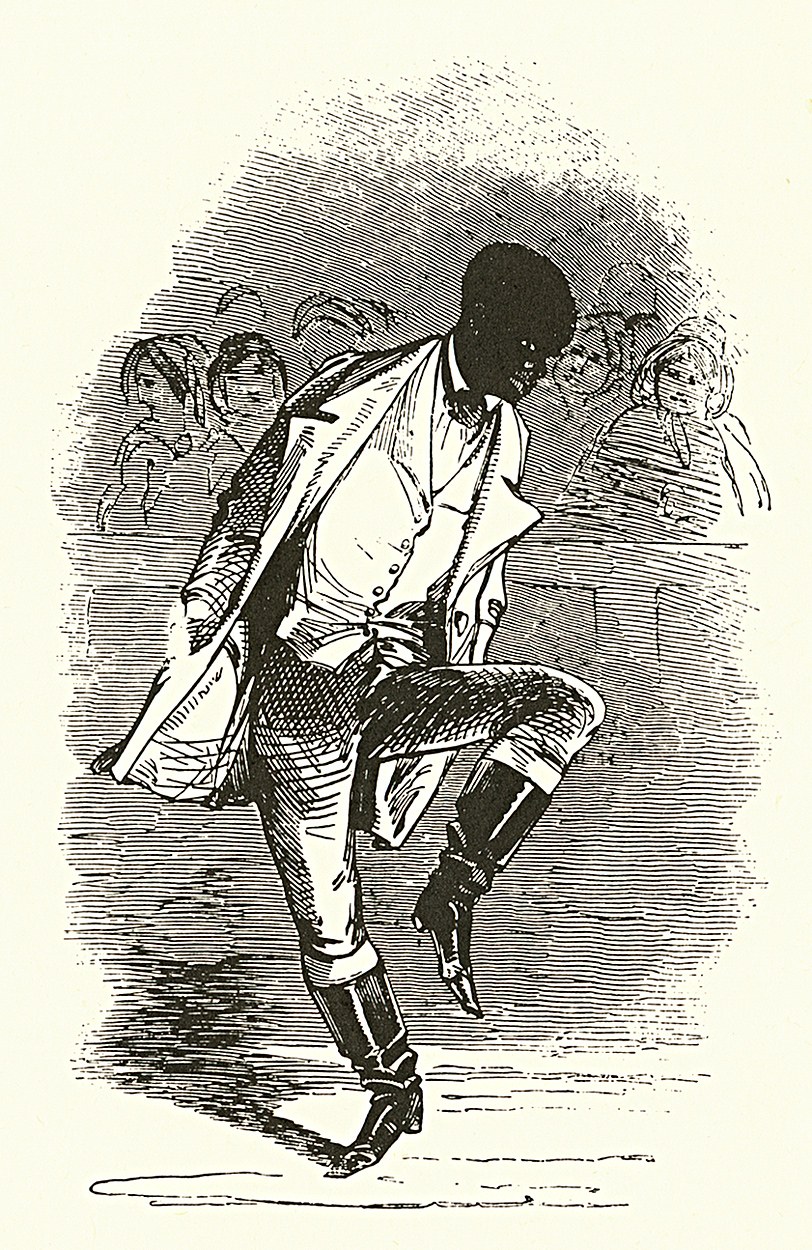
Master Juba
Hans Nathan · 1848
Public Domain
Continue Exploring
Lineage of Dance
500 years of dance evolution
Champions of Dance
Winners of marquee national & world titles
Language of Dance
161 dance terms & translations
Listening of Dance
Tempo, timing & musicality tools
Gallery of Dance
5,700+ artworks from museum collections
Attire of Dance
Evolution of dance dress across eras
Keep the thread going
Dance history, technique, and the occasional rabbit hole — in your inbox. Thoughtful, infrequent, unsubscribe anytime.
Free. No spam. One click to leave.