Adaptive Ballet
Also known as: Adaptive Dance, Inclusive Ballet, Ballet for All Kids, Accessible Ballet
History & Cultural Context
Adaptive ballet teaches classical ballet vocabulary, including the positions, port de bras, plie, tendu and reverence, to disabled and neurodivergent students by altering pedagogy rather than diluting content. Boston Ballet School founded its Adaptive Dance programme in 2002, describing it as the first of its kind in the world; it began with children with Down syndrome and now serves students with a wide range of disabilities from age two through adulthood, with a physical or occupational therapist present in each class and Maria Fux method material used with adult students. In Los Angeles, Bonnie Schlachte, who holds degrees in both psychology and dance, developed the Schlachte Method over roughly twenty-five years and teaches it through Ballet for All Kids. It addresses visual, auditory, vestibular and emotional learning channels using colour-coded floor spaces, visual schedules, mirrors, specially composed classical music and deliberately low-sensory studio environments. Both approaches retain the traditional class architecture of barre, centre, travelling work and reverence, and both culminate in performance, on the premise that disabled students deserve the same repertory, discipline and stage as anyone else.
Cultural Significance
Adaptive ballet emerged from ballet schools rather than clinics, and reflects a shift in which major companies treat access as part of their core educational mission rather than as outreach at the margins.
Characteristic Movement & Technique
Standard ballet vocabulary delivered with extended preparation, repetition, visual and tactile cueing and physical support. Positions are approximated to each student's range rather than corrected toward a single ideal line.
Partnering Dynamics
Classes commonly pair each student with a trained volunteer or aide who dances alongside rather than manipulates. Group formations, circles and hand-holding phrases build ensemble awareness and shared timing.
Competitive Context
Non-competitive. Progress is marked by class progression and end-of-year performances rather than examinations or medals, though some students go on to graded syllabus work in mainstream classes.
Regional Variations
Programmes are typically hosted by professional companies and independent studios. Teacher training offered by Boston Ballet and by Ballet For All Kids has carried both models well beyond their home cities.
Common Misconceptions
Adaptive ballet is not simplified movement play. It is ballet, taught with different scaffolding, and it is not a therapeutic intervention delivered by clinicians even where a therapist is present in the room.
Peak Popularity
Signature Figures
- Bonnie Schlachte
- Maria Fux
Notable Codifiers
- Boston Ballet School Adaptive Dance
- Ballet For All Kids (Schlachte Method)
Dance Lineage
Adaptive Ballet Music & Tempo
Drawn from 20 Adaptive Ballet tracks in the LODance music library.
Example tracks at practice tempo
- Pirouettes 2 - 8 130 4/4 — Giuliano Sacchetto-Giordano Trivellato & Ballet Dance Company130 BPM
- Ronds de Jambe Ballet 6 130 4/4 — Giuliano Sacchetto-Giordano Trivellato & Ballet Dance Company130 BPM
- Battements Fondus - Ale ballet 1 100 — Giuliano Sacchetto-Giordano Trivellato & Ballet Dance Company100 BPM
- Grands Battements 2 - Ballet 9 100 4/4 — Giuliano Sacchetto-Giordano Trivellato & Ballet Dance Company100 BPM
- First Dance - Grand Plies - Ballet 3 100 3/4 — Giuliano Sacchetto-Giordano Trivellato & Ballet Dance Company100 BPM
- Ronds de Jambe - Ballet 2 100 3/4 — Giuliano Sacchetto-Giordano Trivellato & Ballet Dance Company100 BPM
Adaptive Ballet on screen
Films and television where Adaptive Ballet appears, with the sequences worth watching for.
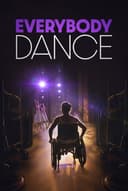
Poster artwork from TMDB.
 This site uses TMDB and the TMDB APIs but is not endorsed, certified, or otherwise approved by TMDB.
Sources & Further Reading
Cultural & Historical Context
Adaptive Ballet emerged from United States (Boston, Massachusetts and Los Angeles, California) during 2002—present day. Understanding the cultural roots, musical traditions, and social circumstances of this era enriches appreciation for the dance's characteristics and significance.
Formative Influences
Codifiers & Standardizers:
Boston Ballet School Adaptive Dance, Ballet For All Kids (Schlachte Method)
Signature Movement Vocabulary:
Bonnie Schlachte, Maria Fux
Primary Source Documents
The Library of Dance contains public-domain primary sources for dance history. Copyrighted modern syllabi are indexed with purchase links to their respective copyright owners. Search by dance name or codifier to discover primary source documents.
Last reviewed: September 2026 — This dance profile synthesizes historical research, cultural documentation, and contemporary practice knowledge to provide authoritative context.
More in Para DanceSport
Combi Style Wheelchair Dance
Para DanceSport's flagship format—one wheelchair-using athlete partnered with a standing dancer—competed across the full Standard and Latin ballroom programs.
Duo Wheelchair Dance
A Para DanceSport format in which two wheelchair-using athletes dance together as a couple across the Standard and Latin programs.
Single Wheelchair Dance
A solo Para DanceSport format in which a single wheelchair-using athlete performs Standard or Latin dances alone, judged on technique, musicality, and expression.
Integrated Dance (Mixed-Ability Dance)
A choreographic practice in which disabled and non-disabled artists create and perform together as equal collaborators, rather than dance adapted for disabled participants.
Dance for Parkinson's
A class format for people with Parkinson's disease taught by professional dancers in a studio, using ballet, modern and social dance vocabulary rather than clinical exercise.
Deaf Dance & Sign-Song
Dance created and performed by Deaf artists, often using sign language as choreographic material, with rhythm carried by vibration, visual cueing and trained internal counting.
Seated & Chair-Based Dance
A dance class format performed entirely from a chair, designed for people whose balance, stamina or mobility makes standing dance impractical or unsafe.
Continue Exploring
Lineage of Dance
500 years of dance evolution
Champions of Dance
Winners of marquee national & world titles
Language of Dance
161 dance terms & translations
Listening of Dance
Tempo, timing & musicality tools
Gallery of Dance
5,700+ artworks from museum collections
Attire of Dance
Evolution of dance dress across eras
Keep the thread going
Dance history, technique, and the occasional rabbit hole — in your inbox. Thoughtful, infrequent, unsubscribe anytime.
Free. No spam. One click to leave.