Pre-Ballet & Creative Movement
Also known as: Creative Movement, Creative Dance, Pre-Primary Ballet, Baby Ballet, Movement and Music
History & Cultural Context
Pre-ballet and creative movement is the introductory dance class for roughly ages two to six, sitting ahead of formal syllabus training. Its pedagogy descends from two European sources. Emile Jaques-Dalcroze's eurhythmics, developed and disseminated in the early twentieth century, taught music through rhythmic bodily movement and established the principle that children internalise metre by moving it, using concentration and imaginative play to build mental and physical equilibrium. Rudolf Laban's movement analysis, set out for schools in Modern Educational Dance in 1948, supplied the vocabulary of effort, space, weight and time along with the Basic Movement Themes on which creative dance lessons are still structured. In the United States, Margaret H'Doubler founded the first university dance teacher training programme at Wisconsin in the late 1920s and framed dance as both science and creative art; Gladys Andrews in the 1950s and later Anne Green Gilbert and Susan Stinson extended child-centred creative dance through the rest of the century. A typical class alternates structured material with imagery-driven exploration, improvisation and props, building musicality, spatial awareness and body vocabulary before technical correction begins.
Cultural Significance
Creative movement carries a progressive-education inheritance in which dance serves whole-child development, which sits in productive tension with ballet schools that treat the same class primarily as a readiness and recruitment stage.
Characteristic Movement & Technique
Locomotor basics including walking, running, skipping, galloping and leaping, combined with shape-making, level and pathway exploration, simple ballet positions, port de bras and imagery-led improvisation.
Partnering Dynamics
No partnering in the technical sense. Children work solo, in circles, and in mirroring or follow-the-leader pairs, holding hands for group formations and learning to share space and timing.
Competitive Context
Non-competitive and typically non-examined. Most programmes precede graded syllabus examinations, though some ballet examination bodies offer an introductory pre-primary level at the top of this age range.
Regional Variations
British and Commonwealth schools tend to feed directly into graded ballet syllabi, while American and Northern European provision leans more heavily on Laban-derived creative dance as a discipline valuable in its own right.
Common Misconceptions
Pre-ballet is frequently treated as babysitting in tutus. It is structured foundation work in musicality, spatial literacy and motor sequencing, and creative movement is a distinct pedagogy rather than unstructured free play.
Peak Popularity
Signature Figures
- Emile Jaques-Dalcroze
- Rudolf Laban
- Margaret H'Doubler
- Gladys Andrews
- Anne Green Gilbert
- Susan Stinson
- Isadora Duncan
Notable Codifiers
- Dalcroze Eurhythmics
- Laban Movement Analysis
Dance Lineage
Pre-Ballet & Creative Movement Music & Tempo
Drawn from 23 Pre-Ballet & Creative Movement tracks in the LODance music library.
Example tracks at practice tempo
- Walks 16x8 2t (Chopping Wood in the Forest!) — Nolwenn Collet99 BPM
- Feet: Pointe and Flex 8x8 2t (Tango for My Toes!) — Nolwenn Collet91 BPM
- Stretching 4x8 3t (My Cat Likes Stretching!) — Nolwenn Collet
- Retires in Parallel 4x8 2t (Kittens on the Roof) — Nolwenn Collet
- Creative Dance: Mime! 8x8 2t (I Lost Rodolph My Dog!!) — Nolwenn Collet
- Plies 4x8 + 2x8 (My Clown Plays the Accordion) — Nolwenn Collet
Pre-Ballet & Creative Movement on screen
Films and television where Pre-Ballet & Creative Movement appears, with the sequences worth watching for.
 Billy Elliot (2000)10 sequences indexedTurn-and-stop class · 00:15:51 · chor. Peter Darling; Lynne Page (associate)Billy joins his first ballet class · 00:11:28 · chor. Peter Darling; Lynne Page (associate)Arabesque and pirouette spotting practice · 00:20:36 · chor. Peter Darling; Lynne Page (associate)
 Feel the Beat (2020)1 sequence indexedNew Hope team first rehearsal · chor. Mia Michaels
 Step Up (2006)1 sequence indexedNora teaches the children's ballet class · 00:44:23 · chor. Anne Fletcher
Poster artwork from TMDB.
 This site uses TMDB and the TMDB APIs but is not endorsed, certified, or otherwise approved by TMDB.
Sources & Further Reading
Cultural & Historical Context
Pre-Ballet & Creative Movement emerged from Europe and the United States (Switzerland, Germany, United Kingdom, Wisconsin) during the 1920s—present day. Understanding the cultural roots, musical traditions, and social circumstances of this era enriches appreciation for the dance's characteristics and significance.
Formative Influences
Codifiers & Standardizers:
Dalcroze Eurhythmics, Laban Movement Analysis
Signature Movement Vocabulary:
Emile Jaques-Dalcroze, Rudolf Laban, Margaret H'Doubler, Gladys Andrews, Anne Green Gilbert, Susan Stinson, Isadora Duncan
Primary Source Documents
The Library of Dance contains public-domain primary sources for dance history. Copyrighted modern syllabi are indexed with purchase links to their respective copyright owners. Search by dance name or codifier to discover primary source documents.
Last reviewed: September 2026 — This dance profile synthesizes historical research, cultural documentation, and contemporary practice knowledge to provide authoritative context.
More in Ballet
Ballet de Cour (Court Ballet)
The aristocratic court spectacle from which ballet grew, danced by nobles (including Louis XIV) and codified into the five positions and turnout under Beauchamp at the Académie Royale de Danse (1661).
Romantic Ballet
The early-19th-century era that introduced pointe work, the ethereal 'white ballet,' and the ballerina as central figure, exemplified by La Sylphide (1832) and Giselle (1841).
Classical Ballet
The full-evening story-ballet style perfected by Marius Petipa in Imperial Russia—Swan Lake, The Sleeping Beauty, The Nutcracker—that defines the core ballet repertory and codified virtuoso classical technique.
Neoclassical Ballet
The 20th-century style—pioneered by George Balanchine with Apollo (1928)—that retained classical technique while stripping narrative and scenery for speed, line, extension, and pure response to music.
Contemporary Ballet
The late-20th-century-onward fusion of classical ballet technique with modern and contemporary dance, associated with choreographers such as William Forsythe and Jiří Kylián.
Vaganova Method
A pedagogical system for training classical ballet dancers, not a choreographic style or a period repertoire. Agrippina Vaganova built it by analysing what the French, Italian and older Russian teachers of the Imperial school had each done well, and fixing the result as a progressive year-by-year course. It is the training behind the Kirov and Bolshoi companies and, in diluted or borrowed form, behind a large share of ballet teaching worldwide.
Cecchetti Method
A training method rather than a style of choreography, built on a fixed weekly cycle of set exercises so that the whole vocabulary is covered every six days and no muscle group is overworked. Enrico Cecchetti taught it to a generation that included Pavlova, Nijinsky and Karsavina; it was written down by his London pupils and admirers in the 1920s. Its concern is anatomical economy: strength built without strain, and the same effort available on the sixth day as on the first.
Royal Academy of Dance (RAD) Method
A graded teaching and examination syllabus rather than a technical school descended from one master, assembled in 1920 by teachers of five different national traditions who wanted a common standard for ballet teaching in Britain. Its structure is a ladder of examined levels, each with set exercises, taken by children and by vocational students. It is now the most widely examined ballet syllabus in the world.
Balanchine Method
A way of training dancers for a specific body of choreography, developed by George Balanchine at the School of American Ballet from 1934 and refined over five decades to serve New York City Ballet. It prizes speed, clarity at high tempo, extreme range of movement and a willingness to go off the vertical and recover. Unlike the older European schools it was never written into a syllabus by its founder, and is transmitted by teachers who danced for him.
Bournonville Method
The training developed by August Bournonville for the Royal Danish Ballet, built to serve his own ballets and preserved in Copenhagen long after the French style it descends from had disappeared in Paris. It trains a jump that appears to cost nothing, intricate beaten footwork, and an upper body that stays modest while the legs do difficult things. It is the closest surviving link to early nineteenth-century French classroom practice.
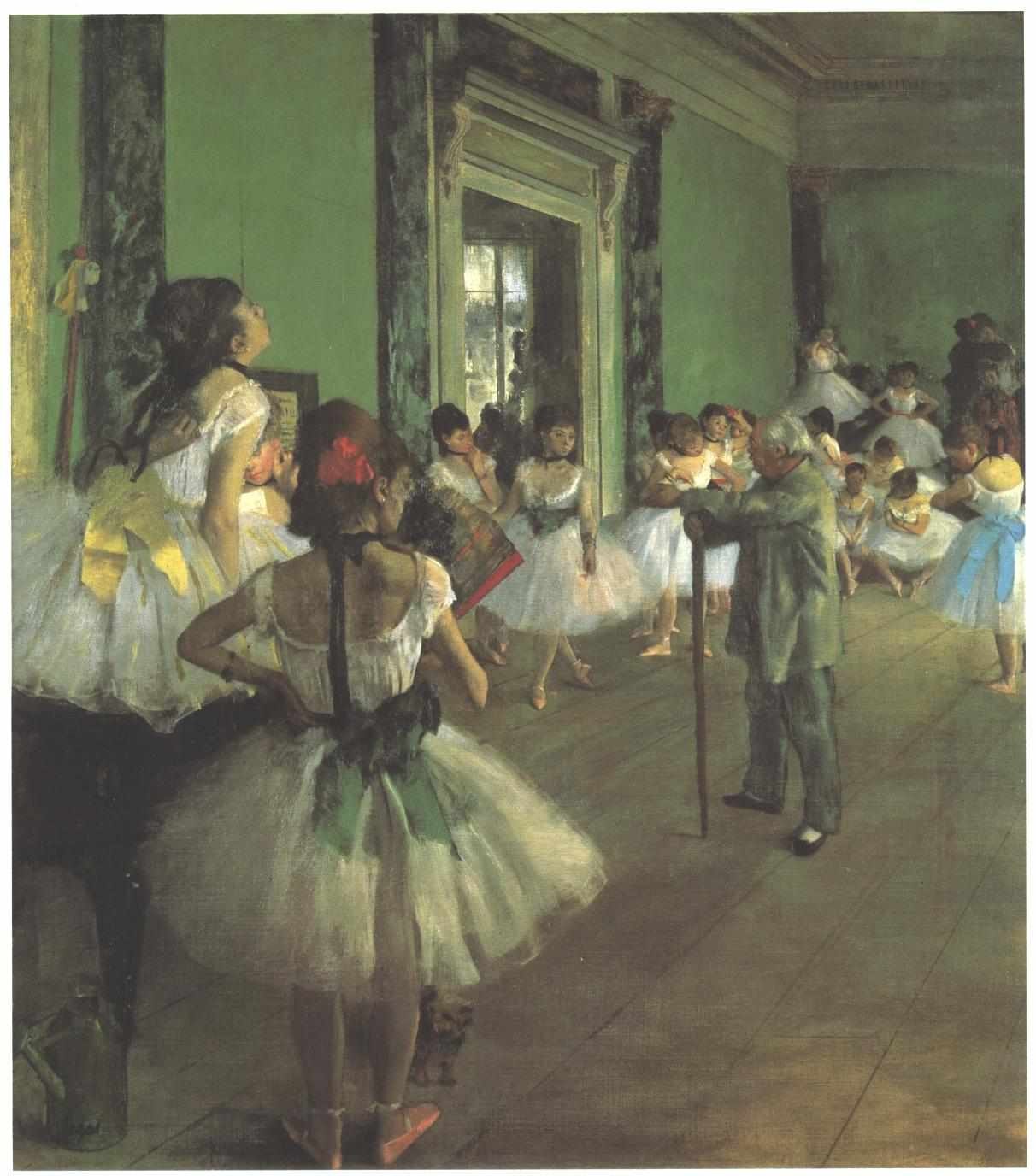
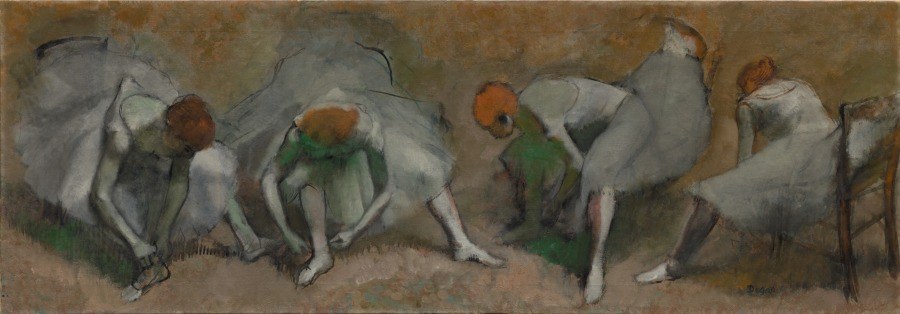
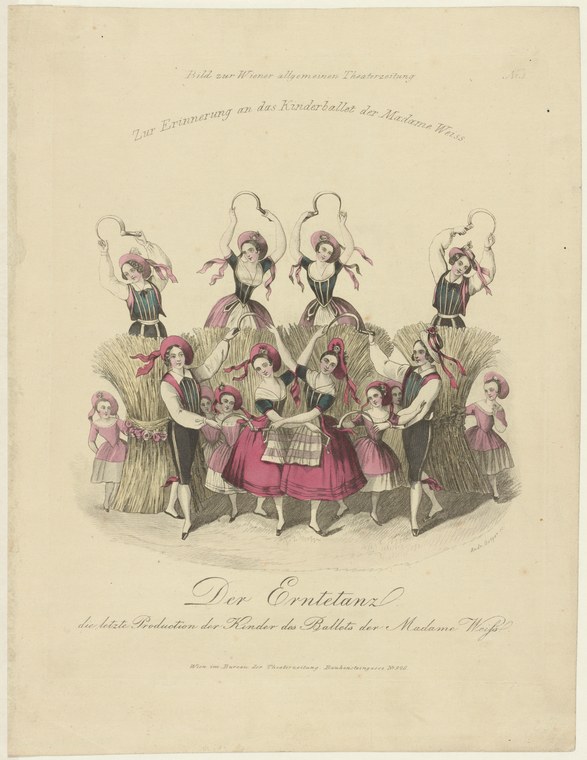
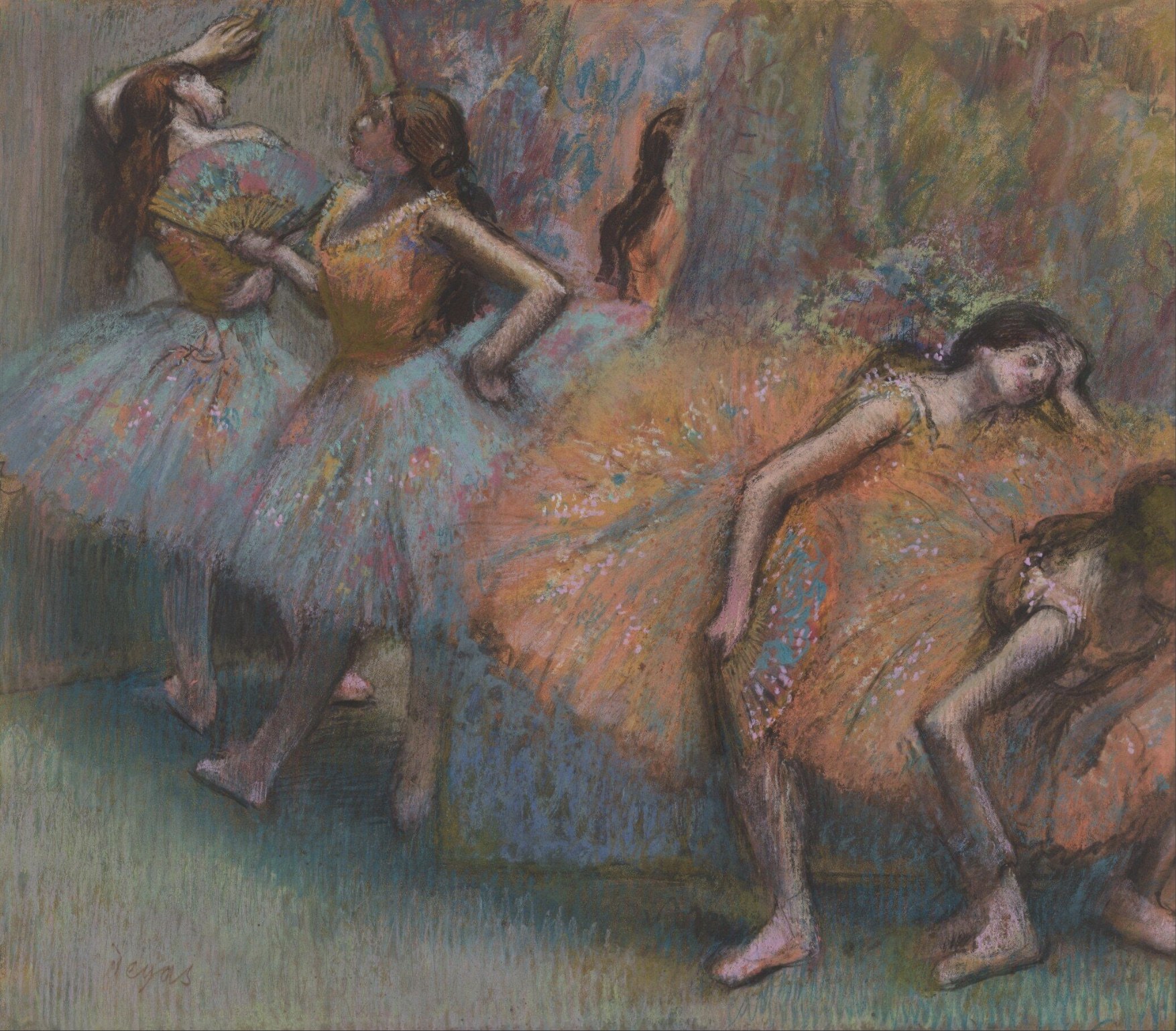
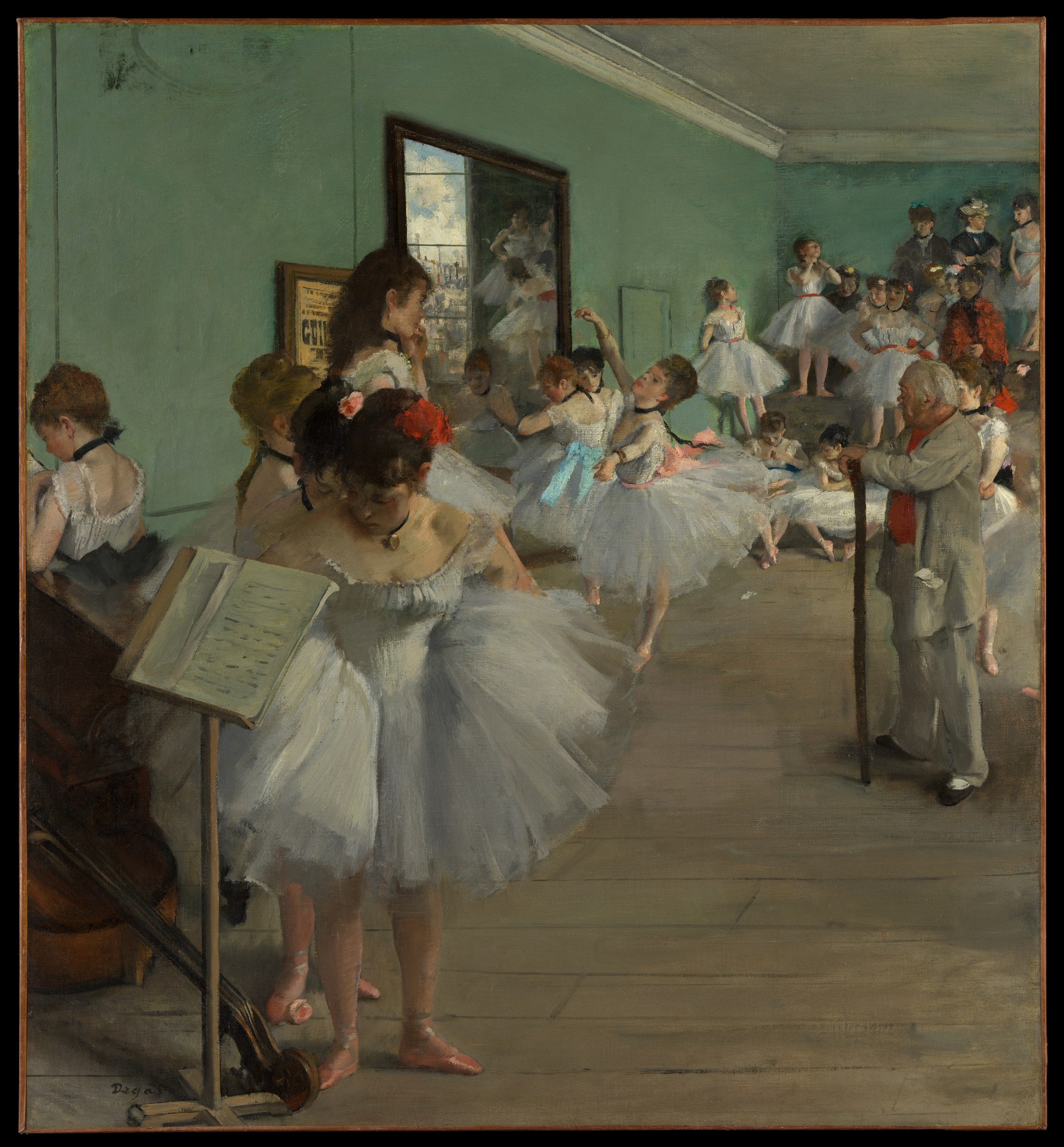
Pre-Ballet & Creative Movement in art
Browse the gallery →Works our catalogue identifies as depicting pre-ballet & creative movement.
Continue Exploring
Lineage of Dance
500 years of dance evolution
Champions of Dance
Winners of marquee national & world titles
Language of Dance
161 dance terms & translations
Listening of Dance
Tempo, timing & musicality tools
Gallery of Dance
5,700+ artworks from museum collections
Attire of Dance
Evolution of dance dress across eras
Keep the thread going
Dance history, technique, and the occasional rabbit hole — in your inbox. Thoughtful, infrequent, unsubscribe anytime.
Free. No spam. One click to leave.