Exotic Floorwork
Also known as: Floorwork, Sensual Floorwork, Exotic Floor Flow, Floor Flow
- Origin
- United States and Canada
- Era
- 1990–Present
- Rhythm
- 4/4, phrased in long sustained lines across two- and four-bar units rather than on individual beats, with accents landing on arrivals and level changes
- Tempo
- 60-90 BPM
- Character
- Slow, weighted and continuous; controlled sensuality that prizes seamlessness over impact.
History & Cultural Context
Exotic floorwork is the ground-level movement vocabulary of exotic dance: everything performed on knees, hips, back and forearms rather than upright. It covers crawls, knee slides and pivots, body rolls and waves, shoulder and hip rolls, leg extensions, transitions between kneeling and lying, and controlled recoveries back to standing. Practitioners generally work in high heels, often with knee pads, and the defining skill is silent, unhurried weight transfer - landing and rising without visible effort or audible impact. Its lineage runs through American and Canadian club dance rather than through concert dance, and it is genuinely less documented than the other styles in this family. Pole dance's own history places the athletic turn in the 1980s, first in Canada and then the United States, and the shift from club floors to formal instruction in the 1990s, when Fawnia Mondey began teaching in Las Vegas and became widely credited as the first pole dance instructor. Sheila Kelley's studio programme, developed after she trained for the film Dancing at the Blue Iguana, brought the vocabulary to a general fitness audience. Floorwork separated out as its own module as pole studios professionalised after 2003, and it is now routinely taught to students who never touch an apparatus, including within heels and chair classes.
Cultural Significance
The vocabulary comes from strip-club labour, and that origin remains stigmatised even as the movement is taught in mainstream fitness and dance studios. Teachers from within the community consistently argue that studios adopting floorwork should credit the strippers who developed it rather than rebranding it as generic "sensual movement".
Characteristic Movement & Technique
Movement travels through the knees, hips, shoulders and spine, using sequential body waves and rolls to change level without pushing off the hands. Knee slides, pivots and reverse crawls carry the dancer across the floor, and the technical marker is a soundless, decelerated landing rather than a dropped one.
Partnering Dynamics
Exotic floorwork is a solo idiom with no lead-follow relationship; the floor itself is the surface the dancer works against. Duo and group choreography exists in showcases, but it is built on unison and mirroring rather than on contact technique.
Competitive Context
Floorwork is scored as a component within exotic pole competitions rather than as a standalone sport, and it has no independent governing body. That is a deliberate distinction from pole sport, which was formalised competitively through the International Pole Sports Federation, founded in 2009.
Regional Variations
North American floorwork stays close to its club-derived form, direct and grounded. Studios in Russia and Eastern Europe developed a more balletic, extension-heavy interpretation that has since been widely exported, and it is that version most often seen in international exotic showcases.
Common Misconceptions
Floorwork is not a beginner's substitute for pole work or a warm-up for it; it is a distinct discipline with its own conditioning demands, particularly on the knees, wrists and shoulders. Nor is it improvised - the slow, continuous quality that reads as effortless is the product of specific deceleration and weight-transfer technique.
Signature Figures
- Fawnia Mondey
- Sheila Kelley
Notable Codifiers
- Fawnia Mondey
- Sheila Kelley
Dance Lineage
Exotic Floorwork Music & Tempo
Drawn from 20 Exotic Floorwork tracks in the LODance music library.
Example tracks at practice tempo
- Mistaken — Marian Hill
- Bewitching Pool — Spells and Curses
- Consideration — Rihanna feat. SZA
- Slow — Amanati & Roniit
- Pythia — Amanati
- Waves — Woodju
Exotic Floorwork on screen
Films and television where Exotic Floorwork appears, with the sequences worth watching for.
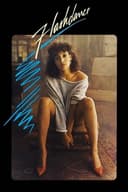
Poster artwork from TMDB.
 This site uses TMDB and the TMDB APIs but is not endorsed, certified, or otherwise approved by TMDB.
What to Wear
Attire guidance for Exotic Floorwork and other Heels & Sensual Performance dances. Each card below is sized to the moment — class, practice, social, or competition — because the wardrobe shifts as the stakes do.
Reading the cards
In Class
The shoe is the technical requirement and everything else is preference. Bring a heel with a secured ankle strap and a stable base — a block heel or a thick stiletto around 2.5 to 4 inches — not a fashion pump that slips off in a body roll; an indoor-only pair keeps the floor clean and your grip predictable. Wear something fitted so you and the teacher can see the shape your body is making, and cover your knees with long leggings or knee pads, because these classes live on the floor. If you are new, a chunky boot or even sneakers for the first class is completely normal while your ankles adapt.
Social Dancing
There is no social floor for heels dance — it is a studio and performance form — but the vocabulary travels straight to a club or party, where you wear whatever you'd wear out and the only real consideration is shoes you can actually stand in all night. In the studio, the closest thing to a social occasion is the end-of-course showcase or open class filming. Test any outfit at home first: a lot of what looks good standing still doesn't survive a floor roll or a hair flip.
Competition
Heels has no competitive circuit or costume rulebook; the equivalent is the class video shoot, the studio showcase and the choreographer's reel. Choose an outfit for how it reads on camera — clean lines, contrast against the studio wall, nothing that hides the hip and leg work — and secure anything that can shift. Practical performance rules still apply: straps double-knotted or taped, no loose jewellery, and a backup pair of shoes in the bag.
Shoes
A secured ankle strap is the one non-negotiable — a slip-on pump comes off in a body roll and takes an ankle with it. Start with a block heel or a thick stiletto around 2.5–4", with a platform if you want height without the steep pitch through the forefoot. Some dancers keep a suede-soled pair for smooth studio floors so turns release cleanly instead of catching. Indoor-only, broken in at home before class; Burju, Hella Heels and Pleaser are the common names, and a chunky boot or even sneakers is a completely normal first class.
In Practice
Practice wear is more fitted than class wear for a specific reason: this style is built on the shapes your body makes, and you cannot correct a line you cannot see. Leggings or bike shorts with a fitted top, hair in something that survives a hair flip, and knee pads under the leggings because floorwork is constant. Film yourself — mirror work and camera work show completely different things, and the camera is what most of this style is ultimately made for.
Common Pitfalls
- ✗Buying a heel with no ankle strap — it is the most common injury cause in these classes.
- ✗Bare knees on a hard studio floor; you will bruise in the first hour and stop committing to the floorwork.
- ✗Starting at 5" or higher before the ankles are conditioned.
- ✗Wearing an outfit for the first time in class or on a shoot without testing it through a floor roll at home.
- ✗Wearing your heels in on the street and then onto a studio floor — grit on the sole ruins both grip and the marley.
Price Range
- Budget: A chunky-heeled boot or strapped heel you already own, plus $15–30 knee pads. Genuinely enough for the first month.
- Mid: Pleaser or entry Burju dance heels roughly $60–120, slim sleeve-style knee pads $25–40, gel forefoot cushions and blister tape under $20.
- Premium: Hella Heels or custom-fit dance heels at roughly $150–280, a second suede-soled pair for studio floors, and outfits bought for how they read on camera rather than in the mirror.
Key Terms
- Ankle strap
- The strap that keeps the shoe on your foot through floorwork and turns. The single most important feature in a dance heel, ahead of height or brand.
- Block heel
- Wide, stable heel that spreads load and is far more forgiving for beginners than a thin stiletto.
- Platform
- Raised sole under the toe that reduces the angle of the foot — a 5" heel on a 2" platform feels like a 3" heel.
- Floorwork
- Choreography performed on the ground — the reason knee coverage or pads are standard rather than optional.
- Ladies' styling
- Solo styling vocabulary drawn from partnered Latin and club dance, taught in heels classes; danced alone here, but it comes from a partnered context.
Quick Tips
- •Suede-soled shoes allow controlled sliding and pivoting — essential for most partner dances.
- •Avoid rubber soles on dance floors; they grip too much and can cause knee injuries.
- •Bring a separate pair of clean shoes for the dance floor to keep it in good condition.
Recommended Gear for Exotic Floorwork
Essential equipment and apparel selected for dancers learning Exotic Floorwork.


As an Amazon Associate, LODance earns from qualifying purchases. Affiliate disclosure
Sources & Further Reading
Cultural & Historical Context
Exotic Floorwork emerged from United States and Canada during the 1990s—present day. Understanding the cultural roots, musical traditions, and social circumstances of this era enriches appreciation for the dance's characteristics and significance.
Formative Influences
Codifiers & Standardizers:
Fawnia Mondey, Sheila Kelley
Signature Movement Vocabulary:
Fawnia Mondey, Sheila Kelley
Primary Source Documents
The Library of Dance contains public-domain primary sources for dance history. Copyrighted modern syllabi are indexed with purchase links to their respective copyright owners. Search by dance name or codifier to discover primary source documents.
Last reviewed: September 2026 — This dance profile synthesizes historical research, cultural documentation, and contemporary practice knowledge to provide authoritative context.
More in Heels & Sensual Performance
Heels (Stiletto Dance)
Commercial choreography performed in high-heeled shoes, descended from jazz-funk and hip-hop, formalised as a weekly studio class by Shirlene Quigley at Millennium Dance Complex around 2008.
Chair Dance
A sensual or cabaret routine built around a chair as a fixed prop, using its seat, back and legs as architecture for poses, level changes and transitions.
Twerk
A Black New Orleans social dance from the early-1990s bounce scene, driven by rapid pelvic and gluteal isolation over a braced lower body and a stable spine.
Ladies' Styling (Lady Style)
The solo styling layer taught within salsa, bachata and Latin ballroom: arm lines, hip motion, spins, head and hair movement layered over the follower's basic footwork.
Continue Exploring
Lineage of Dance
500 years of dance evolution
Champions of Dance
Winners of marquee national & world titles
Language of Dance
161 dance terms & translations
Listening of Dance
Tempo, timing & musicality tools
Gallery of Dance
5,700+ artworks from museum collections
Attire of Dance
Evolution of dance dress across eras
Keep the thread going
Dance history, technique, and the occasional rabbit hole — in your inbox. Thoughtful, infrequent, unsubscribe anytime.
Free. No spam. One click to leave.