49 works in this view — arrow keys or swipe to move between them.
Dance in Art
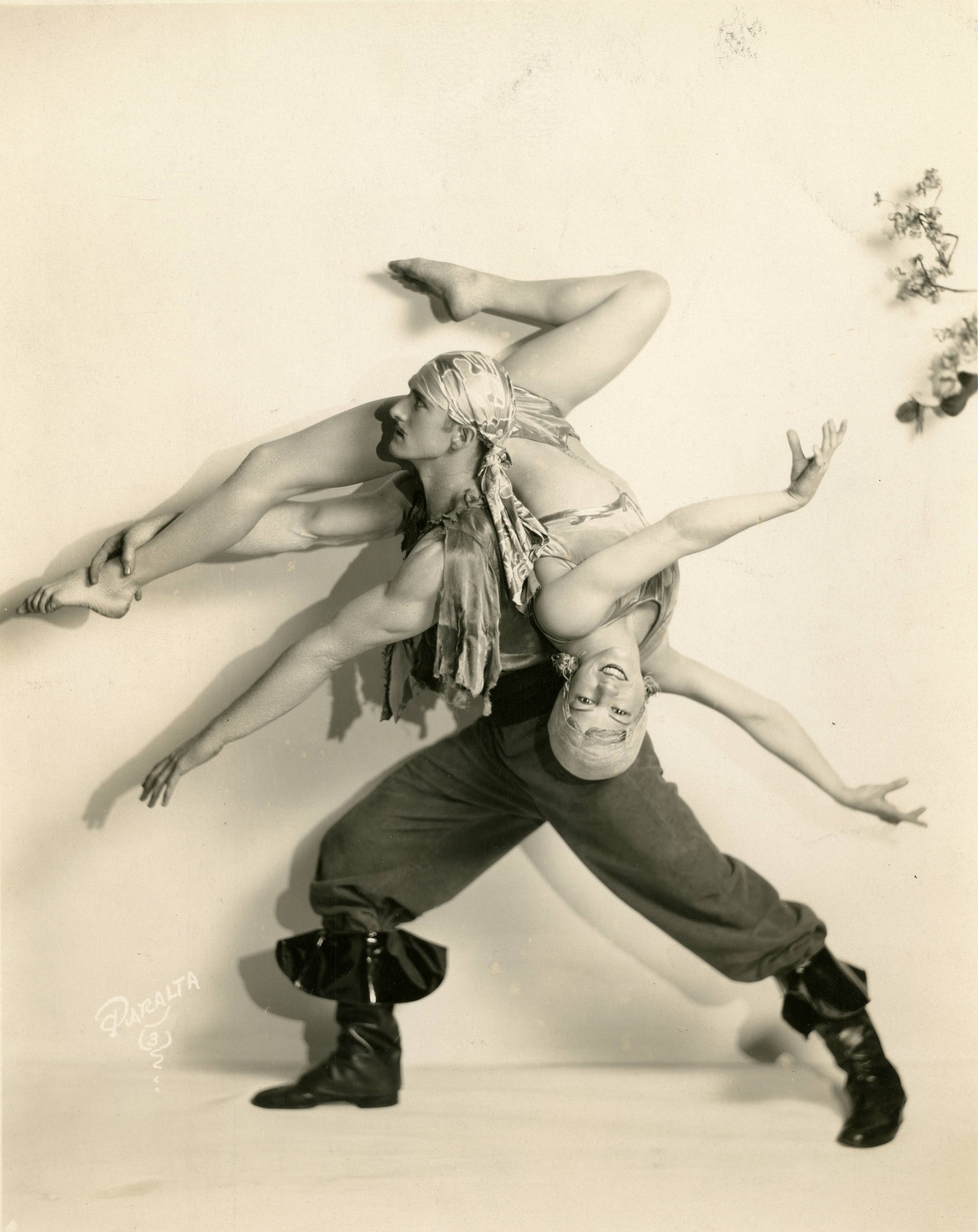
Emile and Romaine, acrobatic dance team
Paralta
- Source:
- Wikimedia Commons
- Rights:
- Public domain — free to use, share and adapt.
- Recorded as:
- public_domain
Acrobatic and adagio dancing were significant components of vaudeville and revue entertainment in the 1920s–30s, yet remain less documented in dance history than ballet or ballroom forms. This photograph provides rare visual evidence of how partner acrobatics were performed and presented to audiences, and it shows the integration of comedy into what might otherwise be seen as purely technical display. For historians of American entertainment and variety performance, this is a primary document of a now-vanished performance tradition.
What you are looking at
A black-and-white photograph captures two acrobatic dancers in a dynamic, inverted composition against a plain studio backdrop. The figure in the foreground, wearing dark trousers and black boots with ruffled cuffs, is photographed upside-down with legs extended upward and arms spread wide, face contorted in an exaggerated comic expression. Above and interlocked with this figure is a second dancer in light-colored clothing with a patterned headscarf or turban, their body arched and twisted to create a striking interlocking silhouette. The photograph is taken from directly above, flattening the composition against the white ground so the two bodies appear as a single, impossible sculptural form. Dried flowers or botanical elements are visible at the upper right edge, suggesting a staged studio setting. The image is signed "Paralta" in the lower left corner.
The dancing
Both dancers are suspended in a state of apparent weightlessness, their bodies locked in a tight, symmetrical intertwining. The lower figure's weight is carried on the shoulders and upper back while legs point skyward; the upper figure's torso is deeply arched backward with limbs engaged to maintain the locked position. The extreme inversion and the precise, mirror-like geometry of the pose suggest practiced technique in partner acrobatics. The comic facial expression of the lower dancer indicates this is performance rather than purely athletic display—showmanship is part of the vocabulary.
The dance depicted
This is acrobatic dance, specifically partner acrobatics (adagio style), a form that emphasizes balance, counter-balance, and trust between two performers. The locked, inverted position with interlocking bodies is characteristic of adagio technique, where one partner becomes an instrument for the other's movement. The catalogue identifies these performers as Emile and Romaine of the 'Jazz Buccaneers' Idea produced by Fanchon and Marco, prominent vaudeville impresarios. The photograph documents a moment of theatrical acrobatics designed for stage entertainment, likely part of a variety or revue show where such feats were featured as novelty acts.
How it was made
This is a gelatin silver print, a standard medium for theatrical publicity photography of the 1920s–30s era. The photograph is crisp and well-lit, typical of studio work made for promotion and documentation. The signature and composition suggest this was an official publicity still made to advertise the performers and act. The photograph's distribution via Wikimedia Commons indicates it entered a public archive, likely from a theatrical collection or press archive, which was typical for vaudeville promotional materials of this period.
About this work
Emile and Romaine, an acrobatic dance team, are captured in this 1929 publicity photograph performing an inverted locked position characteristic of partner acrobatics. The image documents a moment from their work in variety entertainment, specifically in Fanchon and Marco's production 'Jazz Buccaneers' Idea, which combined comedy, music, and acrobatic spectacle. This photograph is a record of early 20th-century theatrical acrobatics as it existed in American vaudeville and revue shows—a form of dance rooted in circus skill but adapted for the stage, blending athletic prowess with entertainment value. The exaggerated facial expression and comic framing show that acrobatic dance was as much about personality and humor as it was about technical achievement.
How to look at it
Observe the photographer's choice to shoot from directly above, which transforms the two bodies into a unified abstract pattern rather than a traditional portrait. This flattening effect emphasizes the geometric perfection and symmetry of the locked position. Note also the contrast between the technical precision of the pose and the exaggerated, comedic facial expression—acrobatic performance was not about beauty alone but about the shock of the impossible combined with entertainment. The studio setting with its plain backdrop and decorative botanical elements signals this is a staged documentation, not a candid moment.
The artist
Paralta was a theatrical photographer active in the 1920s–30s, specializing in publicity photographs for vaudeville performers and variety entertainers. The signature style and the professional quality of the lighting and composition indicate a photographer working at the center of theatrical entertainment, producing images for promotion and archival purposes. Such photographers were crucial to the vaudeville ecosystem, creating the visual record that circulated in programs, lobby displays, and press releases.
The period
In the 1920s, American vaudeville and revue shows were at their commercial peak. Fanchon and Marco were major impresarios producing large-scale variety spectacles that combined comedy, music, dance, and acrobatic novelty acts. Acrobatic and adagio dancing had roots in circus performance but were increasingly incorporated into theatrical entertainment. This was also the era when jazz influences were being marketed in theatrical titles and performance styles—'Jazz Buccaneers' Idea' signals the commodification of jazz imagery even in acts that had no musical connection to jazz itself. Theatrical photography of this period served as a primary marketing tool and a record of ephemeral live performance.
Where it lives
The image is held in Wikimedia Commons and was likely drawn from a public theatrical archive or collection. As a publicity photograph, it would have circulated among theaters, in programs, and in press materials. The signature and professional quality suggest it was an official production photograph rather than a personal keepsake.
Dance in this work
Questions about this work
What is adagio dancing?
Adagio is a style of partner acrobatics emphasizing balance, counter-balance, and trust between two performers. One dancer often serves as a base or instrument for the other's movement, allowing for inverted, suspended, and contorted positions that would be impossible solo. It originated in circus performance but was adapted for theatrical entertainment in vaudeville and revue shows.
Who were Fanchon and Marco?
Fanchon and Marco were prominent American impresarios and producers of theatrical revues and variety shows in the 1920s–30s. They created large-scale spectacles combining comedy, music, dance, and novelty acts, and were among the most successful producers of this era.
Why is the expression so exaggerated?
Acrobatic performance in vaudeville and revue was meant to entertain through a combination of technical skill and comedy. The exaggerated expression emphasizes the showmanship and humor of the act, transforming pure athletic achievement into theatrical spectacle.
What does the title 'Jazz Buccaneers' mean?
The title marketed the show by borrowing the appeal of jazz culture, which was fashionable and controversial in the 1920s. 'Buccaneers' suggested adventure and roguery. However, this does not necessarily indicate the show featured jazz music or dance; it was primarily a branding strategy.
More dance artwork