49 works in this view — arrow keys or swipe to move between them.
Dance in Art
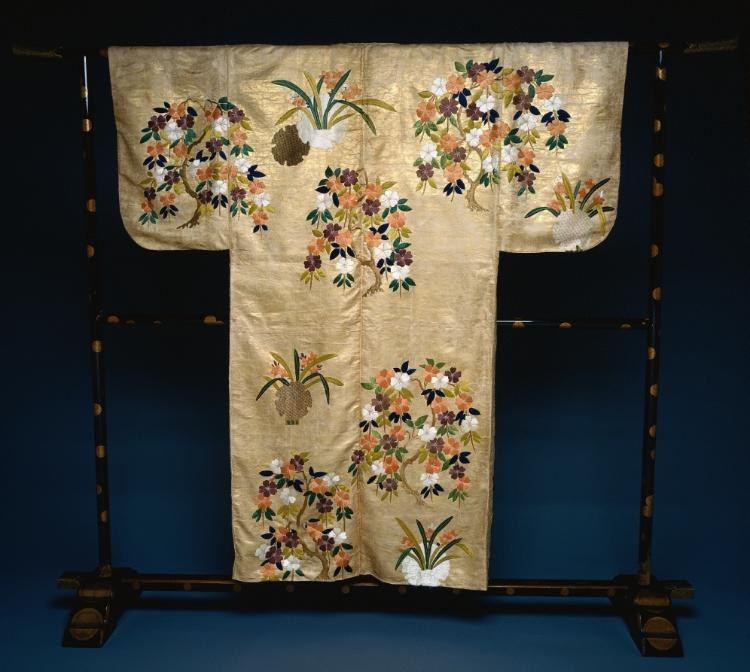
Nō Costume (Nuihaku) with Blossoming Trees and Flowers
Unknown artist
- Medium:
- embroidery, silk and applied gold leaf on silk ground
- Collection:
- Textiles
- Source:
- Cleveland Museum of Art
- Rights:
- Public domain — free to use, share and adapt.
- Recorded as:
- CC0
This object documents the sophisticated visual language of classical Japanese theater at a moment when it was reaching its aesthetic peak, and it shows how costume functioned as a semantic system—colors, flowers, and techniques communicated narrative and character type without any dependence on spoken text. For dancers and performers, it illuminates the relationship between visual design and embodied movement: the weight, drape, and reflectivity of such a garment would have shaped how an actor moved beneath it, making the costume not merely decoration but a collaborative partner in the choreography of performance.
What you are looking at
A formal nō costume displayed flat against a deep blue ground, mounted on a wooden stand. The garment is a nuihaku—a layered robe worn under the principal actor's outer costume in nō theater. The ground fabric is a pale cream silk, probably silk damask, densely embroidered across the chest, sleeves, and front panels with flowering trees and plants rendered in silk thread and applied gold leaf. The design depicts blossoming branches—identifiable as cherry and iris—rendered in autumnal and spring colors: rust, deep purple, pale pink, cream, and pale green. The flowers spill downward in clusters as if caught mid-fall or mid-bloom. The composition is symmetrical across the center front, with major floral motifs anchoring the shoulders and descending toward the hem. Between the flowers, smaller leafy sprigs and scattered blossoms create visual rhythm across the entire surface. The construction shows the T-shaped silhouette of a kosode-type garment: broad rectangular sleeves, a deep neckline, and a body that would fall straight when worn. The embroidered details are raised and three-dimensional; the gold leaf catches light differently from the silk thread, creating surface variation. The garment has no visible decoration at the hips, a detail consistent with early Edo-period fashion.
The dancing
No human figures are depicted. This is costume as object and artifact, displayed to show the complete design and construction rather than in performance context. The absence of a body means we see the garment's full surface design without the concealment that would occur in wear—a scholarly or museum presentation rather than a scene of performance.
The dance depicted
This is a costume object from nō theater, the classical Japanese performance form that emerged in the 14th century and crystallized into its formal ritual mode by the 15th–17th centuries. Nō integrates dance, drama, music, and poetry in highly stylized movement and gesture. The nuihaku is worn as an underrobe by actors in female roles (played by men, as was convention in classical nō). The floral design—particularly cherry and iris—suggests this costume was likely worn in plays depicting spring and autumn, seasons central to nō's symbolic and poetic vocabulary. The choice of embroidery on a gold-touched ground is typical of the highest rank of nō costume, reserved for roles of supernatural beings, high-ranking women, or spiritually charged characters. The design may have been inspired by a classical poem, as noted in the catalogue record, making the garment itself a form of literary quotation—characteristic of nō's sophisticated interweaving of text, image, and movement.
How it was made
This is embroidery on silk, executed in a combination of techniques: satin stitch, couching stitch, and outline stitch in silk thread, with areas of applied gold leaf. The gold leaf is adhered to the silk ground rather than thread-wrapped, which creates a distinctive surface that reflects light and contrasts with matte silk embroidery. This technique—combining silk embroidery with applied metal—required exceptional skill and was expensive; such garments were typically commissioned for wealthy patrons or major temples and shrines where nō was performed. The layering of embroidered decoration on a silk damask ground created a richly textured surface that would catch light in performance, enhancing the visual impact of the actor's movement across the stage. The construction method and material choices mark this as a high-status object made for sustained use in repeated performances.
About this work
This is a nō costume from the Edo period (dated 1675, which would place it in the mid-Edo era), a time when classical nō was consolidating its aesthetic and formal conventions. Nō remains the oldest continuously performed theater form in the world; this costume is evidence of the visual sophistication and technical achievement embedded in that tradition. The garment functioned as both a work of wearable art and a vehicle for performance meaning: its floral imagery would have communicated character type, seasonal context, and emotional tone to an educated audience fluent in classical poetry and Shinto-Buddhist symbolism. As a museum object, it reveals the labor and resources invested in creating dance and theater—the costume itself as a form of artistic practice alongside the movement and music of performance.
How to look at it
Examine the placement and density of the floral elements: the heaviest embroidery falls across the upper chest and shoulders, where it would frame the actor's face and upper body during performance. The downward cascade of flowers suggests a deliberate visual rhythm—the eye follows the blooms downward as an actor might move through stylized nō gestures (te, or hand movements). The contrast between the matte cream ground and the reflective gold leaf would have created an optical shimmer in candlelit performance spaces. Notice also the botanical specificity of the flowers (cherry and iris are distinct, not generic blossoms), a detail that reflects the nō tradition of embedding precise seasonal and poetic references into every element of a production.
The period
Nō theater reached its classical formal maturity during the Muromachi period (1336–1573) under the patronage of the shogunate, and it continued to be refined and performed by hereditary acting families throughout the Edo period (1603–1868). By the 17th century, when this costume was made, nō had become codified into a system of five plays per day, with strict aesthetic principles governing movement, music, costume, and mask. The visual arts of the period—painting, ceramics, textiles—were equally sophisticated; the integration of poetry, painting, and theater reflected a unified courtly aesthetic that valued restraint, seasonal reference, and the beauty of suggestion over explicit statement. Embroidered textiles of this quality were produced for both Buddhist institutions (which sponsored nō performances) and for the wealthy merchant class that had begun to rival the feudal nobility in cultural patronage by the mid-Edo period.
Where it lives
This costume is held in the Textiles collection at the Cleveland Museum of Art (cma). It is catalogued as a nō costume from the Edo period, 1675. The robe has been preserved as a museum artifact and is displayed in a conservation-appropriate manner on a period-style wooden stand.
Dance in this work
Questions about this work
Who would have worn this costume?
A male actor playing a female role in a nō performance—likely a young or beautiful woman, a goddess, or a supernatural female being. In classical nō, all roles were performed by men, and the nuihaku (under-robe) worn by female characters was one of the most visually elaborate costume elements. The high-status embroidery and gold-leaf work indicate this was a costume for a principal or important secondary role.
Why are cherry and iris so important to Japanese theater?
Both flowers carry deep symbolic meaning in Japanese poetry and aesthetics. Cherry blossoms represent spring, transience, and beauty; iris represents early summer and is associated with victory and protection. In nō, the choice of floral motif communicates the season, emotional mood, and sometimes the spiritual nature of the character wearing it. An audience familiar with classical poetry would immediately understand the costume's meaning through these botanical references.
How would this costume have looked in performance?
The nuihaku was worn under a more visible outer robe (an uchikake or other formal garment), so only portions would be visible—typically the hem, sleeves, and neckline. In the dim, candle-lit theater spaces where nō was performed, the gold leaf would have created moments of shimmer and reflection as the actor moved through the slow, ritualized gestures characteristic of nō. The weight and drape of the embroidered silk would have affected the actor's posture and movement, making the costume a physical partner in the dance.
What makes this embroidery technique special?
The combination of silk embroidery (in multiple stitch techniques) with applied gold leaf required exceptional skill and was time-consuming to produce. Gold leaf, rather than gold thread, creates a different optical and textural effect—it reflects light more dramatically and creates a more luxurious surface. This technique was expensive and reserved for the highest-status costumes, indicating this garment was made for a major theater company or wealthy patron.
More dance artwork





