History & Cultural Context
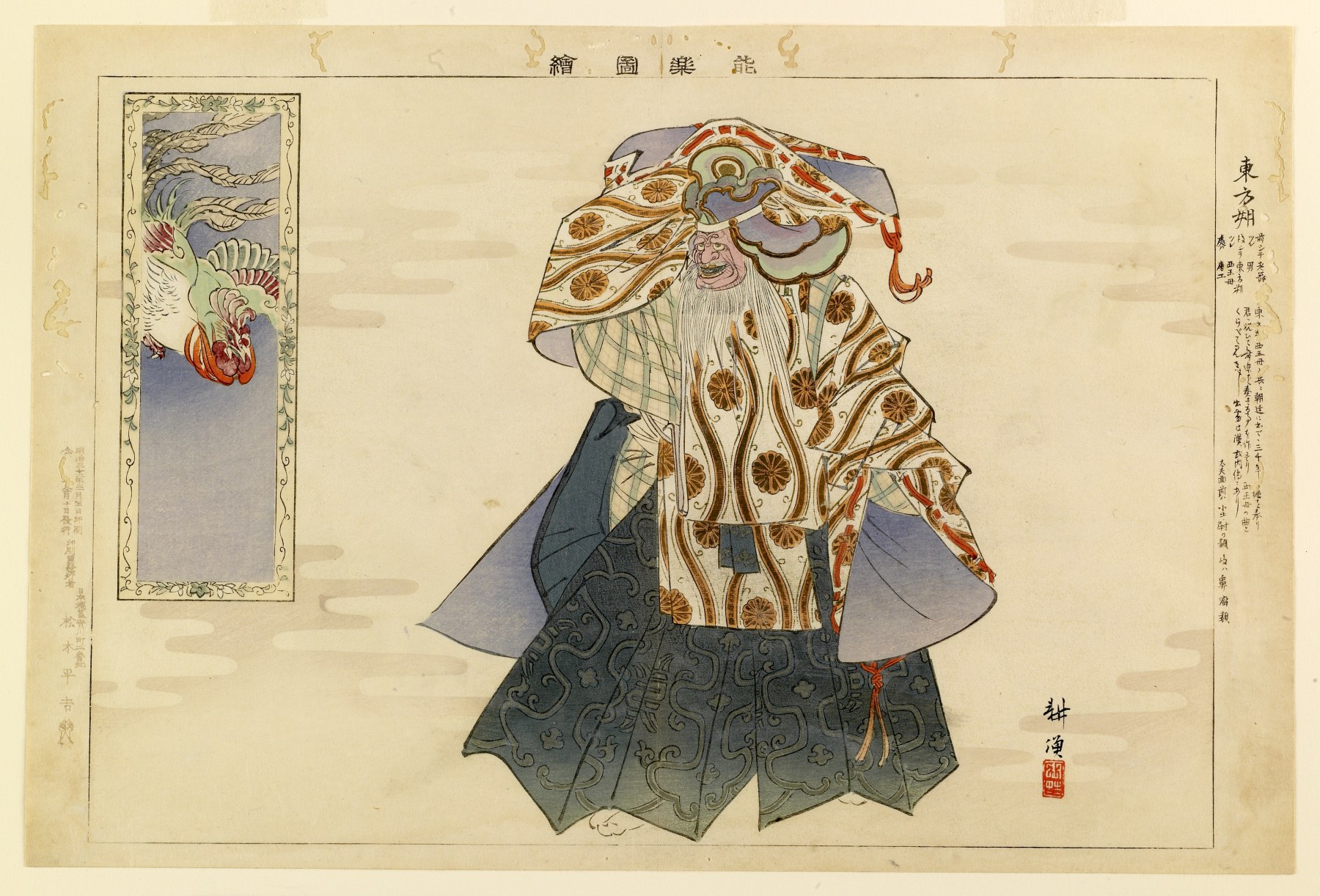
Noh Mai is the dance component of Noh theater, one of the oldest surviving theatrical art forms in Japan, refined in the fourteenth century by Kan'ami and his son Zeami.
Noh Mai — In Depth
Mai (舞) is the dance of Japanese Noh, a masked dance-drama that has been performed continuously since the 14th century and stands among the oldest living theater traditions in the world. Noh grew out of earlier popular and ritual entertainments — sarugaku ('monkey music', descended from sangaku imported from China in the 8th century), the rice-planting spectacle dengaku, and elements of gagaku court music and kagura Shinto dance. Its decisive refinement came in the late Muromachi period through the actor-playwrights Kan'ami Kiyotsugu and, above all, his son Zeami Motokiyo, whose talent won the patronage of the Ashikaga shogun Yoshimitsu. Under this shogunal and later samurai patronage Noh was elevated from popular entertainment into an aristocratic art, codified in the Edo period as the ceremonial theater (shikigaku) of the warrior class.
The word mai denotes a specific kind of dance and is deliberately distinguished from odori. Mai is a circling, gliding, restrained movement rooted in older courtly and ritual tradition — the performer keeps the feet close to the ground and 'goes around' the stage — whereas odori refers to the rhythmic, hopping, jumping folk dance that later fed into Kabuki and Bon dancing. Practitioners speak of 'dancing Noh' (noh wo mau), never of odori, capturing this ethos of slowness, suppression and understatement.
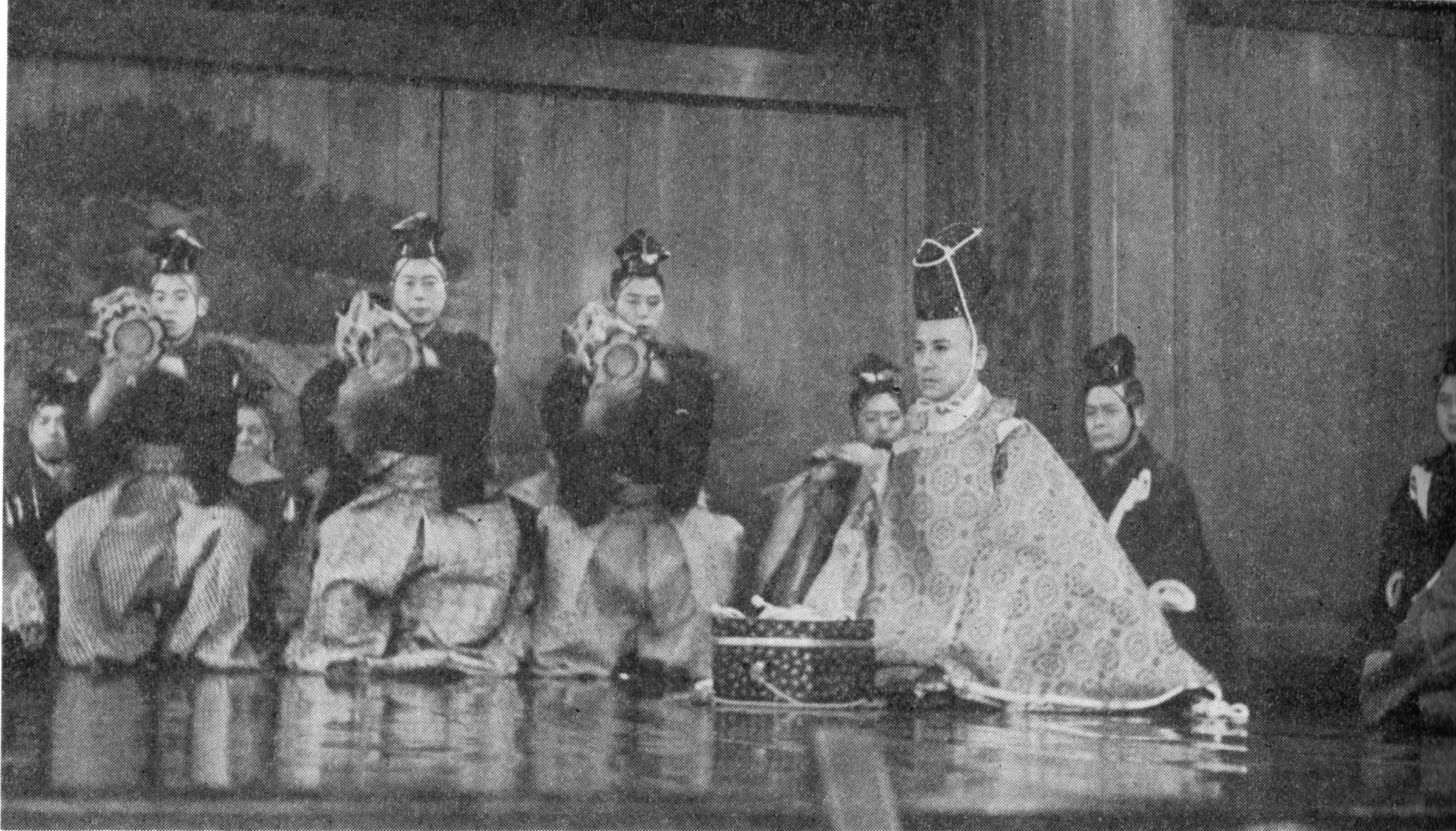
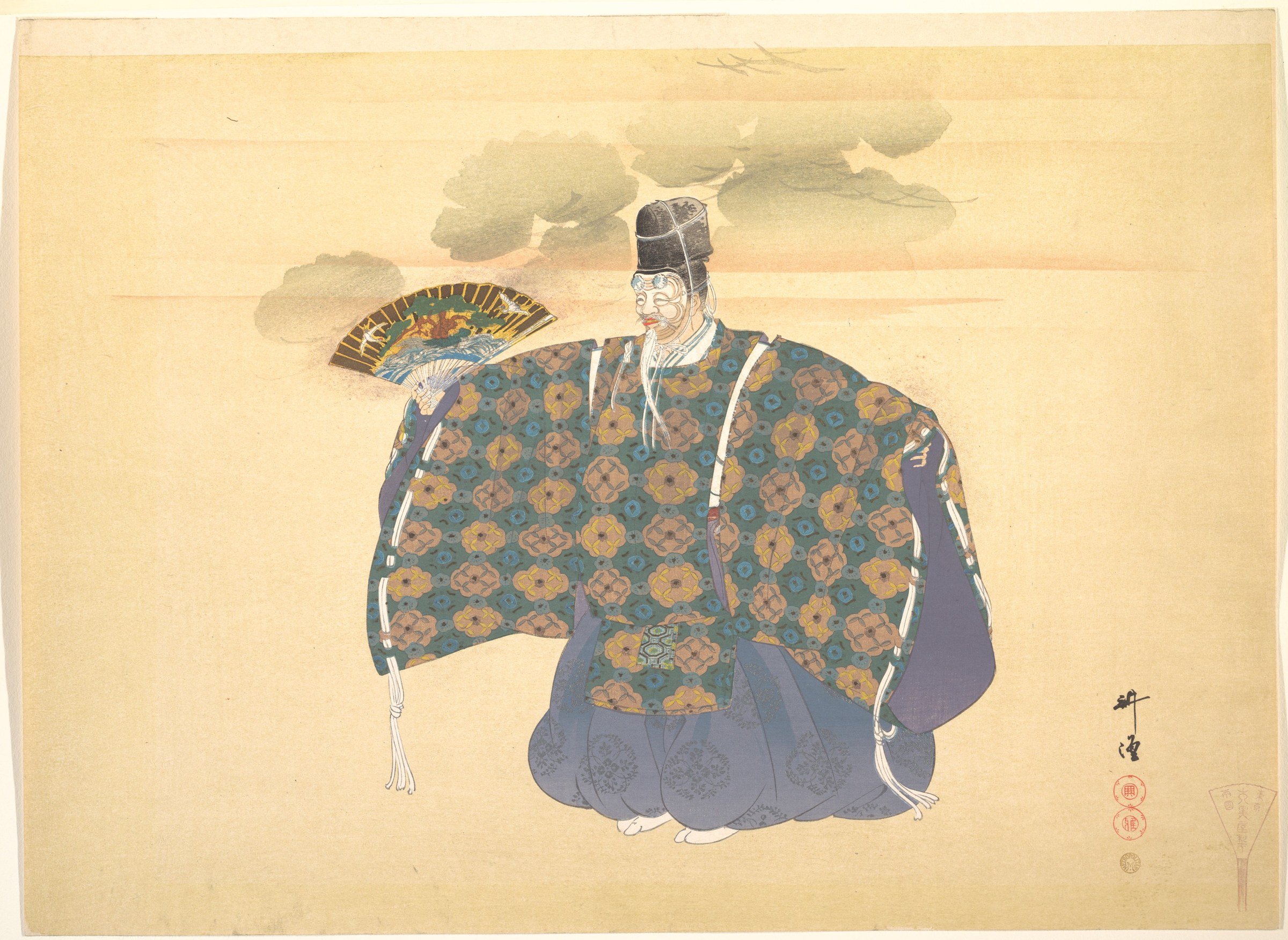
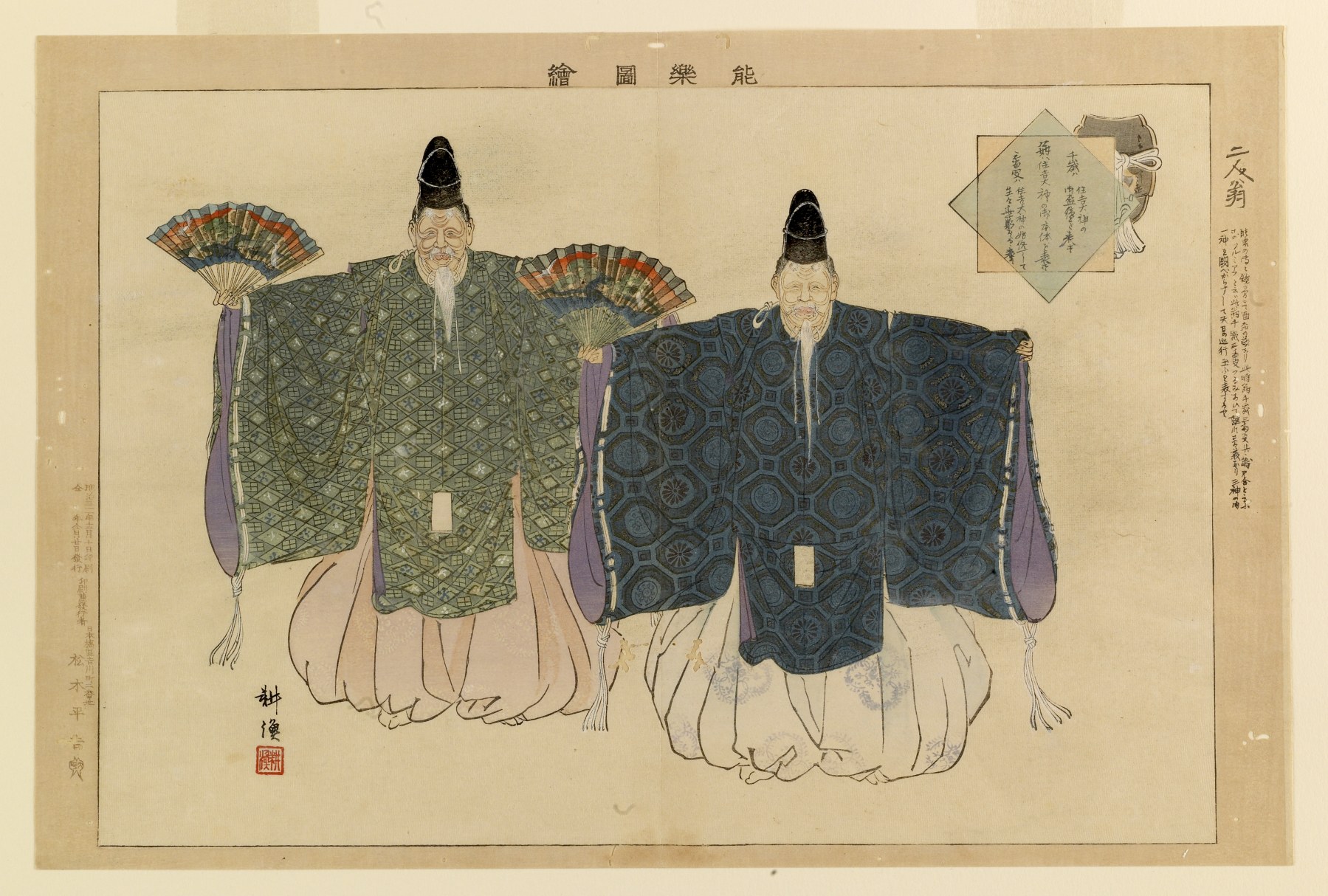
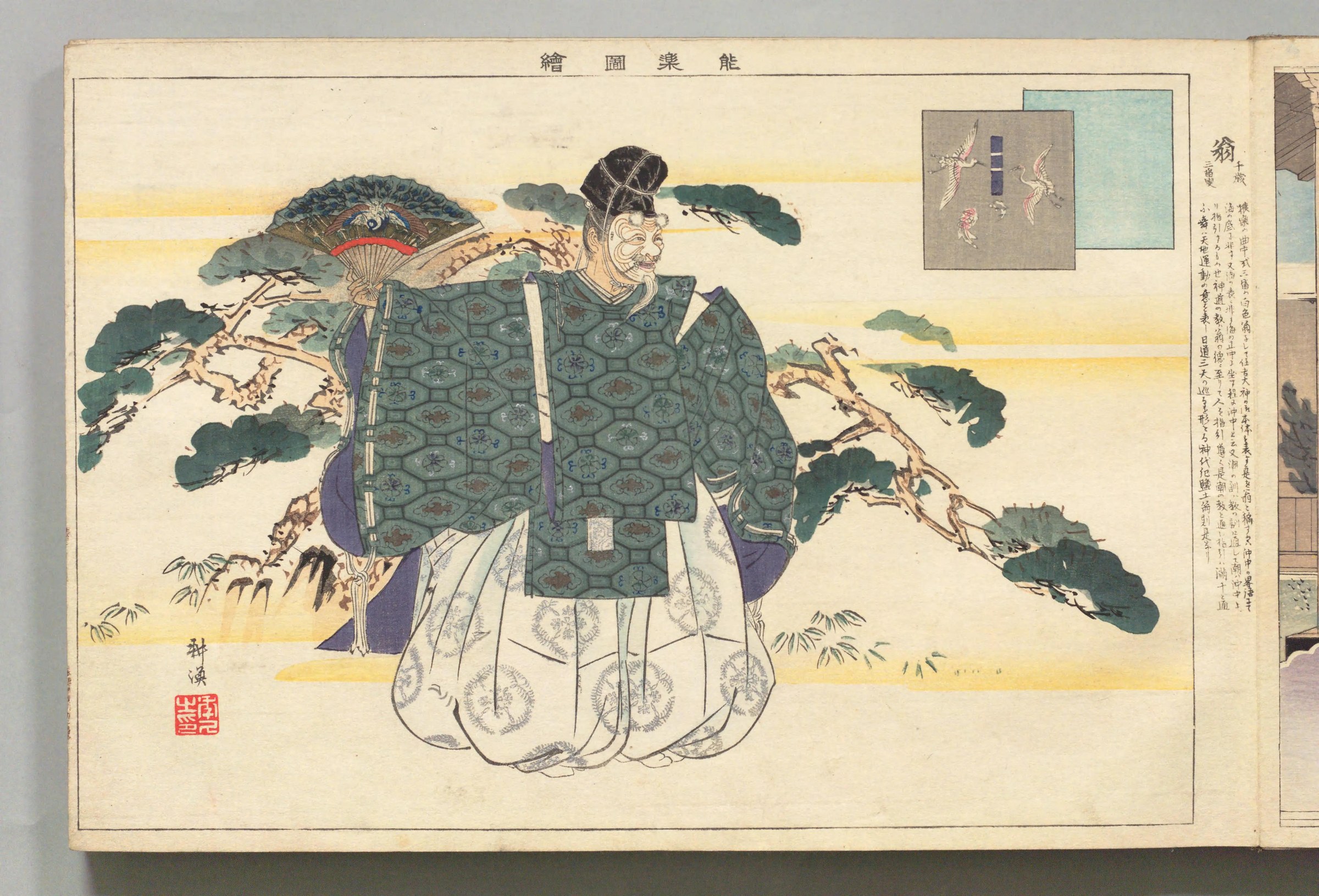
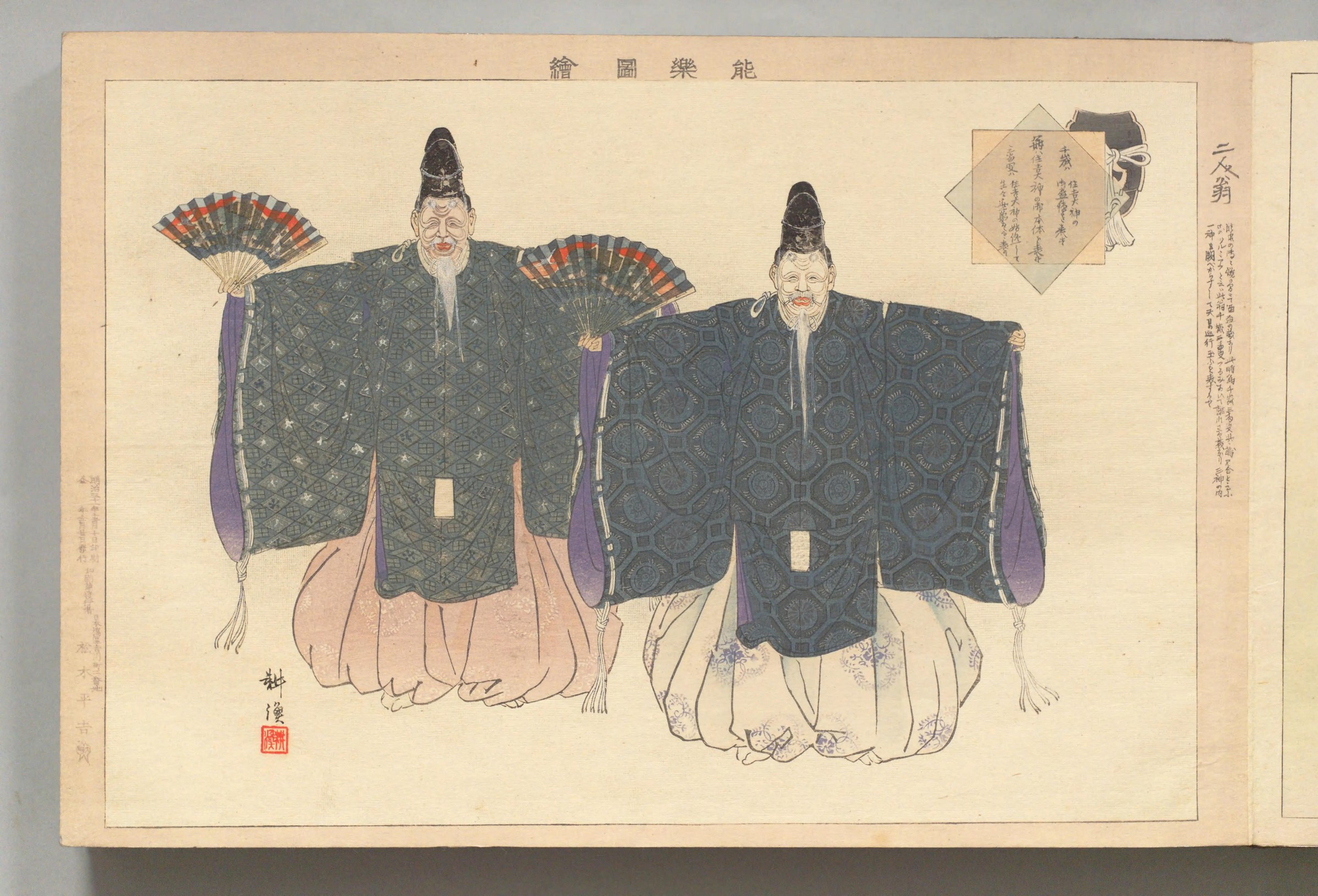
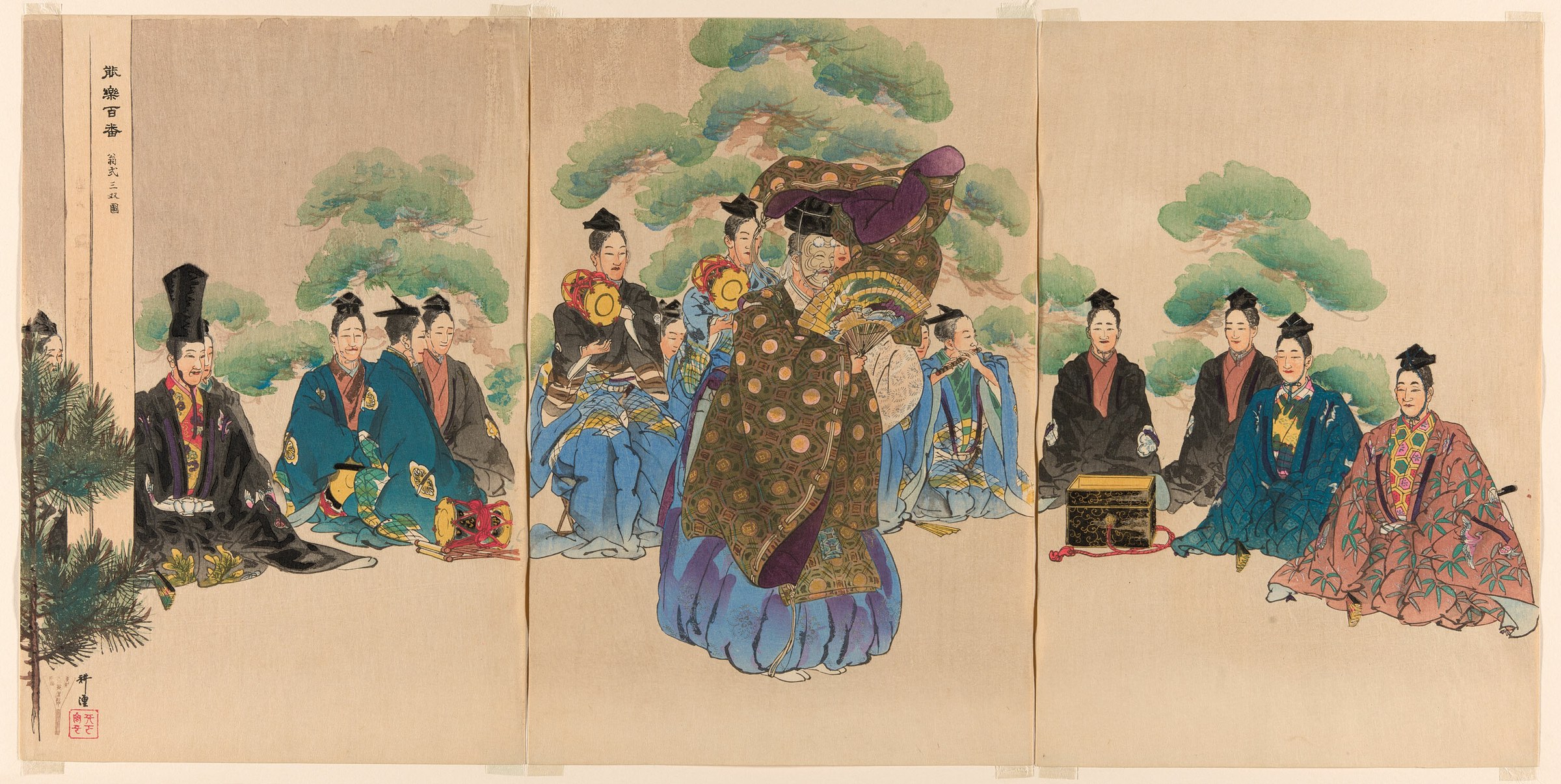
Aesthetically, mai embodies yugen, a mysterious and profound beauty tinged with melancholy, and is paced by the principle of jo-ha-kyu (slow introduction, quickening development, rapid climax) that governs virtually every element of Noh, along with a keen use of ma, the charged emptiness of pause and negative space. Technique is built from kata, named stylized movement units, assembled over the kamae — the basic posture with knees slightly bent, weight low, arms rounded, and a folded fan held in the right hand. The signature walk is suriashi (hakobi), a sliding step in which the feet never leave the floor. Emotion is conveyed through economical gestures such as shiori (covering the eyes to signify weeping) and sashi (an arcing point into the distance), the fan standing in for objects and landscape. The masked lead actor, the shite, performs the central dance; recognized types of mai are graded by tempo and character, including the medium chu-no-mai, the extremely slow and dignified jo-no-mai for female ghosts and deities, the brisk otoko-mai for living men, the very fast kami-mai for male gods, plus gaku and kagura. Dances often build to the climactic kuse and mai sections of a play. Excerpted forms — the shimai (a short dance without mask or full costume) and the maibayashi (a longer excerpt with the full musical ensemble) — are central to training and recital.
Musically, mai is carried by the hayashi of nohkan flute, kotsuzumi and otsuzumi hand drums, and (in many pieces) the taiko stick drum, interlocked with the vocal art of utai chanted by the shite and the jiutai chorus of six to eight men. Five hereditary schools — Kanze, Hosho, Konparu, Kongo and Kita — preserve the shite tradition today. Zeami's treatises, led by Fushikaden (Kadensho), remain the foundational theory of the art. Noh, together with its comic counterpart Kyogen, forms Nogaku, designated an Important Intangible Cultural Property of Japan in 1957 and inscribed by UNESCO (proclaimed 2001, listed 2008).
Sources: https://en.wikipedia.org/wiki/Noh ; https://en.wikipedia.org/wiki/N%C5%8Dgaku ; https://ich.unesco.org/en/RL/nogaku-theatre-00012 ; https://www.the-noh.com/en/world/dance.html ; https://www.the-noh.com/en/world/danceform.html ; https://www.britannica.com/art/Noh-theatre ; https://www.britannica.com/biography/Zeami
Noh Mai Music & Tempo
Drawn from 20 Noh Mai tracks in the LODance music library.
Example tracks at practice tempo
- Noh: Sanekata II — Hosho Arata
- Noh: Aoi-no-ue — Sakurama Kintaro
- Noh: Hachinoki II — Sakurama Kintaro
- Noh: Matsumushi — Kita Roppeita
- Noh: Takasago — Kenze Tetsunojo VI
- Noh: Youchi Soga I — Kondo Kenzo; Okura Rokuzo
Who governs Noh Mai
Federations, councils and examining bodies with a recorded role in this style. No single organisation can tell you this — each one knows only itself.
What to Wear
Attire guidance for Noh Mai and other Global East Asian Classical & Modern dances. Each card below is sized to the moment — class, practice, social, or competition — because the wardrobe shifts as the stakes do.
Reading the cards
In Class
Varies by tradition. Chinese classical: flowing practice pants and tops. Japanese forms may require specific practice kimono or comfortable modern wear.
Social Dancing
Traditional attire for cultural events and performances. Modern fusion styles accept contemporary dancewear.
Competition
Full traditional costume: Chinese classical uses flowing silk costumes with long sleeves (water sleeves); Japanese dance uses kimono or stylized versions.
Shoes
Chinese classical: soft-soled dance shoes or bare feet. Japanese traditional: tabi (split-toe socks) or bare feet. Modern fusion: flexible dance shoes.
In Practice
Water-sleeve practice tops are standard for Chinese classical training; the sleeves are technical equipment, not decoration.
Price Range
- Budget: Practice clothing from existing wardrobe; tabi $20–50.
- Mid: Practice water-sleeve top $80–250; performance kimono pieces $200–1,000.
- Premium: Authentic silk performance costumes with hand embroidery $1,500–8,000+.
Key Terms
- Water sleeves
- Long extended sleeves used in Chinese classical dance — choreography manipulates them as an extension of the arms.
- Tabi
- Japanese split-toe socks worn for traditional Japanese dance forms.
Quick Tips
- •Suede-soled shoes allow controlled sliding and pivoting — essential for most partner dances.
- •Avoid rubber soles on dance floors; they grip too much and can cause knee injuries.
- •Bring a separate pair of clean shoes for the dance floor to keep it in good condition.
Sources & Further Reading
Cultural & Historical Context
Noh Mai emerged from Japan during the 1350s—present day. Understanding the cultural roots, musical traditions, and social circumstances of this era enriches appreciation for the dance's characteristics and significance.
Primary Source Documents
The Library of Dance contains public-domain primary sources for dance history. Copyrighted modern syllabi are indexed with purchase links to their respective copyright owners. Search by dance name or codifier to discover primary source documents.
Last reviewed: October 2026 — This dance profile synthesizes historical research, cultural documentation, and contemporary practice knowledge to provide authoritative context.
More in Global East Asian Classical & Modern
Butoh
Contemporary avant-garde dance created in reaction to Western ballet; emphasizes squat physique and earthbound movements.
Bon Odori
Folk dance performed during Obon festival to honor ancestors' spirits; danced in circles around a tower stage (yagura).
Buyō (Nihon Buyo)
Classical Japanese dance tradition combining movement with dramatic expression.
Kabuki Dance
Vibrant theatrical dance with bold, exaggerated movements; part of Kabuki theatre depicting romance, revenge, and common struggles.
Kumi Odori
Okinawan traditional dance with graceful movements; recognized as Important Intangible Cultural Property.
Yosakoi
Modern Japanese festival dance inspired by the Awa Odori tradition of neighboring Tokushima and set to contemporary music; performed with naruko (wooden clappers).
Dragon Dance
Team manipulation of long decorated dragon symbolizing strength and prosperity; performed during festivals.
Lion Dance
Southern China: guardian against evil spirits; Northern China: acrobatic depiction of lion's ferocity and agility.
Yangge
Folk dance of northern China rooted in agricultural ritual; performed at the Spring Festival and Lantern Festival.
Dunhuang Dance
Classical dance form inspired by Dunhuang cave paintings; features fluid movements and silk ribbon movements.
Lantern Dance
Southern Chinese folk dance performed with lantern props during festivals.
Errenzhuan
Northeast Chinese dance-drama tradition with theatrical elements.
Seungmu
Solo classical dance performed in monk robes; expresses spiritual seeking through dynamic turning and spinning.
Taepyeongmu
Graceful classical court dance originally performed for the king; features slow, flowing movements.
Buchaechum (Fan Dance)
Contemporary classical dance using large colorful fans to create wave and wave patterns.
Geommu (Sword Dance)
Martial dance performed by warriors with sword props; demonstrates strength and technical skill.
Cheoyongmu
Classical court dance originally performed to ward off evil; features five dancers with distinct roles.
Noh Mai in art
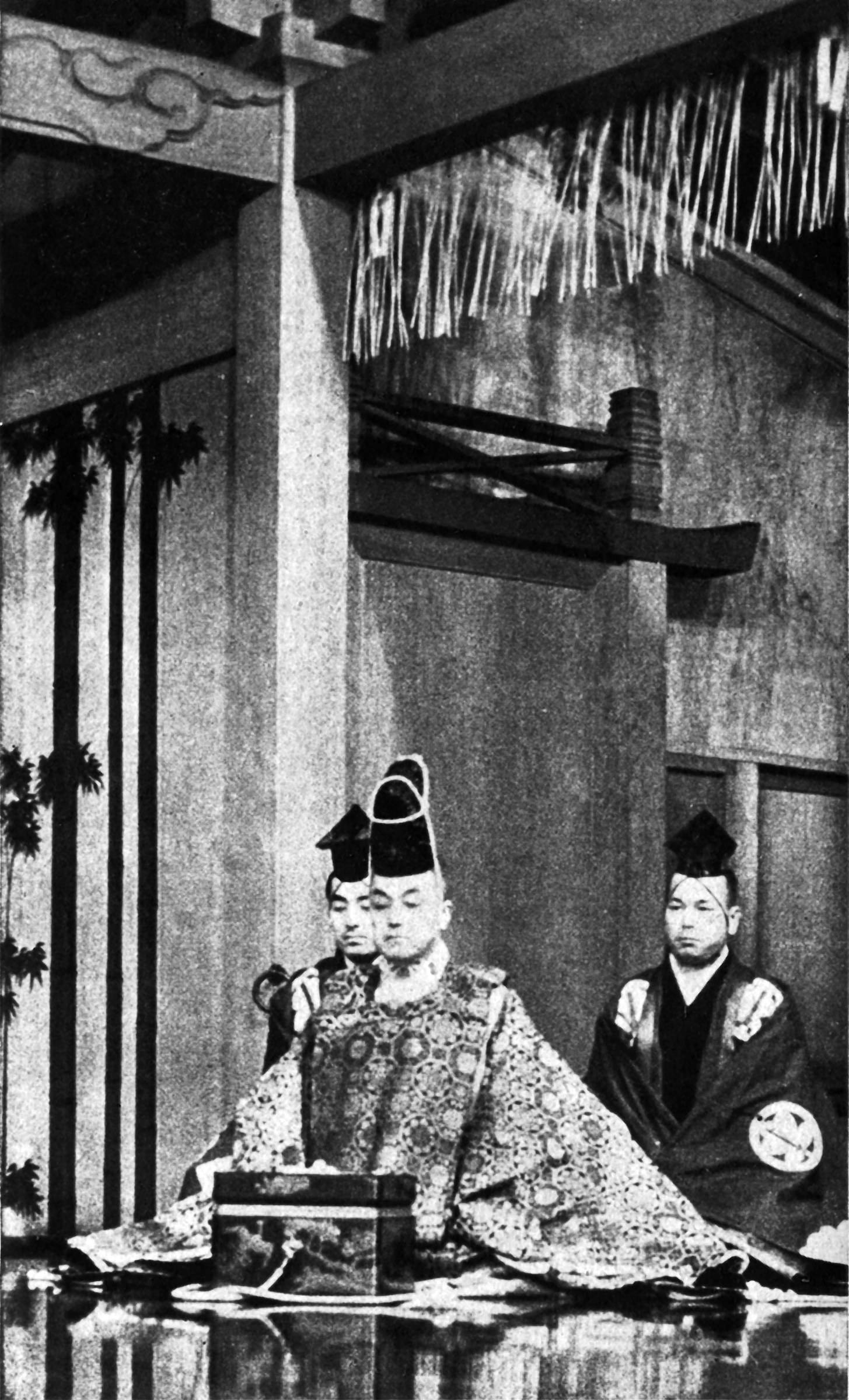
Browse the gallery →Works our catalogue identifies as depicting noh mai.
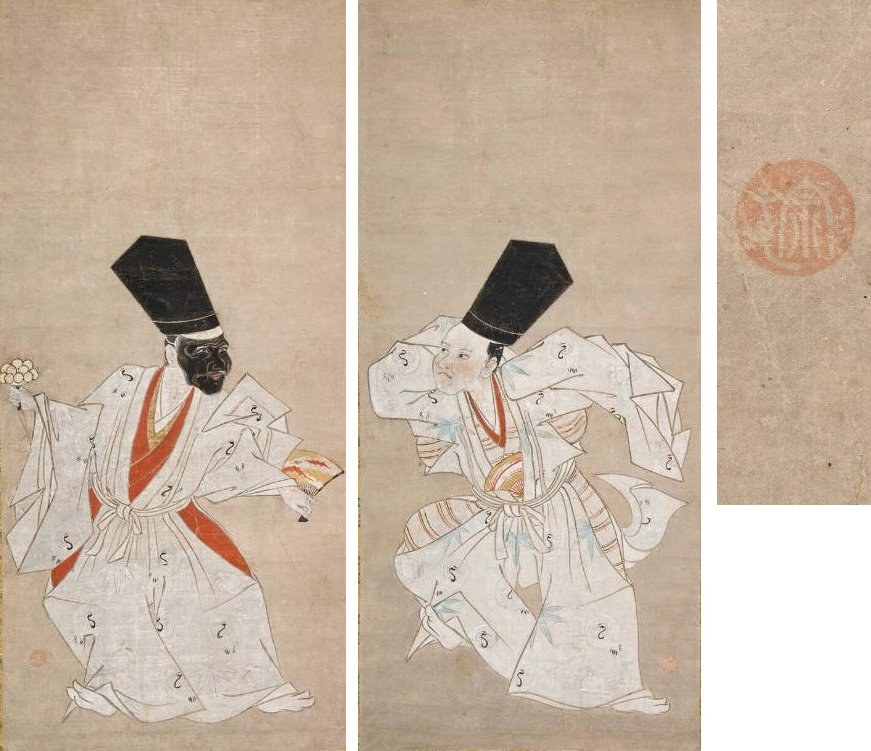
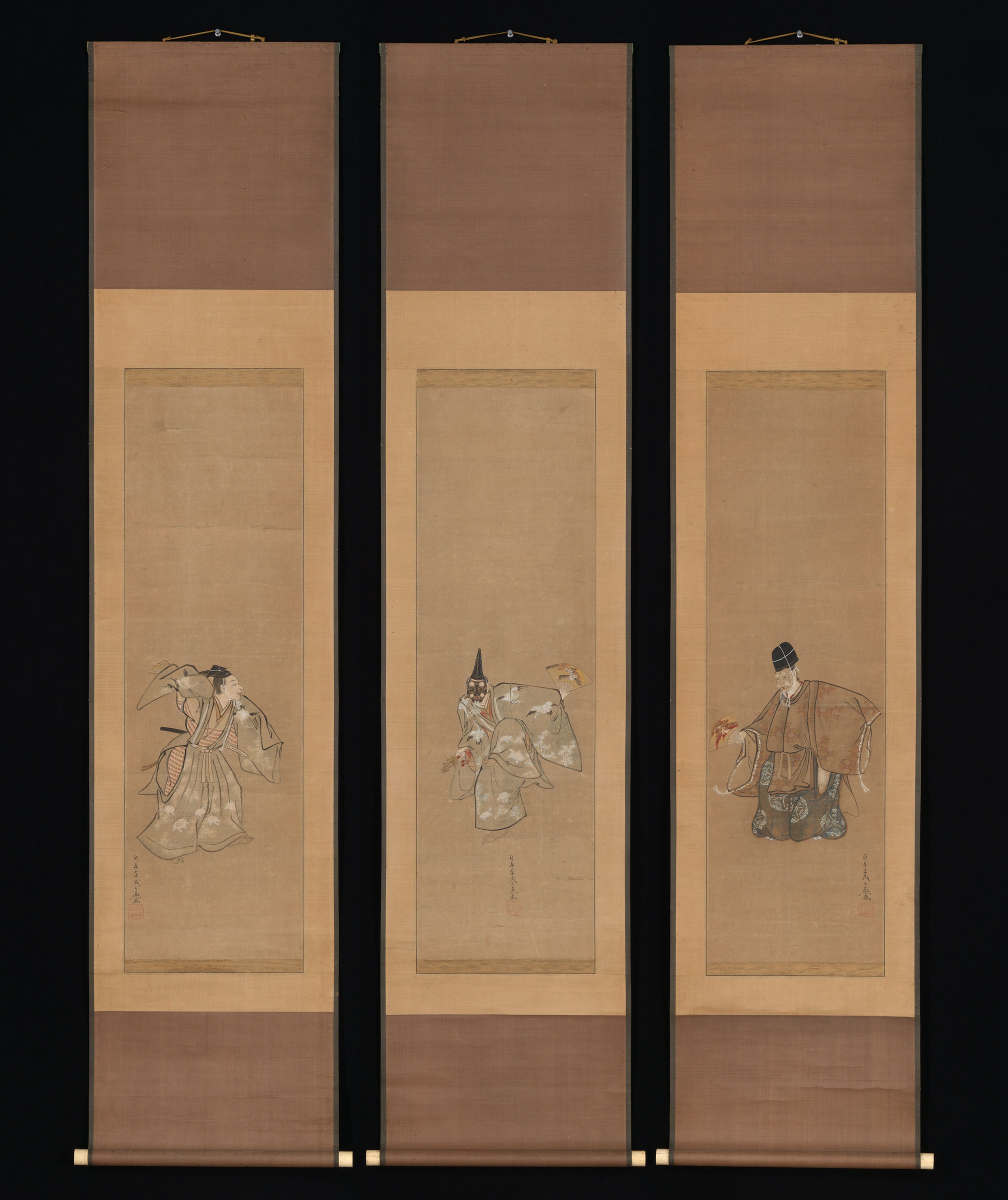
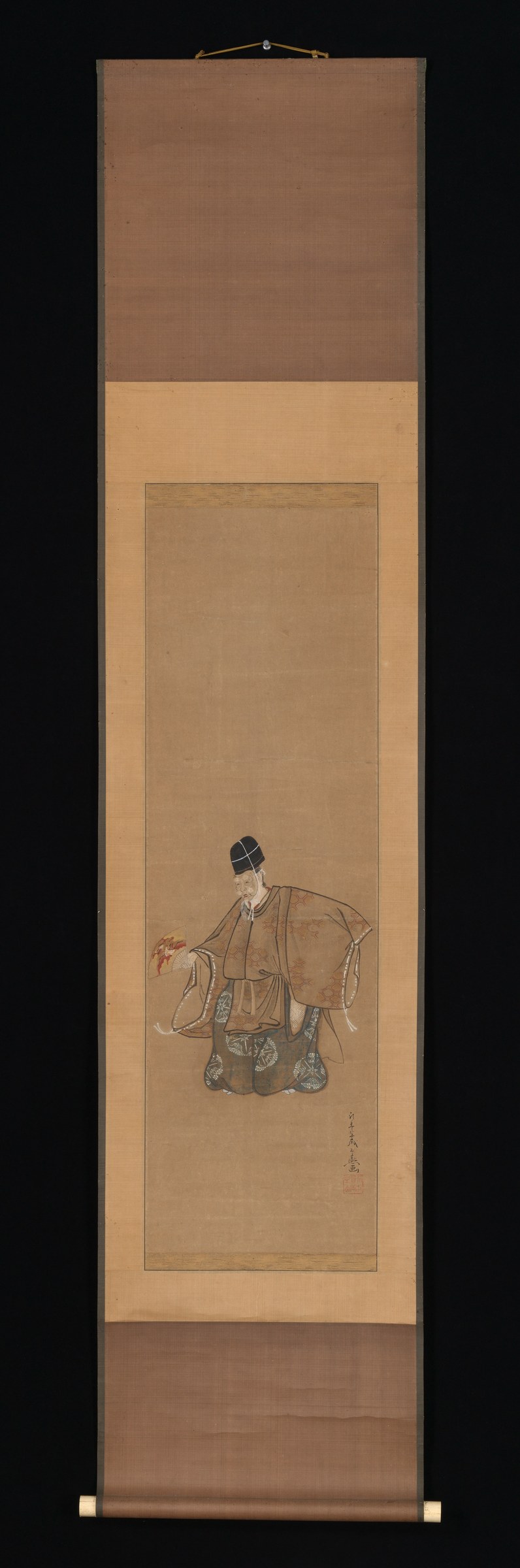
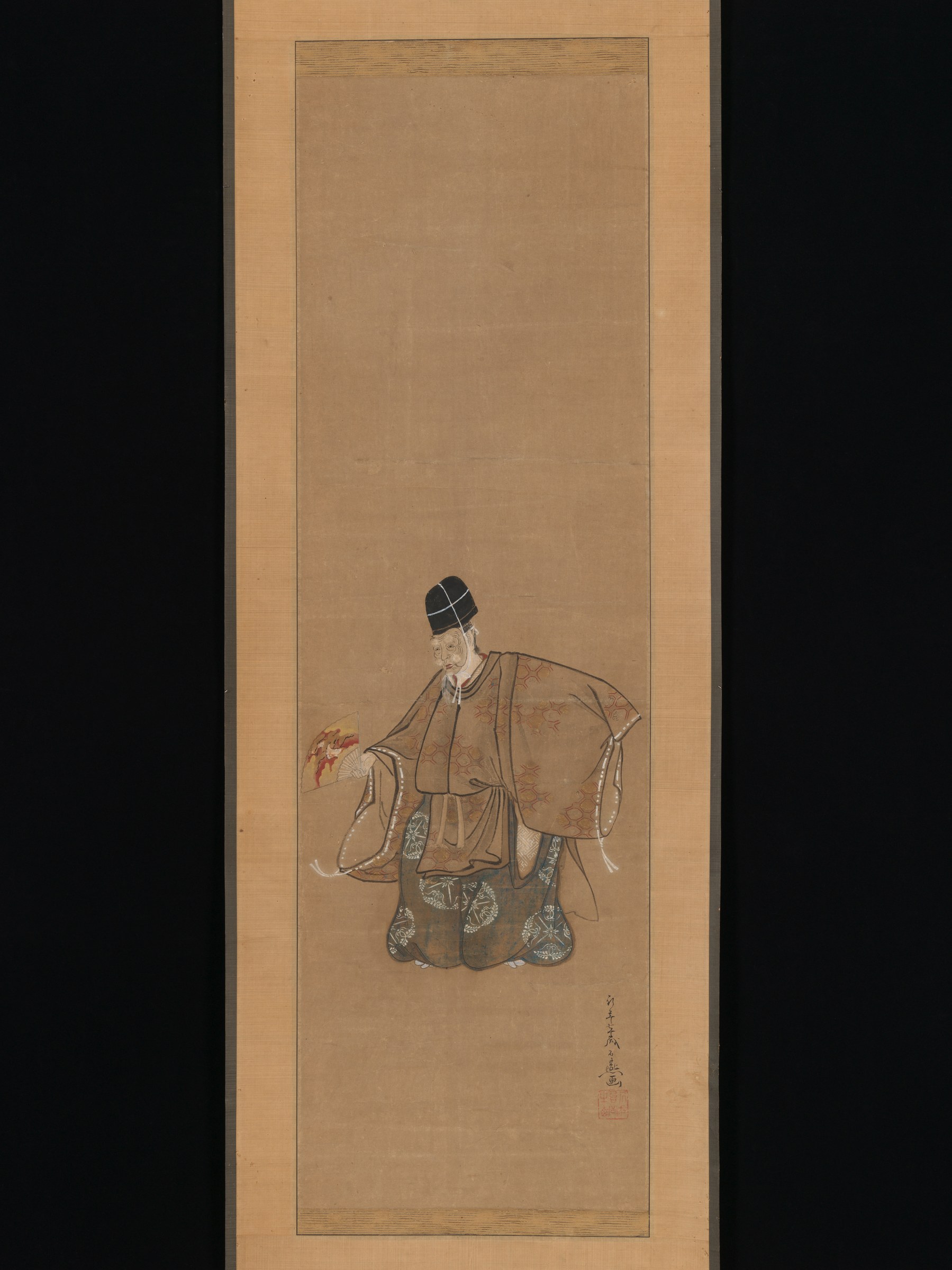
Continue Exploring
Lineage of Dance
500 years of dance evolution
Champions of Dance
Winners of marquee national & world titles
Language of Dance
161 dance terms & translations
Listening of Dance
Tempo, timing & musicality tools
Gallery of Dance
5,700+ artworks from museum collections
Attire of Dance
Evolution of dance dress across eras
Keep the thread going
Dance history, technique, and the occasional rabbit hole — in your inbox. Thoughtful, infrequent, unsubscribe anytime.
Free. No spam. One click to leave.