49 works in this view — arrow keys or swipe to move between them.
Dance in Art
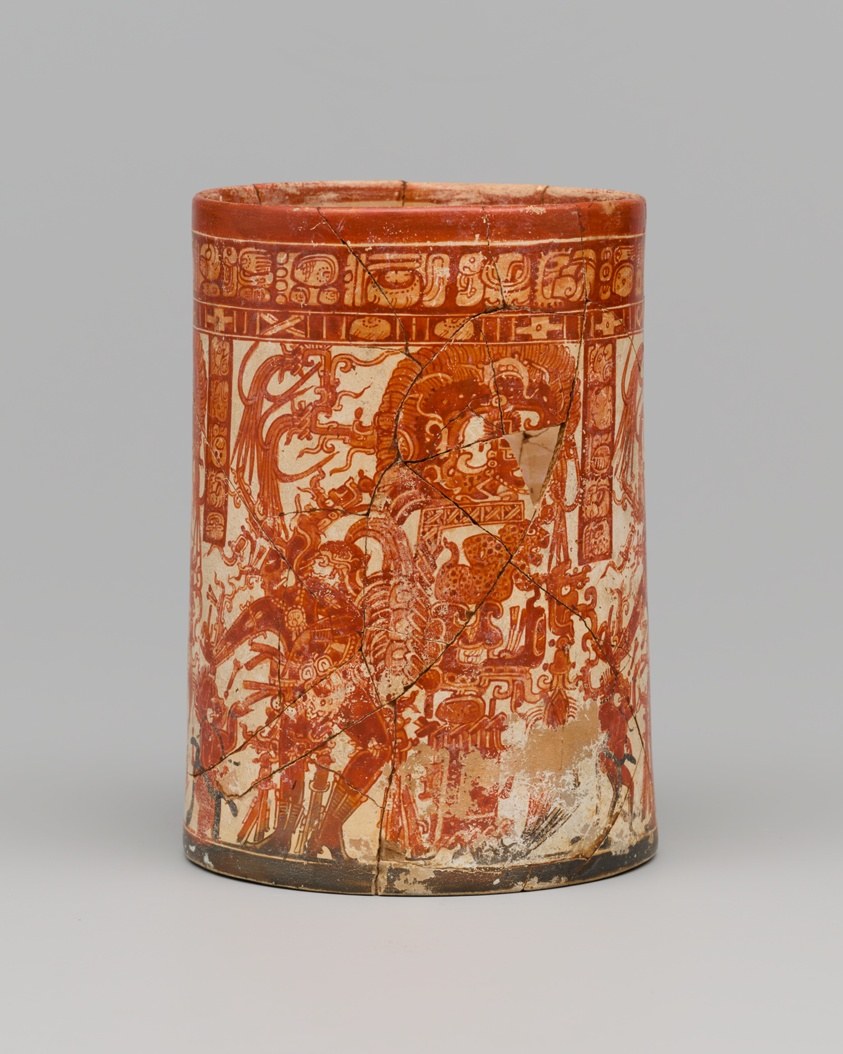
Vessel with Dancing Maize Gods
Aj Maxam (Maya) Vicinity of Naranjo, Petén region, Guatemala
- Medium:
- Earthenware and pigment
- Collection:
- Arts of the Americas
- Source:
- Art Institute of Chicago
- Rights:
- Public domain — free to use, share and adapt.
- Recorded as:
- CC0 (Public Domain)
This vessel is one of the few surviving documents of pre-Columbian dance and ritual performance, and bears the signature of a named Maya artist—extraordinarily rare for any ancient non-Mediterranean tradition. It demonstrates that ritual dance was not incidental to Maya elite life but central to cosmology, governance, and religious practice, worthy of being captured in durable ceramic form. For any history of dance that claims to be global, this object is essential evidence that sophisticated choreographic and narrative traditions existed in the Americas centuries before European contact.
What you are looking at
A cylindrical earthenware vessel bears a densely composed scene executed in red and cream pigment, characteristic of Classic Maya polychrome pottery. The composition is divided into distinct registers by linear borders and glyphic text. The central field depicts multiple figures in elaborate dress and ornament, their bodies rendered in the Maya convention of profile with frontal torsos. At least three human figures are identifiable, wearing the regalia of Maya nobility: tall feathered headdresses, jeweled collars, and patterned textiles. They are interacting with zoomorphic or supernatural beings—creatures with elaborate crests and fanged jaws. The scene includes architectural elements rendered as small structures or shrines, and the entire composition is framed by a band of glyphic text at the rim and decorative motifs below. The ceramic has aged to reveal areas where the pigment has flaked or worn, exposing the cream-colored clay body beneath the red pigment.
The dancing
The human figures are depicted in dynamic poses that suggest movement and interaction rather than static stance. Their bodies are shown in the characteristic Maya three-quarter view, with heads in profile and torsos frontal. The limbs are articulate and positioned to suggest gesture—raised arms, bent knees—though the ceramic's curved surface and wear make precise reading difficult. The positioning and overlapping of figures, along with the directional thrust of their bodies and limbs, implies a narrative moment of encounter or ritual action rather than a single unified dance formation. The scale and placement suggest social hierarchy, with taller or centrally positioned figures commanding the composition.
The dance depicted
The identity of this scene is confirmed by its glyphic text and iconography as a depiction of maize deity mythology central to Maya cosmology and ritual performance. The K'inich Ajaw (maize god) and related deities appear in postures associated with ritual reenactment and shamanic transformation. Classic Maya elite performed danced narratives of creation and deity interaction as part of royal ceremonial life, and this vessel likely documented such a performance or its mythological source. The dynamic postures and theatrical costume suggest that the scene captures a moment of ritual dance or performed mythology, possibly relating to the maize god's journey or resurrection. The exact dance form cannot be named from the image alone, but the ceremonial context and deity figures confirm this as sacred-ceremonial performance.
How it was made
The object is a cylindrical ceramic vessel formed from clay, painted with a red pigment (likely derived from iron oxide) applied to a cream slip or natural clay surface. The technique is hand-painting on unfired or leather-hard clay before firing in a kiln. The curved surface of the cylinder presented technical challenges for the artist, who nonetheless maintained compositional coherence across the form and created fine detail in headdresses, jewelry, and glyphic text. Firing in a low-oxygen atmosphere (reduction firing) typical of Maya kilns produced the cream and dark tones visible in the surviving pigment. The vessel's cylindrical form and horizontal registers indicate it was meant to be read by rotating it in the hands—a format that made these objects precious documents of elite knowledge, ritual, and mythology, likely used in royal courts or ceremonial contexts.
About this work
This is a Maya polychrome cylinder vessel dating to the Late Classic period (c. 780 CE), created in the Petén region near Naranjo in what is now Guatemala. It records a scene of ritual performance or mythological reenactment involving the maize deity and other supernatural beings, rendered in the formal style of Maya court art. The vessel is attributed to the artist Aj Maxam on the basis of glyphic signature—a rare named attribution from the pre-Columbian Americas. The work represents one of the most significant bodies of evidence for understanding how Maya nobility performed and visualized sacred narratives, and it exemplifies the sophistication of Maya ceramic arts at their height.
The piece belongs in a gallery of dance in art because it documents an ancient tradition of ritual performance as an integral part of religious and political life. The dynamic postures, elaborate costume, and mythological narrative preserved on the ceramic surface attest to a complex choreographic tradition that has left no other written record. For scholars of dance history and anthropology, such vessels are primary sources for understanding pre-Columbian performance, the role of the body in ritual, and the continuity of indigenous traditions in Mesoamerica.
How to look at it
Rotate the vessel slowly to follow the narrative from left to right, as the artist intended. Attend to the position of the limbs and the direction of the bodies: the raised arms, the bent knees, and the forward lean of the figures all convey movement and interaction. Look at the headdresses and regalia—these are not mere decoration but markers of identity and ritual role; the height and elaboration of costume correlated with status in Maya society. The glyphic text that frames the scene (legible to a Maya reader) would have named the deity, the date, and the royal owner, embedding the image in a specific moment of history and mythology. The wear and loss of pigment are real but also show how long these objects have been treasured: they survive because they mattered.
The artist
Aj Maxam is one of the few identified ancient Maya artists known by name, his signature appearing in glyphic text on surviving polychrome vessels. He worked in the Petén region of Guatemala during the Late Classic period, when such fine ceramics were produced for elite consumption and funerary use. Named artist signatures on Maya pottery, though rare, indicate that some artisans had sufficient status and recognition for their work to be marked with their name—a practice that distinguishes them from the vast majority of anonymous Maya potters. Aj Maxam's style is characterized by narrative complexity, fine detail in figural and glyphic rendering, and command of the cylindrical format.
The period
The Late Classic Maya period (c. 600–900 CE) was the apogee of Maya civilization, when the city-states of the Petén were at their political and artistic height. This was an era of intensive artistic production, when polychrome ceramics reached their technical and aesthetic peak, and when hieroglyphic writing recorded increasingly detailed accounts of royal ritual, warfare, and cosmology. Ritual performance was inseparable from political authority: Maya rulers performed as shamans and as the embodied gods themselves—particularly the maize god—in ceremonies that renewed cosmic order and affirmed the ruler's right to govern. These performances likely drew on centuries of tradition and involved elaborate costume, music, and choreography. The detailed depiction of such scenes on ceramics suggests they were considered important enough to preserve and likely served to validate and transmit elite knowledge.
Where it lives
The vessel is housed in the Arts of the Americas collection at the Art Institute of Chicago. It is recorded as being from the vicinity of Naranjo in the Petén region of Guatemala, one of the major city-states of the Classic Maya world. Objects of this type—fine polychrome cylindrical vessels—were made for royal courts and buried with elite individuals or used in ritual contexts; their presence in museum collections today reflects both the archaeological recovery of Maya sites and the historical removal of cultural patrimony.
Dance in this work
Questions about this work
How do we know this is a dance scene and not just a mythological image?
The postures of the figures—the raised arms, bent knees, dynamic weight shifts, and the directional thrust of the bodies—are consistent with movement and performance rather than static worship or conversation. In Maya art, such active postures typically indicate ritual reenactment or performed mythology. Combined with the costume and the supernatural beings present, the image documents a moment when the maize deity and other gods were embodied and performed by human actors in a royal ceremony.
What do the glyphs say?
The glyphic text, visible at the rim and in registers, would identify the deity depicted, the date of the depicted event (in the Maya Long Count calendar), the location, and likely the name of the royal owner. Without specialist training in Classic Maya hieroglyphics, the text cannot be fully read from the image alone, but the presence of such inscriptions was crucial to how Maya elites used these vessels—they functioned as documents, not just ornaments.
Was this vessel used in the ceremony or made to record it?
Likely both. Some polychrome vessels were used to serve food or drink in elite contexts, including ritual feasting. Others were created specifically for funerary use or to commemorate important events. The fine quality and narrative detail suggest this was a prestige object meant to be seen and handled by the elite, validating the performance it depicts and preserving knowledge of the ceremony.
What happened to the pigment?
The red pigment has flaked and faded over more than 1,200 years due to age, handling, burial conditions, and the chemistry of the clay and pigment themselves. The cream-colored areas visible are the underlying clay body where the red has worn away. Despite the loss, enough survives to read the composition and the identity of the figures.
More dance artwork





