49 works in this view — arrow keys or swipe to move between them.
Dance in Art
Carlotta Grisi and Jules Perrot
Unknown
- Collection:
- Figurine
- Source:
- Victoria and Albert Museum
- Rights:
- Rights vary by item — check the source record before reusing this image. Source record ↗
- Recorded as:
- V&A — check rights per item
This figurine documents both the visual language of Romantic-era partnered dance and the celebrity culture that surrounded it. For historians of theatrical dance, it is evidence of how performers were memorialized and marketed; for dancers, it shows the refined posture, frame, and aesthetic ideals that defined the era.
What you are looking at
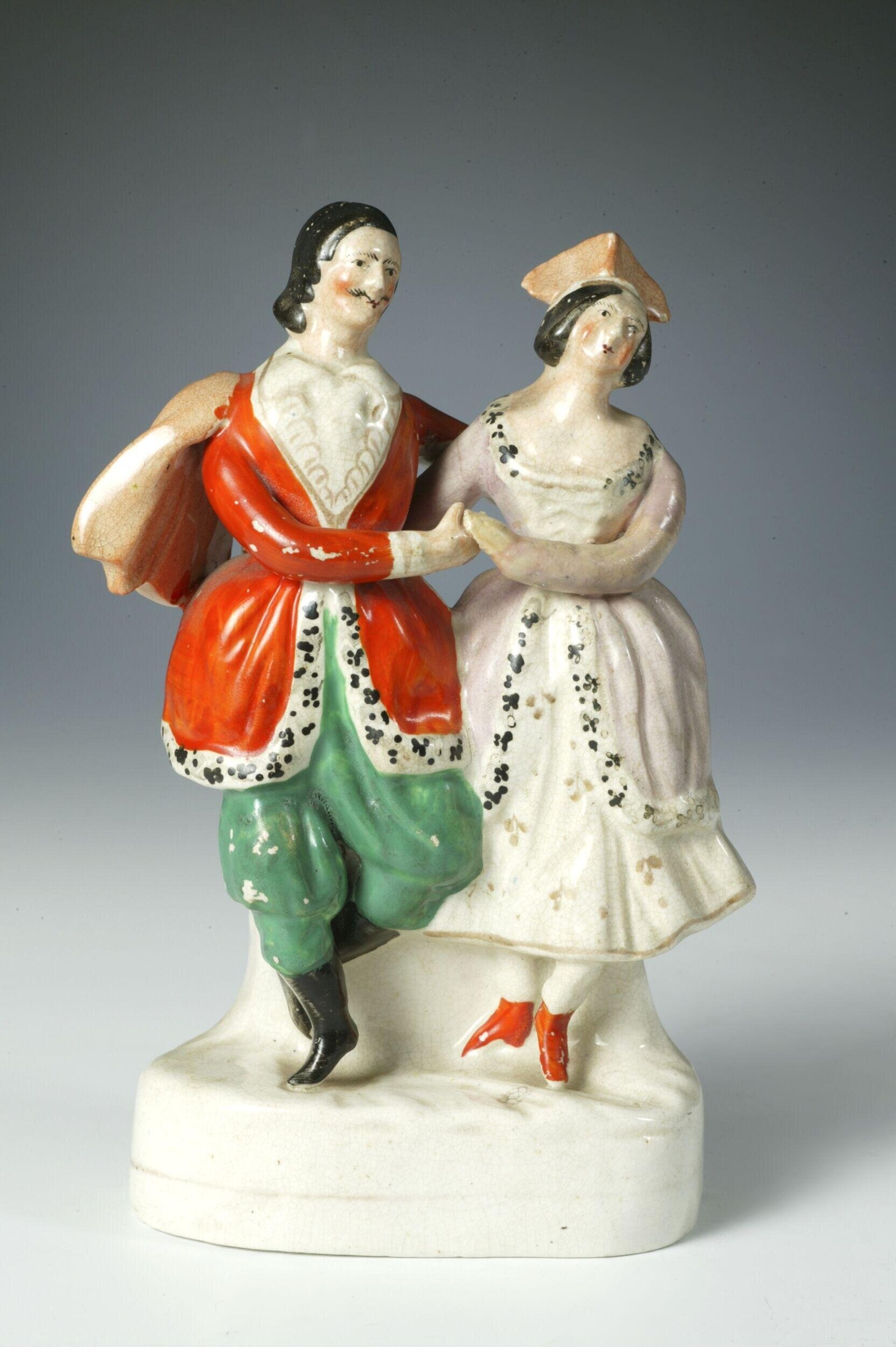
A porcelain figurine depicts two dancers in mid-performance against a plain base. The male dancer, positioned at left, wears a vibrant red jacket with white embroidered details at the chest, green breeches, and black boots. His posture is upright and commanding, shoulders back, with his gaze directed upward and away. The female dancer at right wears a pale lavender or white dress with a fitted bodice and full skirt, decorated with black dot or floral motifs. She wears red slippers and gazes upward toward her partner. Between them, their hands meet in a gentle contact—his right hand clasping her left. The composition suggests a moment of partnership and courtship, with both figures animated yet formal. The modeling is refined, with careful attention to facial features, the fall of fabric, and the decorative embellishments of their costumes. The figurine captures the refined, theatrical style of mid-19th-century ballroom or theatrical dance.
The dancing
Both dancers stand in an upright, elongated frame typical of Romantic-era partnered dance. The male dancer's upper body is slightly advanced, his arm extended in a supportive gesture; the female dancer leans fractionally toward him, their joined hands forming the primary point of connection. Neither figure is in deep flexion or extreme extension, suggesting a moment of poised movement rather than dramatic athleticism. The positioning conveys mutual regard and formal partnership rather than the close frame of later ballroom styles. The modeling of their limbs and torsos is slender and aristocratic, consistent with the aesthetic ideals of mid-century ballet and theatrical dance.
The dance depicted
The identities named in the catalogue record—Carlotta Grisi and Jules Perrot—were among the most celebrated dancers of the Romantic ballet era. Grisi (1819–1899) was an Italian prima ballerina; Perrot (1810–1894) was a French dancer and later renowned choreographer. If this figurine accurately depicts them together, it likely commemorates a specific partnership or celebrated moment they shared on stage, though the exact production is not identified here. The pose suggests a pas de deux or a moment of theatrical interaction rather than concert social dancing. The refined costumes and theatrical presentation—the vivid colors, the embroidered details—point to a stage work of the 1840s, when both dancers were at the height of their careers.
How it was made
This is a hand-painted porcelain figurine, a technique that allowed for fine modeling of facial features and the incising of drapery folds, combined with careful hand application of colored glazes and gilded or metallic details. The base is simple and unglazed, typical of mid-century figure production. Porcelain figurines of celebrated performers were common souvenirs and collectors' items, distributed commercially to ballroom and theater audiences. The quality of the modeling and the specificity of the costuming suggest this was a professional production, likely from a European porcelain maker, and would have circulated among people with access to theatrical performances.
About this work
This porcelain figurine records a moment between two of the Romantic ballet era's most celebrated performers, capturing the partnership and theatrical glamour of 1840s dance. Grisi and Perrot were central figures in the creation and performance of the great Romantic ballets; their on-stage partnership, marked by technical brilliance and dramatic presence, was legendary. The figurine freezes a formal, courteous moment of dance—not the extremes of movement, but the poise and mutual regard that underpinned their performances. As an object, it testifies to the star system of 19th-century dance and the appetite for theatrical souvenirs that immortalized favorite performers for domestic collections.
How to look at it
Attend to the hands and the direction of the gaze—both are points of connection and communication. Notice the extreme verticality of both figures and the slenderness of their limbs, ideals of beauty in Romantic aesthetics. The bright colors and gilded details catch light and draw the eye, mimicking the spectacle of a stage lit by gas lamps. The moment captured is not one of extreme physical demand but of poise and composure, suggesting the controlled elegance that separated professional theatrical dancers from ordinary people.
The period
In the 1840s, when this figurine was likely made, Romantic ballet was at its zenith. Carlotta Grisi had recently danced the role of Giselle (choreographed by Jean Coralli and Jules Perrot) at its 1841 premiere in Paris—a cornerstone of the Romantic repertoire. Jules Perrot was both a dancer of immense technical and dramatic skill and an increasingly prolific choreographer. The period celebrated the ballerina as an otherworldly, ethereal figure, yet the partnership between male and female dancers remained central to the ballet d'action. Porcelain figurines of dancers had been produced since the 18th century, but the commercial market for such souvenirs expanded significantly in the 19th century as urban theatrical culture grew and star performers acquired a modern kind of celebrity. This figurine participates in that market, offering middle-class collectors a way to own a memento of the stars they admired.
Where it lives
The record identifies this as a figurine held in a collection sourced from "va" (likely Virginia); no further provenance details are recorded. Porcelain figurines of this type were widely distributed commercial objects, and tracking individual examples to a maker or specific performance is often not possible.
Dance in this work
Questions about this work
Who were Carlotta Grisi and Jules Perrot?
Carlotta Grisi (1819–1899) was an Italian ballerina and one of the great stars of the Romantic era; she created the role of Giselle in 1841. Jules Perrot (1810–1894) was a French dancer renowned for his technical mastery and dramatic presence, and later became one of the 19th century's most important choreographers. Both were central figures in the development of Romantic ballet and frequently partnered on stage.
What does this figurine represent?
It commemorates the famous partnership between two celebrated performers, likely made and sold as a souvenir for theater audiences in the 1840s. The pose captures the refined, formal quality of their stage presence rather than a specific dramatic moment. Such figurines allowed middle-class collectors to own a memento of the stars they admired in performance.
How can you tell this is about dance?
The upright posture, joined hands, formal frame, and theatrical costumes all signal partnered dance of the Romantic ballet era. The elaborate dress, the refined modeling of the bodies, and the moment of mutual regard all point to a choreographed theatrical encounter rather than social dancing.
More dance artwork





