Romantic Ballet
Also known as: Ballet blanc
- Origin
- France / Western Europe
- Era
- 1830–1850
- Rhythm
- Set by score (varies)
- Tempo
- Varies
- Character
- Ethereal, lyrical, dramatic
History & Cultural Context
Romantic ballet flourished c.1830–1850 as part of the broader Romantic movement, turning to themes of the supernatural, the exotic, and unattainable love. It established pointe work and the long white tulle skirt, foregrounded the ballerina, and produced enduring works—La Sylphide (1832), Giselle (1841), and the later Coppelia (1870)—with star ballerinas such as Marie Taglioni and Fanny Elssler. It marks ballet's full transition into a theatrical art organized around expressive, ethereal female dancing.
Cultural Significance
The 'white act' (ballet blanc) of corps de ballet in white established an image of ballet that persists in the popular imagination.
Characteristic Movement & Technique
Introduction of pointe work, lightness and elevation, and the floating quality of the ballet blanc.
Signature Figures
- Marie Taglioni
- Fanny Elssler
- August Bournonville
- Jules Perrot
Notable Codifiers
- August Bournonville
Romantic Ballet Music & Tempo
Drawn from 17 Romantic Ballet tracks in the LODance music library.
Example tracks at practice tempo
- La Sylphide, Act 1: V. Arrival of the Guests - Pas d'Ecossaise — Royal Danish Orchestra; David Garforth; Kim Sjøgren84 BPM
- La Sylphide, Act 1: II. Effy's Entrance — Royal Danish Orchestra; David Garforth; Kim Sjøgren81 BPM
- La Sylphide, Act 2: VII. James and the Witch - the Scarf — Royal Danish Orchestra; David Garforth; Kim Sjøgren68 BPM
- La Sylphide, Act 2: III. The Sylphide Calls the Sylphs — Royal Danish Orchestra; David Garforth; Kim Sjøgren70 BPM
- La Sylphide, Act 1: III. James - Effy - the Witch - the Fortune-Teller Scene — Royal Danish Orchestra; David Garforth; Kim Sjøgren
- La Sylphide, Act 2: VIII. Finale — Royal Danish Orchestra; David Garforth; Kim Sjøgren
Who governs Romantic Ballet
Federations, councils and examining bodies with a recorded role in this style. No single organisation can tell you this — each one knows only itself.
Legends of Romantic Ballet
Dancers, choreographers and teachers whose work shaped this style.
Romantic Ballet on screen
Films and television where Romantic Ballet appears, with the sequences worth watching for.
 Angel's Last Mission: Love (2019)3 sequences indexedFinal Giselle performance · chor. Choi Soo-jinYeon-seo rehearses “Giselle” with an imagined DanFinal “Giselle” stage for Dan
 The Turning Point (1977)2 sequences indexedGiselle Wili performance after Emilia drinks · 01:07:28 · chor. Jean Coralli; Jules PerrotGiselle Act II pas de deux and Yuri variation · chor. Jean Coralli; Jules Perrot
 The Band Wagon (1953)1 sequence indexedThe Beggars Waltz · 00:34:25 · chor. Michael Kidd
 The Paris Opera (2017)1 sequence indexedLa Bayadère backstage performance excerpt · chor. Rudolf Nureyev
Poster artwork from TMDB.
 This site uses TMDB and the TMDB APIs but is not endorsed, certified, or otherwise approved by TMDB.
Romantic Ballet in performance
20 staged works in the Limelight catalogue contain Romantic Ballet, 1789–1995 — 7 of them in a named act or number.
- Ballet · Louis Henry · defining styleAct III · Pas de deux
Act III, the Garden of Women on the Island of Pirates — A discrete pas de deux singled out for separate musical treatment from the rest of the act, the standard formal duet set-piece of Romantic ballet. Source: "the pas de deux in Act III were composed by L…
- La Tarentule1839Ballet · Jean Coralli · defining styleAct I · pas de deux (Fanny and Therese Elssler)
Act I, the pas de deux for Fanny and Therese Elssler — A formal duet for two star ballerinas within a Romantic-era Paris Opéra ballet-pantomime; the specific steps are not described, only that it is a pas de deux. Source: "In the first act, Fanny and her si…
- L'Île Enchantée1864Ballet · defining stylePas de deux
No. 5, the Pas de deux — the love scene between the Mariner and the Fairy Queen — A sustained partnered adagio duet built around the ballet's central romance; the contemporary reviewer notes its unusual descriptive/emotional weight compared with the rest of…
- Namouna1882Ballet · Lucien Petipa · defining styleAct II
Act II, the slave-dealer's island — A slave-market divertignement in which the newly freed women remove their veils and perform a group dance, the orientalist 'unveiling' set piece characteristic of exotic-set Opéra ballets of the era. Source: "her former c…
- Ballet · Jean DaubervalThe Fanny Elssler pas de deux
Aumer's 1828 Paris Opéra production, as danced by Fanny Elssler from 1837 — A virtuoso Grand pas with variations created for the Romantic-era ballerina Fanny Elssler, drawing on operatic airs, in the manner of the star showpieces of Romantic ballet. Source:…
- Graduation Ball1940BalletLa Sylphide and the Scotsman
La Sylphide and the Scotsman pas de deux — A pas de deux explicitly costumed and titled as a pastiche of the Romantic ballet La Sylphide, with the female dancer in a Romantic tutu. Source: "the Sylphide a Romantic tutu"
- Swan Lake1995Ballet · Matthew BourneAct I · Scene 3
Act I, Scene 3, the theatre-box ballet-within-the-ballet — A staged ballet performed for the onstage royal audience deliberately imitates the ornate costumes, backdrop and acting style of nineteenth-century Romantic ballet as a parody within the larger work…
- Ballet · Filippo Taglioni, Jean Coralli · defining style
The whole episode, from the nuns' rising to their return to the tombs — Corps of white-clad ghost-nuns performing a supernatural seduction dance; Taglioni's performance fixed as 'ethereal', the visual and atmospheric template (moonlight, gothic ruin, white…
- La Sylphide1832Ballet · Filippo Taglioni · defining style
The whole ballet, both acts — Sustained aestheticized pointe work for the title role used to signify weightlessness and otherworldliness, contrasted with grotesque, earthbound character dance for the witches and an airy corps divertissement for the Sylph's…
- Giselle1841Ballet · Jean Coralli, Jules Perrot · defining style
Both acts — Mime fused with a small classical vocabulary throughout — arabesque, attitude, cabriole, jeté, sissonne, entrechat — with Act I village character dancing giving way to Act II's uniform corps of white-clad Wilis in geometric, synchronized pattern…
- Ballet · defining style
The underwater scene where Mattéo is drawn into the depths, surrounded by the corps of naiads; and the title role as danced by Cerrito throughout — A massed corps of supernatural female water-spirits dances en masse around a solitary mortal male to programm…
- La Péri1843Ballet · Jean Coralli · defining style
The pas de songe and pas d'abeille solos created for Carlotta Grisi as the Péri — A dream-dance ending in a jump from a six-foot platform caught by the partner, and a solo mimed around an imaginary bee sting described as a decorous striptease — both built a…
- Pas de Quatre1845Ballet · Jules Perrot · defining style
Throughout the piece, in both the ensemble sections and the individual variations — Ballerinas dance with demure lightness, delicacy, and poise, using fluid, elegant arm movements described as the work's signature feature - the core stylistic markers of Rom…
- A Folk Tale1854Ballet · August Bournonville · defining style
whole work — The work is built on Romantic-era national folklore themes and is explicitly compared by the article to Bournonville's Taglioni-lineage Romantic ballet La Sylphide. Source: "Bournonville's Taglioni-inspired ballet from 1836"
- Le Corsaire1856Ballet · Joseph Mazilier · defining style
Whole work, especially the role of Conrad as originally staged in 1856 — The leading male role was built on pantomime rather than steps; dancing and narrative mime were assigned to separate performers/roles in the Romantic-era manner. Source: "The role of C…
- Les Sylphides1908Ballet · Michel Fokine · defining style
the whole work — there is no act or scene division given in the article — An undifferentiated corps of sylphs in identical long white tutus dances in moonlight opposite a single male dreamer figure; the costume and imagery were deliberately modelled on Tagl…
- Scotch Symphony1952Ballet · George Balanchine · defining style
Throughout the ballet, most explicitly in the second-movement adagio — Steps, gestures and poses are deliberately allusive of the Romantic ballet era, with the ballerina role built as a light, otherworldly vision in the manner of La Sylphide's Sylph. Source…
- The Dream1964Ballet · defining style
The corps passages for Titania's four fairy attendants (Peaseblossom, Cobweb, Moth, Mustardseed) — Quick, silvery footwork and a soft, flowing upper body for the fairy corps, including a staged quotation of the four-woman grouping and pose from the Romantic…
- Serenade1934Ballet · George Balanchine
two specific falls within the choreography — A pair of falls staged as a direct choreographic quotation of Romantic-ballet vocabulary from Giselle. Source: "The dance is characterized by two falls, a choreographic allusion to Giselle, but also an element in…
- La sonnambula1946Ballet · George Balanchine
The Sleepwalker's entrance and the ballet's final tableau — The Sleepwalker is described moving without apparent contact or effort, first appearing gliding through the air toward the Poet and later gliding away with him at the close, an ethereal, unseeing q…
Every claim above is quoted from a cited source and names where in the work the style appears. Claims we could not place or could not quote are held back from this list and shown on the work’s own page instead. Browse the full performance catalogue →
Sources & Further Reading
Where This Dance Is Documented
Ivor Guest – The Romantic Ballet in Paris (2008)
An editor's note on where the technique for this dance is actually written down — sometimes a named book, sometimes the fact that no such book exists. A judgement, not a count of what we hold.
Cultural & Historical Context
Romantic Ballet emerged from France / Western Europe during the 1830s—1850s. Understanding the cultural roots, musical traditions, and social circumstances of this era enriches appreciation for the dance's characteristics and significance.
Formative Influences
Codifiers & Standardizers:
August Bournonville
Signature Movement Vocabulary:
Marie Taglioni, Fanny Elssler, August Bournonville, Jules Perrot
Primary Source Documents
The Library of Dance contains public-domain primary sources for dance history. Copyrighted modern syllabi are indexed with purchase links to their respective copyright owners. Search by dance name or codifier to discover primary source documents.
Last reviewed: September 2026 — This dance profile synthesizes historical research, cultural documentation, and contemporary practice knowledge to provide authoritative context.
More in Ballet
Ballet de Cour (Court Ballet)
The aristocratic court spectacle from which ballet grew, danced by nobles (including Louis XIV) and codified into the five positions and turnout under Beauchamp at the Académie Royale de Danse (1661).
Classical Ballet
The full-evening story-ballet style perfected by Marius Petipa in Imperial Russia—Swan Lake, The Sleeping Beauty, The Nutcracker—that defines the core ballet repertory and codified virtuoso classical technique.
Neoclassical Ballet
The 20th-century style—pioneered by George Balanchine with Apollo (1928)—that retained classical technique while stripping narrative and scenery for speed, line, extension, and pure response to music.
Contemporary Ballet
The late-20th-century-onward fusion of classical ballet technique with modern and contemporary dance, associated with choreographers such as William Forsythe and Jiří Kylián.
Pre-Ballet & Creative Movement
The early-childhood foundation class that introduces rhythm, spatial awareness and basic ballet vocabulary through imaginative, imagery-led movement rather than formal syllabus work.
Vaganova Method
A pedagogical system for training classical ballet dancers, not a choreographic style or a period repertoire. Agrippina Vaganova built it by analysing what the French, Italian and older Russian teachers of the Imperial school had each done well, and fixing the result as a progressive year-by-year course. It is the training behind the Kirov and Bolshoi companies and, in diluted or borrowed form, behind a large share of ballet teaching worldwide.
Cecchetti Method
A training method rather than a style of choreography, built on a fixed weekly cycle of set exercises so that the whole vocabulary is covered every six days and no muscle group is overworked. Enrico Cecchetti taught it to a generation that included Pavlova, Nijinsky and Karsavina; it was written down by his London pupils and admirers in the 1920s. Its concern is anatomical economy: strength built without strain, and the same effort available on the sixth day as on the first.
Royal Academy of Dance (RAD) Method
A graded teaching and examination syllabus rather than a technical school descended from one master, assembled in 1920 by teachers of five different national traditions who wanted a common standard for ballet teaching in Britain. Its structure is a ladder of examined levels, each with set exercises, taken by children and by vocational students. It is now the most widely examined ballet syllabus in the world.
Balanchine Method
A way of training dancers for a specific body of choreography, developed by George Balanchine at the School of American Ballet from 1934 and refined over five decades to serve New York City Ballet. It prizes speed, clarity at high tempo, extreme range of movement and a willingness to go off the vertical and recover. Unlike the older European schools it was never written into a syllabus by its founder, and is transmitted by teachers who danced for him.
Bournonville Method
The training developed by August Bournonville for the Royal Danish Ballet, built to serve his own ballets and preserved in Copenhagen long after the French style it descends from had disappeared in Paris. It trains a jump that appears to cost nothing, intricate beaten footwork, and an upper body that stays modest while the legs do difficult things. It is the closest surviving link to early nineteenth-century French classroom practice.
Romantic Ballet in art
Browse the gallery →Works our catalogue identifies as depicting romantic ballet.
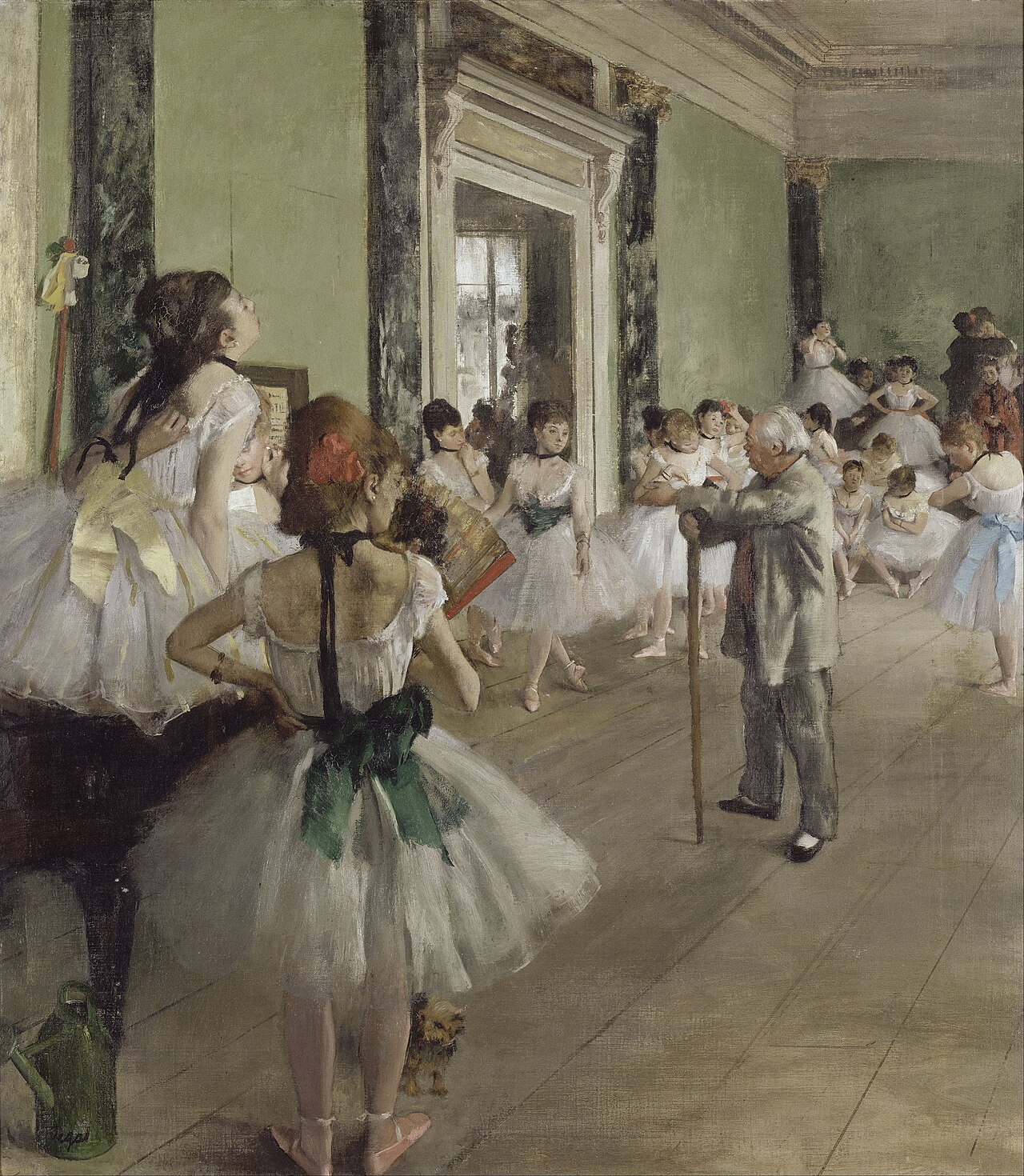
The Dance Class
Edgar Degas
public_domain
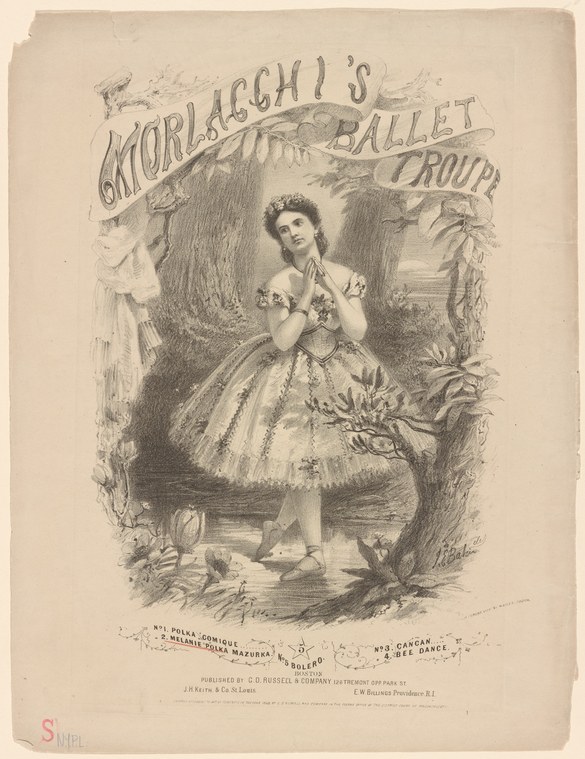
Morlacchi's Ballet Troupe
Unknown artist · 2019
public_domain
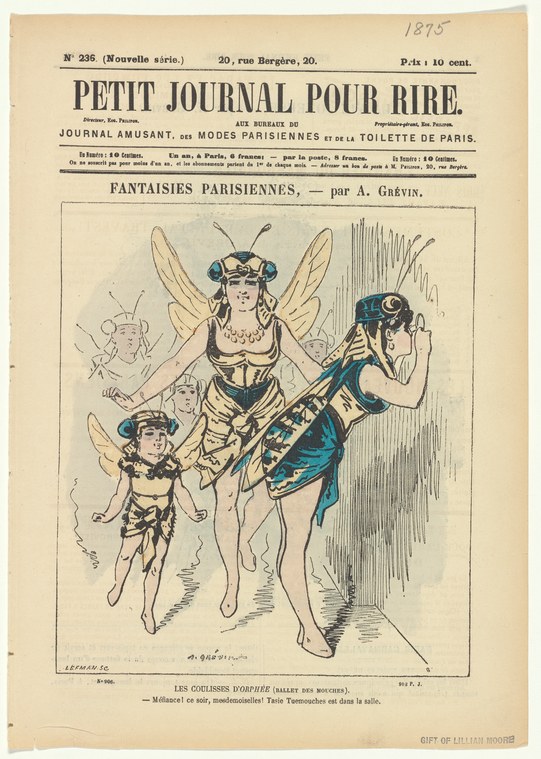
Dance cartoons
Unknown artist · 2019
public_domain
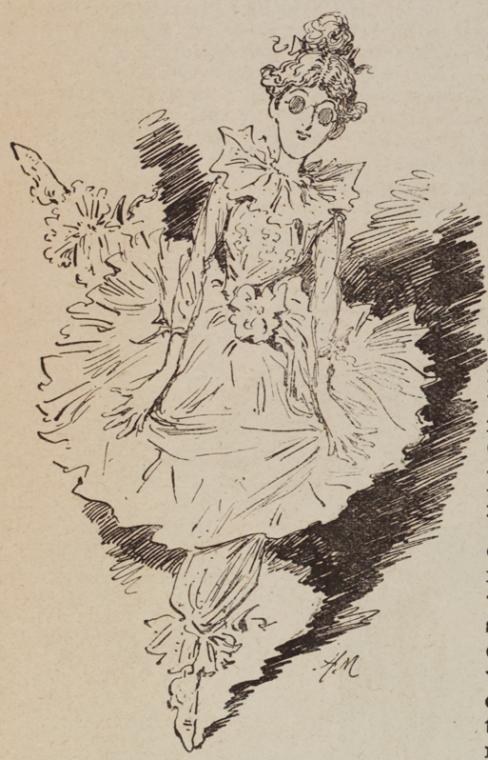
Ballet dancer
Unknown artist
public_domain
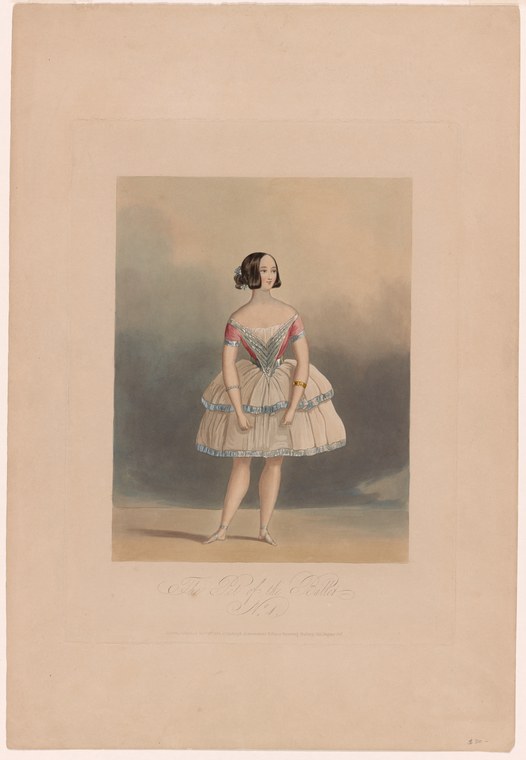
The Pet of the Ballet
Unknown artist · 2023
public_domain
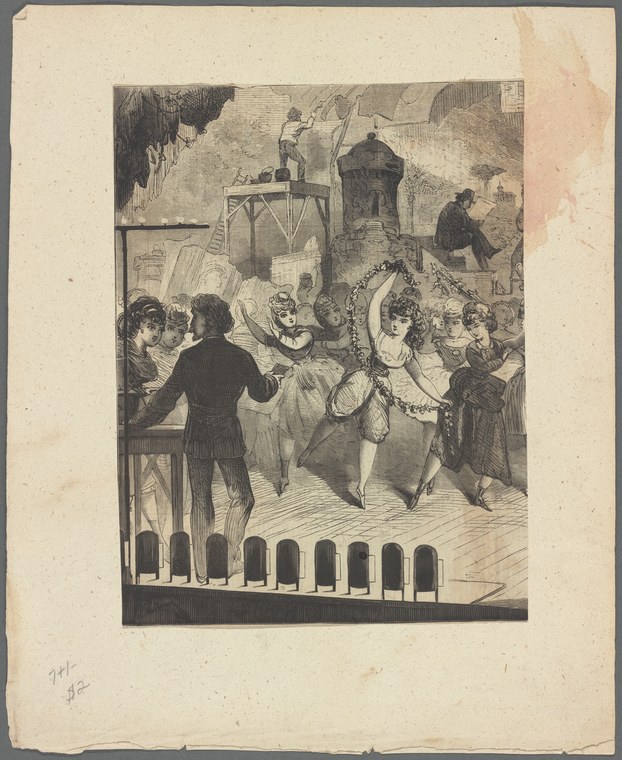
Ballet rehearsal onstage
Unknown artist
public_domain
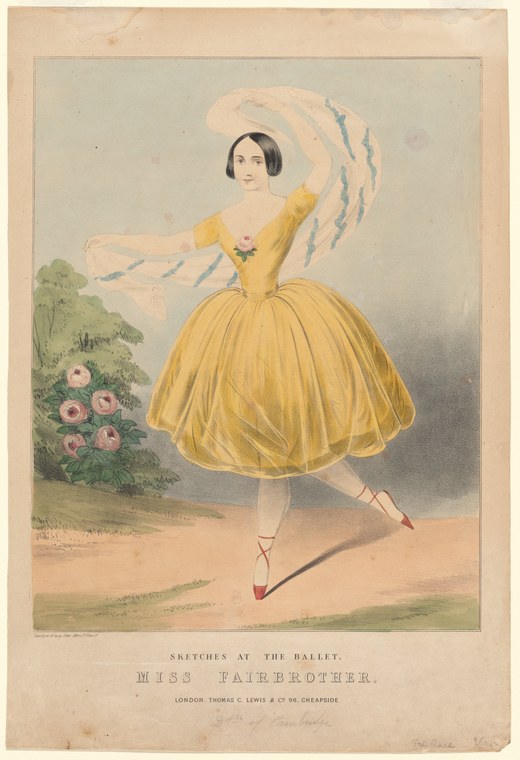
Sketches at the ballet
Unknown artist · 2019
public_domain
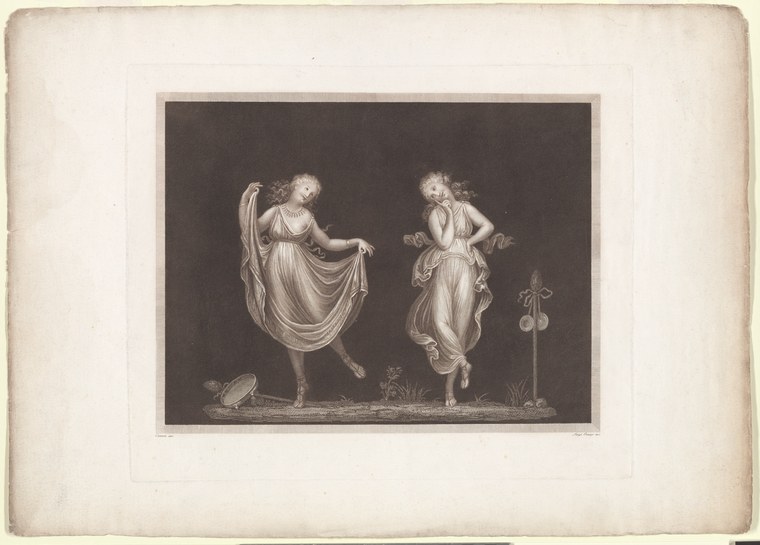
Ancient dancing
Unknown artist · 2019
public_domain
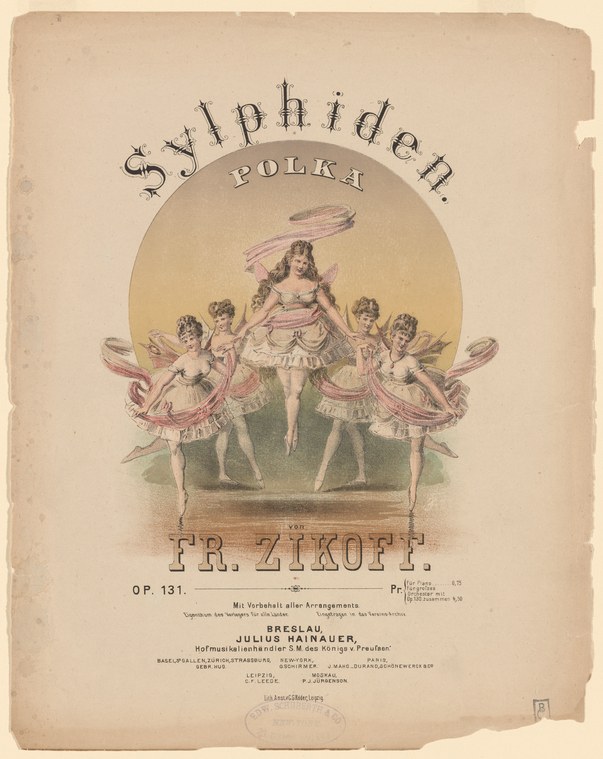
Sylphiden. Polka
Unknown artist
public_domain
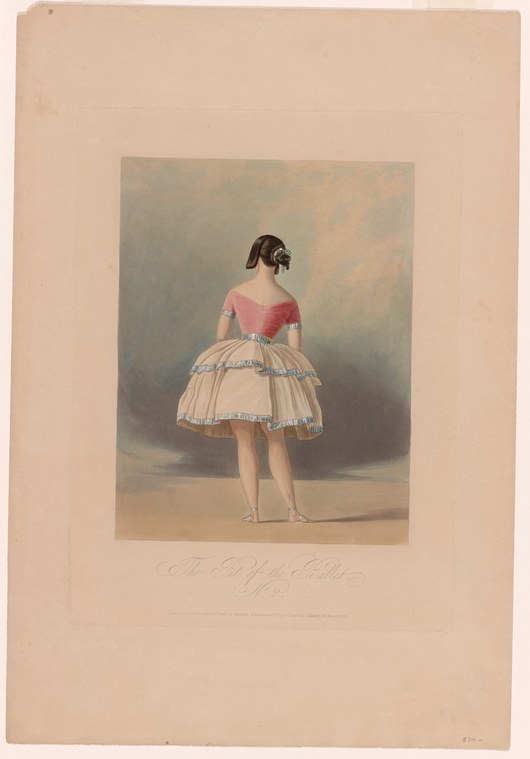
The pet of the ballet
Unknown artist
public_domain
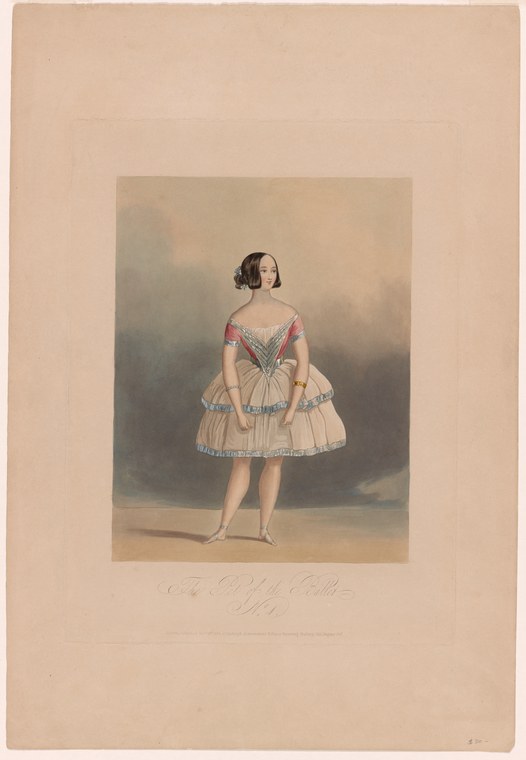
The Pet of the Ballet
Unknown artist
public_domain
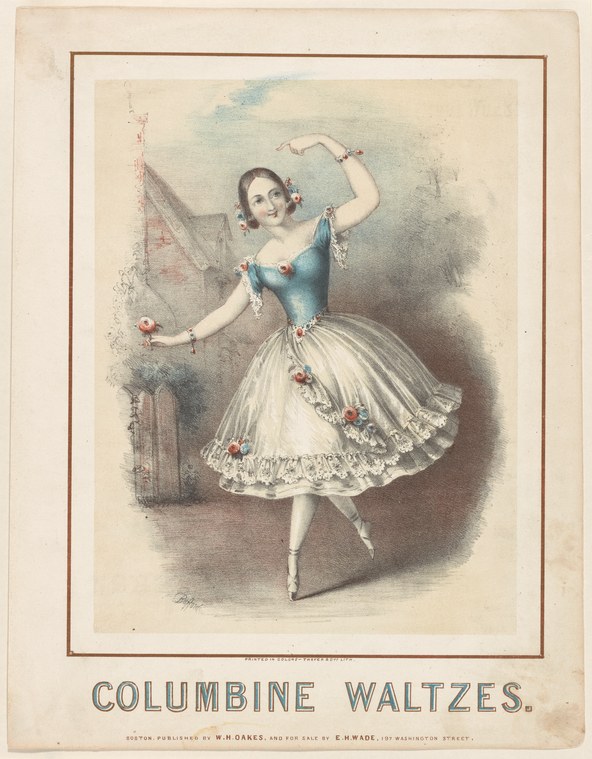
Columbine waltzes
Unknown artist
public_domain
Continue Exploring
Lineage of Dance
500 years of dance evolution
Champions of Dance
Winners of marquee national & world titles
Language of Dance
161 dance terms & translations
Listening of Dance
Tempo, timing & musicality tools
Gallery of Dance
5,700+ artworks from museum collections
Attire of Dance
Evolution of dance dress across eras
Keep the thread going
Dance history, technique, and the occasional rabbit hole — in your inbox. Thoughtful, infrequent, unsubscribe anytime.
Free. No spam. One click to leave.