49 works in this view — arrow keys or swipe to move between them.
Dance in Art
Cinderella
Brotherston, Lez
- Collection:
- Costume design
- Source:
- Victoria and Albert Museum
- Rights:
- Rights vary by item — check the source record before reusing this image. Source record ↗
- Recorded as:
- V&A — check rights per item
Lez Brotherston is an internationally recognized theatre and dance designer whose work has defined the visual language of major ballet and contemporary dance productions. This drawing is a primary document of how a major designer approached the Cinderella narrative in the early 21st century—what silhouette, color, and emotional register they chose for the transformed heroine. For dancers and historians, the pose and the rendering offer insight into how character, psychology, and movement potential are embedded in costume design before a single rehearsal begins.
What you are looking at
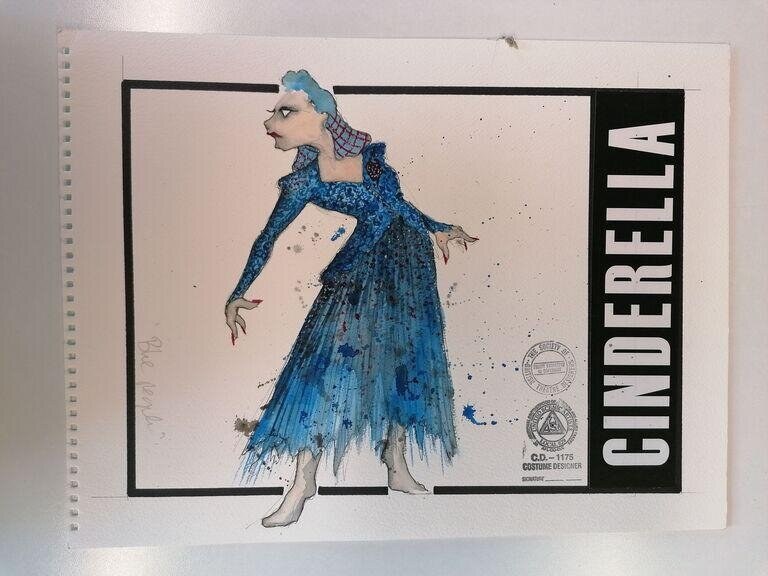
A single figure in profile, facing left, wears a floor-length gown in deep blue with a speckled or watercolor texture suggesting movement and atmosphere. The dress has long sleeves and a voluminous skirt that tapers toward the hem with an irregular, painterly edge suggesting decay or dissolution—patches of the fabric appear worn or faded to white. A coordinating blue headpiece crowns the figure. The pose is elegant but restrained: the dancer stands with one arm extended forward at waist height, the other relaxed at the side, the body slightly angled as if pausing mid-gesture or mid-journey. The composition is theatrical and formal, framed within a bold black rectangle that isolates the figure against a pale ground. A large sans-serif label reading "CINDERELLA" runs vertically down the right edge of the frame, asserting the work's identity as costume design.
The dancing
The single figure occupies a three-quarter standing position, weight evenly distributed. The forward arm is extended with an open hand and relaxed fingers—a gesture neither balletic nor athletic, but quietly expressive and inward-turning. The head is held in profile with a contemplative or downcast gaze. There is no partnering, no turnout, no lifted épaulement; the posture suggests restraint and a softer, more naturalistic carriage than classical ballet demands.
The dance depicted
This is a costume design for the character of Cinderella, most likely for a ballet production given the fairy-tale subject matter and the theatrical context of costume design documentation. The blue gown and the stylization suggest a moment after transformation—the ball gown or a gown of enchantment—rather than the ash-covered servant state. The pose and the figure's inward quality suggest a character at a threshold, caught between states. Without seeing the full production, it is difficult to identify a specific ballet tradition (Petipa, Ashton, contemporary), but the softness of the gesture and the absence of balletic precision in the drawn body suggest a 20th-century or contemporary interpretation rather than classical Romantic or Imperial styles.
How it was made
This appears to be a watercolor or mixed-media costume design on paper, with ink outlining and a fluid, translucent application of blue pigment to the gown. The irregular washes and spattering suggest either deliberate artistic technique to evoke the magical or transformative nature of the garment, or the document's age and handling. The printed label and production codes (visible in the lower portion) indicate this is a professional working drawing from a theatre archive, produced for costume construction and reference. The combination of precise line work with expressive color suggests it was made by or under the supervision of a trained costume designer for a formal production record.
About this work
This is a costume design drawing for the character of Cinderella, attributed to Lez Brotherston, a prominent contemporary theatre and dance designer. The work documents a single gown—likely the ball gown or enchanted dress—in a moment of quiet, introspective stillness that departs from classical ballet's typical dynamism. The blue watercolor technique with its areas of fading and transparency seems deliberately chosen to evoke magic, transformation, and the ephemeral quality of the fairy tale. As a piece of theatre design practice, it belongs to the archive of professional costume documentation that shapes how audiences understand and remember dance on stage.
How to look at it
Attend first to the silhouette and how the designer has rendered the fabric's weight and movement. The irregular edges of the skirt are not accident but choice—they suggest magic, time, transience. Notice the restraint of the gesture: this is not a dancer mid-leap or in classical pose, but a character pausing, reflecting. The blue is not naturalistic but theatrical and symbolic. Finally, consider the relationship between the drawn body (spare, even delicate) and the elaborate dress: the costume will transform the wearer, or vice versa.
The artist
Lez Brotherston is a British theatre and dance designer who has worked extensively with the Royal Ballet, English National Ballet, and major contemporary choreographers. Known for his imaginative use of color, historical reference, and emotional resonance in design, Brotherston bridges classical and contemporary aesthetics. His work typically combines meticulous draftsmanship with expressive technique, as seen in this Cinderella drawing, and he is celebrated for designs that enhance rather than constrain the dancer's body and movement vocabulary.
The period
In the early 21st century, Cinderella has been the subject of multiple high-profile ballet productions and reinterpretations, including versions by Matthew Bourne and other contemporary choreographers seeking to complicate or reimagine the fairy tale. Classical versions (Petipa, Ashton, Ratmansky) coexist with experimental takes that foreground psychology and social critique. This design likely dates to a production from the 2010s or later, when there was renewed interest in costume as a site of character development and when watercolor and mixed-media design drawings remained standard professional practice despite the rise of digital design tools.
Where it lives
This work is held in the Victoria and Albert Museum's Theatre and Performance Collection, a major archive of costume and stage design drawings. The printed codes and labels indicate it was part of a formal production record, likely for a major British or international ballet company. As a design document, it is both an artwork and a working tool—made to inform construction and to preserve the designer's vision for future reference or restaging.
Dance in this work
Questions about this work
Is this a drawing of an actual costume, or a fantasy design?
This is a costume design drawing made by the designer before the garment was constructed. It served as a blueprint for the costume maker and a record of the designer's vision. Whether the actual costume realized this design exactly, or was adapted in construction, cannot be determined from the drawing alone.
What does the blue speckled texture mean?
The watercolor technique with its irregular washes and areas of fading likely serves multiple purposes: it conveys the magical and ephemeral nature of Cinderella's transformation, suggests the quality of stage lighting and movement, and demonstrates the designer's expressive approach to the medium. The effect may also be partly the result of the document's age and handling.
Why does the figure not look like a typical ballet dancer?
The pose is intentionally restrained and inward-turning, suggesting character and emotion over technical display. This approach is characteristic of contemporary and character-focused costume design, where the body in repose reveals psychology rather than virtuosity. The lack of balletic turnout or lifted carriage suggests the designer prioritized authentic human presence over classical convention.
More dance artwork





