49 works in this view — arrow keys or swipe to move between them.
Dance in Art
Hug Backstage
mary mccartney
- Collection:
- Photograph
- Source:
- Victoria and Albert Museum
- Rights:
- Rights vary by item — check the source record before reusing this image. Source record ↗
- Recorded as:
- V&A — check rights per item
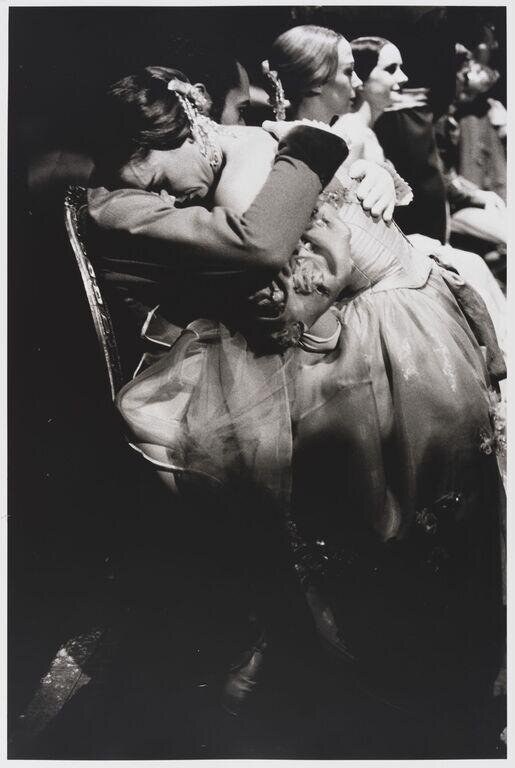
The photograph offers a counterpoint to the usual focus on dancers' technical virtuosity and formal positions. By capturing the moment after performance—a moment of vulnerability and connection—it documents the human costs and rewards of theatrical life, and reminds us that dance is work performed by bodies that tire, emotions that release, and people who rely on each other.
What you are looking at
A black-and-white photograph captures an intimate moment backstage, likely after a performance. A woman in the foreground, wearing a light-colored dress with visible pleating and gathered fabric, leans forward in an embrace with another figure whose head is obscured. Her posture is relaxed and informal, her body angled into the embrace. Behind them, several other figures are visible in soft focus—some seated, others standing—creating a sense of a crowded backstage area. The lighting is dramatic, with strong shadows defining the figures against a dark background, typical of theatrical or event photography. The composition draws the viewer's eye to the tender moment of physical connection in the foreground while the blurred background suggests the bustle of performance life.
The dancing
The principal figure is a woman whose body language conveys emotional release and intimacy—her shoulders are relaxed, her head tilted, and her weight settled into the embrace. Her arm position and the way her dress folds suggest a moment of exhaustion or emotional catharsis after physical exertion. The figure she embraces is less clearly defined, but the mutual lean suggests reciprocal affection. The presence of other figures in the background—some standing, some seated—indicates this is a shared moment within a group, perhaps a company of dancers or performers. No visible footwork or dance-specific positioning is evident; the bodies are at rest or in transition.
The dance depicted
The image most likely documents theatrical performers, probably ballet dancers, in a backstage moment. The formal dress of the woman and the theatrical setting suggest this is professional dance performance context. However, the photograph captures a moment of rest and emotion rather than active dance. The quality of the embrace and the setting suggest this may document the human dimensions of theatrical dance life—the camaraderie and release that follows physical and emotional performance. Without more specific evidence of technique, company affiliation, or performance details, the dance context cannot be narrowed further.
How it was made
This is a black-and-white photograph, likely a professional press or documentary photograph from a theatrical or dance company. The dramatic chiaroscuro lighting—with strong contrast between illuminated and shadowed areas—suggests studio or theatrical lighting, or skilled darkroom technique. The use of selective focus, with sharp detail on the embracing figures and soft blur on the background, indicates either a fast film stock and shallow depth of field or careful darkroom manipulation. The grain and tonal range suggest mid-to-late 20th-century photographic technology. As a photograph, this work circulated within dance and theatrical communities, likely in archives, press collections, or company documentation, and would have reached a professional and educated audience familiar with theatrical practice.
About this work
This photograph documents a private moment in theatrical life: two performers in backstage embrace, captured in the informal space between the structured world of staged performance and everyday life. The image belongs to a tradition of theatrical documentation that privileges human connection and emotional truth over the disciplined positions of formal dance. Mary McCartney's photograph asks viewers to see dancers not as bodies executing technique but as people bound by shared artistic experience, exhaustion, and affection. The work represents an important perspective on dance as embodied work and human relationship rather than aesthetic spectacle alone.
How to look at it
Observe the specific moment McCartney has chosen: not a leap, a turn, or a structured position, but the dissolution of theatrical persona in a moment of privacy. Notice how the formal dress and theatrical setting anchor this as a performance moment, yet the bodies read as unrehearsed and unposed. The lighting technique—dramatic and carefully managed—treats this private moment with the same visual weight usually reserved for on-stage performance, suggesting that this embrace is itself worthy of theatrical attention. The blur of the background figures emphasizes the intimacy of the foreground while insisting that this moment exists within a community of shared practice.
The artist
Mary McCartney is a British photographer and documentary filmmaker known for intimate portraiture and theatrical documentation. She has worked extensively with performing arts companies and has created both still and moving image work exploring performers' lives on and offstage. Her practice typically privileges access, intimacy, and the human dimensions of professional practice, and this backstage moment reflects her characteristic approach to the subject.
The period
This photograph dates to 2004, a period when theatrical dance documentation had moved beyond the formal studio portrait into candid, behind-the-scenes imagery. By the early 2000s, dance photography was increasingly exploring the gaps between performance and reality, influenced by the broader visual culture of celebrity and documentary photography. Simultaneously, British theatrical culture—particularly at major companies like the Royal Ballet—had become more accessible to documentary photographers, allowing for the kind of intimate access this image represents.
Where it lives
The work is held in the V&A (Victoria and Albert Museum) collection, which holds significant archives of theatrical and dance photography and documentation. As a 2004 photograph in a major institutional collection, it has been accessioned and preserved as part of professional documentation of contemporary dance and theatrical practice.
Dance in this work
Questions about this work
Is this a famous dance company or performance?
The photograph does not identify the specific company, dancers, or performance. The formal staging and theatrical lighting suggest a professional company, likely British given McCartney's practice, but the image itself does not indicate which dancers are pictured or what production this was.
What style of dance is this?
The formality of the dress and the theatrical setting suggest classical or contemporary theatrical dance, possibly ballet, but the photograph captures a moment of rest rather than active dance, so the specific style cannot be determined from the image alone.
Why is the backstage moment important to document?
Backstage moments reveal the emotional and physical reality of performance work—the exhaustion, release, and human connection that frames the disciplined work of the stage. By photographing this moment with theatrical attention, McCartney insists that dancers' lives offstage are as worthy of visual documentation as their performances.
More dance artwork





