49 works in this view — arrow keys or swipe to move between them.
Dance in Art
Theatre costume
Wilhelm
- Collection:
- Theatre costume
- Source:
- Victoria and Albert Museum
- Rights:
- Rights vary by item — check the source record before reusing this image. Source record ↗
- Recorded as:
- V&A — check rights per item
This garment documents the everyday practice of early 20th-century theatrical dance—not the high art of concert dance, but the popular musical theatre where most professional dancers of the period earned their living and where audiences experienced dance. The precise, labour-intensive construction reveals assumptions about a performer's body, movement range, and the durability required by nightly performance.
What you are looking at
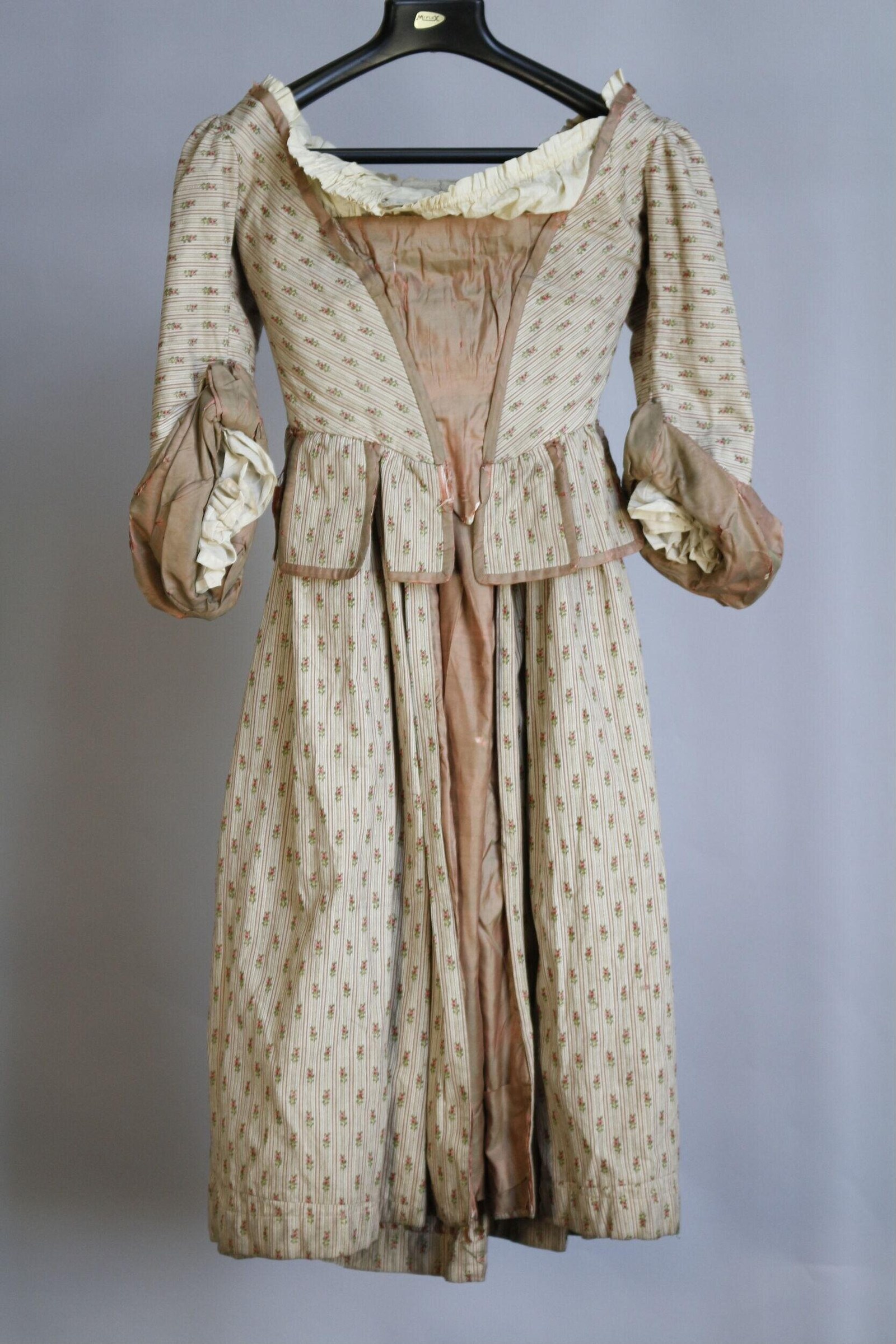
A woman's theatre costume from the early 20th century hangs on a black wooden hanger against a neutral background. The dress is constructed in two layers: an outer layer of cream linen or cotton printed with a small, repeating brown geometric or floral motif, and an inner layer of peachy-tan silk visible through the openings and at the front of the bodice. The bodice features a squared neckline trimmed with gathered cream silk ruffles, and the sleeves are three-quarter length with deep cuffs of the same peachy silk, finished with cream ruffles at the wrist. The skirt is gathered and falls to mid-calf, with four inverted box pleats creating structured panels down the front. The construction and proportions—the high waistline, the modest gathered skirt, and the layered aesthetic—are consistent with early 1910s theatre costuming.
The dancing
No living figure is shown; this is a costume garment displayed on a hanger. The dress itself communicates posture through its construction: the squared shoulders and gathered waist suggest the upright, corseted silhouette of early 1910s fashion, while the full skirt and modest sleeve length indicate movement constrained by the conventions of theatrical dress of that era. The layering of contrasting fabrics and the precision of the pleating suggest a costume designed to hold its shape and read clearly from a distance.
The dance depicted
This is a theatre costume, likely for a comedic or character role in early 20th-century theatrical productions. The modest, rustic-appearing fabrics and print, combined with the practical construction, suggest a peasant, servant, or country character type common in operetta, comic opera, or musical theatre of the period. The costume would have been worn in a staged theatrical dance or musical performance rather than in social or concert dance, and the cut and construction indicate it was designed for an actress-dancer navigating the demands of both spoken performance and choreographed movement.
How it was made
This is a three-dimensional textile object—a garment constructed from hand-sewn or early machine-stitched pieces. The outer layer appears to be printed linen or cotton, a technique allowing for the repeat pattern. The layering technique, use of silk for contrast, and hand-finished details such as the gathered ruffles are consistent with early 20th-century theatrical costume production, likely created by a professional costume maker or atelier rather than a commercial ready-made. The preservation and documentation of the garment as a museum object reflects the value placed on theatre archives and the material culture of performance.
About this work
This is an early 1910s theatre costume, likely German or European (attributed to a maker named Wilhelm in the collection record). The dress exemplifies the practical yet decorative aesthetic of Edwardian-era theatrical costuming, designed for an actress-dancer performing a character role in operetta or musical theatre. It combines fashionable silhouettes of the period with the functional requirements of stage movement and visibility from a distance. The costume belongs in a dance archive because it is evidence of how theatrical dance was clothed and choreographed in a specific place and time, and how the body was shaped and presented in popular musical theatre before the radical costume reforms of mid-century modernism.
How to look at it
Notice first the construction: the carefully planned pleats and the precision of the ruffles indicate this was made for a professional theatre, not a amateur production. Observe how the two-layer technique creates visual interest even in stillness—the contrast between the printed outer layer and the peachy silk shows an understanding of stage lighting and sightlines. The squared neckline and modest sleeve length, typical of 1910s fashion, would have allowed the performer's neck, shoulders, and arms freedom for gesture and movement. The full gathered skirt would have moved with the performer, creating visual momentum while remaining modest and practical.
The artist
The costume is attributed to Wilhelm, identified in the collection record as a maker. No further biographical information is available. Wilhelm may have been a costume designer, tailor, or atelier proprietor working in early 1910s Europe, possibly in Berlin or another major theatrical centre.
The period
The early 1910s saw the height of operetta and comic opera across Europe and the United States—forms that demanded performers who could sing, act, and move with charm and precision. While the Ballets Russes (founded 1909) was revolutionizing avant-garde theatrical dance, the majority of theatrical performers and audiences were engaged with musical theatre, revue, and light opera. Costume design remained deeply conservative in these popular forms, adhering closely to fashionable silhouettes of the day, with modifications for practical movement and stage visibility. The layering technique visible here—showing an undergarment or contrasting fabric—was both a practical choice (the inner layer could be replaced or washed separately) and a visual one, adding depth and interest to the stage picture.
Where it lives
The costume is held in a theatre costume collection, catalogued as a work from 1912 attributed to Wilhelm. The collection is identified in the record by the source code 'va'—likely referring to a major European or international theatre archive. The object is catalogued as a theatre costume rather than as a decorative or fashion garment, indicating it was preserved as evidence of performance practice.
Dance in this work
Questions about this work
Who wore this costume?
The record does not identify the performer. The costume's design—modest, practical, and in character fabrics—suggests a supporting or character role, possibly a servant, peasant, or country girl in a musical theatre production.
What show was this costume worn in?
The record does not specify. Given the date (1912) and the style of construction and materials, it likely appeared in an operetta, comic opera, or musical theatre production of the early 1910s, possibly in a German-speaking theatre, but this cannot be confirmed from the available information.
Why is the undergarment visible?
The layering is both practical and intentional. The inner peachy silk layer could be replaced or washed separately, extending the costume's life. From a stage perspective, the contrast between the printed outer layer and the visible silk creates depth and visual interest under theatrical lighting.
What does this costume tell us about early 1910s theatre dance?
It shows that most theatrical dancers of the period were working in commercially produced musical theatre, not avant-garde concert dance, and that their costumes remained close to fashionable silhouettes even while allowing for movement. The labour-intensive hand finishing indicates the costume was a significant investment—evidence that professional theatre was a well-funded enterprise.
More dance artwork





