Golden Age Broadway Jazz
Also known as: Golden Age Show Dancing, Book Musical Jazz, Classic Broadway Show Dance
History & Cultural Context
Golden Age Broadway Jazz names the house style of the integrated book musical between Oklahoma! (1943) and Fiddler on the Roof (1964). It is not one vocabulary but a shared working method. Agnes de Mille brought concert ballet and American folk gesture; Jerome Robbins brought dramatic structure and ferocious specificity; Jack Cole brought isolations, deep second-position lunges and the fusion of bharatanatyam, flamenco and Lindy Hop he called urban folk dance; Michael Kidd brought athletic, character-driven comedy. What unites them is subordination to story. De Mille took the first choreography Tony in 1947 for Brigadoon and Kidd won the same year for Finian's Rainbow before staging Guys and Dolls in 1950; Robbins won in 1948 for High Button Shoes and again in 1958 and 1965 for West Side Story and Fiddler on the Roof. Performers of the period, among them Cole alumni Gwen Verdon, Carol Haney, Buzz Miller and Matt Mattox, were expected to act, sing and hold ballet line at once. Sequences are built as long dramatic arcs with entrances, reversals and buttons rather than as eight-count combinations, and they are staged for an audience seated out front, never for a mirror.
Cultural Significance
The style is inseparable from the postwar Broadway economy of long runs, resident dance arrangers and producers willing to fund an eighteen-minute ballet inside a comedy. It also established the career chorus dancer as a recognizable American professional identity.
Characteristic Movement & Technique
Grounded second-position lunges, contractions and body isolations from Cole; balletic extension, epaulement and traveling runs from de Mille; sharp directional changes, held stillness and character-specific gesture from Robbins. Almost everything is angled front and played to the balcony.
Partnering Dynamics
Partnering is dramatic rather than technical: lifts and supported turns register status, courtship or violence between named characters. Ensemble couples echo the leads to widen the stakes rather than to display virtuosity.
Competitive Context
There is no competition circuit. The equivalent arena is the Broadway audition and the Tony Award for Best Choreography, first presented in 1947, though Golden Age repertoire is standard material at school and college musical theatre showcases.
Regional Variations
Broadway set the template and the West End, national tours and regional stock houses reproduced it, usually with smaller ensembles. Hollywood adaptations reframed the same choreography for camera, changing spacing, sightlines and the direction the dancing faces.
Common Misconceptions
It is often mistaken for a codified technique. It is a staging discipline: the shared trait is that steps serve the book, not that the steps are the same. That is precisely what separates Musical Theatre Dance from Theatrical Jazz, where the vocabulary itself is the subject.
Peak Popularity
Signature Figures
- Agnes de Mille
- Jerome Robbins
- Jack Cole
- Michael Kidd
- Gower Champion
- Gwen Verdon
- Carol Haney
- Matt Mattox
Notable Codifiers
- Jack Cole
- Agnes de Mille
- Jerome Robbins
- Matt Mattox
Dance Lineage
Golden Age Broadway Jazz Music & Tempo
Drawn from 22 Golden Age Broadway Jazz tracks in the LODance music library.
Example tracks at practice tempo
- Whatever Lola Wants — Original Broadway Cast of Damn Yankees
- Who's Got the Pain? — Original Broadway Cast of Damn Yankees
- Steam Heat — Original Broadway Cast of The Pajama Game
- The Rhythm of Life — Original Broadway Cast of Sweet Charity
- Big Spender — Original Broadway Cast of Sweet Charity
- I'm a Brass Band — Original Broadway Cast of Sweet Charity
Legends of Golden Age Broadway Jazz
Dancers, choreographers and teachers whose work shaped this style.
Golden Age Broadway Jazz on screen
Films and television where Golden Age Broadway Jazz appears, with the sequences worth watching for.
 West Side Story (1961)7 sequences indexedPrologue · 00:05:07 · chor. Jerome RobbinsJet Song · 00:21:01 · chor. Jerome RobbinsDance at the Gym — Blues · 00:31:58 · chor. Jerome Robbins
 The Gay Divorcee (1934)4 sequences indexedThe Continental · chor. Dave GouldDon't Let It Bother You — nightclub chorus · 00:02:04 · chor. Hermes Pan (dance director); Dave Gould (dance ensembles staged by)The Continental production number · 01:16:20 · chor. Hermes Pan (dance director); Dave Gould (dance ensembles staged by)
 Top Hat (1935)3 sequences indexedThe Piccolino production number · 01:29:07 · chor. Fred Astaire (uncredited); Hermes PanThe Piccolino reprise and sunset exit · 01:38:34 · chor. Fred Astaire (uncredited); Hermes PanThe Piccolino finale · chor. Hermes Pan (dance direction; Fred Astaire collaborated)
 An American in Paris (1951)1 sequence indexedI'll Build a Stairway to Paradise · 01:00:18 · chor. Gene KellyOn the Town (1949)1 sequence indexedNew York, New York location number
 Singin' in the Rain (1952)1 sequence indexedBeautiful Girl Montage · 00:34:43 · chor. Gene Kelly; Stanley Donen (uncredited)
 The Band Wagon (1953)1 sequence indexedA New Sun in the Sky · 01:23:10 · chor. Michael Kidd
Poster artwork from TMDB.
 This site uses TMDB and the TMDB APIs but is not endorsed, certified, or otherwise approved by TMDB.
Golden Age Broadway Jazz in performance
One staged work in the Limelight catalogue contains Golden Age Broadway Jazz.
- West Side Story1957Musical theatre · Jerome Robbins · defining style
The whole 1957 production, era-defining Broadway jazz-dance idiom — Finger-snapping, gestural, character-specific jazz vocabulary layered onto balletic technique across the show's dance numbers. Source: "The original balletic, finger snapping choreography w…
Every claim above is quoted from a cited source and names where in the work the style appears. Claims we could not place or could not quote are held back from this list and shown on the work’s own page instead. Browse the full performance catalogue →
What to Wear
Attire guidance for Golden Age Broadway Jazz and other Musical Theatre Dance dances. Each card below is sized to the moment — class, practice, social, or competition — because the wardrobe shifts as the stakes do.
Reading the cards
In Class
Fitted enough that the teacher can see your line, because this style is judged on shape and storytelling from the neck down: leggings or jazz pants, a fitted top or leotard, hair pinned off the face so it doesn't break the focus of a head snap. Jazz shoes cover most classes; bring character shoes when the class works in heels, and expect Fosse-derived material to ask for turned-in, isolated positions your shoes must let you pivot in. Add knee pads or thicker leggings for classes with floorwork or knee slides.
Social Dancing
There is no social floor for musical theatre — the public-facing equivalent is the audition room, and it has its own conventions. Wear something solid-coloured and form-fitting that shows your body clearly and hints at the show you're auditioning for without being a costume; carry both jazz shoes and character shoes in your bag and change to whatever the choreographer calls. Keep jewellery minimal, avoid logos, and never wear brand-new shoes to an audition.
Competition
Musical Theatre is a scored category on the studio competition circuits (as opposed to a separate governing body), judged on character and storytelling as much as technique, so costume is expected to read the number from the back row. Whatever the design, it has to survive the choreography: straps secured, nothing that can slip during lifts or floorwork, and shoes broken in and taped well before the event. In professional work the costume is assigned by the production and your job is to arrive with your own well-fitted shoes and dance belt.
Shoes
Leather character shoes with a secure strap and a leather or suede sole. Around 2–2.5" is the workhorse height for anything with turns and leaps; 3" only when the number is mostly walking and kick lines, since a higher heel puts you in relevé before you start and raises the odds of rolling an ankle. Soft soles let you point the foot and land jumps; hard soles give support under a heavy costume. Jazz shoes cover most class work, with tap and ballet shoes as the show demands — Capezio, Só Dança and Bloch at the affordable end, LaDuca and Miller & Ben as the Broadway premium tier.
In Practice
Rehearsal wear is fitted so the choreographer can see shape and alignment: leggings or jazz pants, a fitted top, hair fully secured. Rehearse in the shoe you will perform in, from as early as possible — heel height changes your balance point, and tech week is the wrong time to discover it. Period shows call for a rehearsal skirt in roughly the weight of the costume, and anything with floorwork or knee slides calls for pads under the leggings.
Common Pitfalls
- ✗Wearing brand-new character shoes to an audition or performance — they need breaking in and a broken-in shoe is a safer shoe.
- ✗Jumping to 3" heels before the ankles are conditioned; rolled ankles come from height, not from choreography.
- ✗Baggy layers that hide the line — this style is scored on shape, so the shape has to be visible.
- ✗Arriving at an audition with only one type of shoe when the choreographer may call for either jazz or character.
- ✗Dancing in socks on marley, which is genuinely slippery, rather than in proper shoes or bare feet.
Price Range
- Budget: Capezio or Só Dança character shoes roughly $40–80, jazz shoes $30–60, leggings and fitted tops you already own.
- Mid: Bloch character shoes roughly $70–120, a dance belt $25–40, knee pads $20–40, a rehearsal skirt $40–80.
- Premium: LaDuca or Miller & Ben, made in Italy and often custom-fitted, at several hundred dollars a pair — the professional standard for eight shows a week, and worth it only once you are dancing that much.
Key Terms
- Character shoe
- Strapped leather heel built for dancing rather than walking — flexible shank, suede or leather sole, heights typically 1.5–3".
- Dance belt
- Supportive undergarment worn under tights or fitted trousers; standard, expected, and not optional in professional rehearsal rooms.
- Rehearsal skirt
- Weighted practice skirt approximating the costume, so the choreography is learned with the fabric rather than against it.
- Sole tape / rosin
- Tape or rosin applied to soles to adjust grip on an unfamiliar stage — too slick and you skid, too tacky and you catch.
- Look like the show
- Audition convention: solid colour, form-fitting, a hint of the era or character — suggestion rather than costume.
Quick Tips
- •Suede-soled shoes allow controlled sliding and pivoting — essential for most partner dances.
- •Avoid rubber soles on dance floors; they grip too much and can cause knee injuries.
- •Bring a separate pair of clean shoes for the dance floor to keep it in good condition.
Sources & Further Reading
Cultural & Historical Context
Golden Age Broadway Jazz emerged from New York City, United States (Broadway) during 1943—1964. Understanding the cultural roots, musical traditions, and social circumstances of this era enriches appreciation for the dance's characteristics and significance.
Formative Influences
Codifiers & Standardizers:
Jack Cole, Agnes de Mille, Jerome Robbins, Matt Mattox
Signature Movement Vocabulary:
Agnes de Mille, Jerome Robbins, Jack Cole, Michael Kidd, Gower Champion, Gwen Verdon, Carol Haney, Matt Mattox
Primary Source Documents
The Library of Dance contains public-domain primary sources for dance history. Copyrighted modern syllabi are indexed with purchase links to their respective copyright owners. Search by dance name or codifier to discover primary source documents.
Last reviewed: September 2026 — This dance profile synthesizes historical research, cultural documentation, and contemporary practice knowledge to provide authoritative context.
More in Musical Theatre Dance
Fosse Style
Bob Fosse's codified stage vocabulary of turned-in knees, rolled shoulders, isolated hips, splayed hands and hat-and-cane props, built into numbers of tightly controlled, sardonic movement.
Dream Ballet
The extended wordless narrative ballet inside a musical, entered from a character's mind, revealing desire or dread that the script and lyrics cannot state aloud.
Precision Kickline
Precision chorus dancing in which a long line executes identical steps and eye-high kicks in exact unison, descended from Russell Markert's Rockettes at Radio City Music Hall.
Contemporary Broadway
The Broadway idiom from the 1990s onward, fusing ballet, hip-hop, street and contemporary technique into character-specific storytelling, usually authored by a choreographer who also directs.
Musical Theatre Character Dance
Period and character styling for the stage, in which folk, social and national dance is stylized in character shoes to establish a show's time, place and social world.
Golden Age Broadway Jazz in art
Browse the gallery →Works our catalogue identifies as depicting golden age broadway jazz.
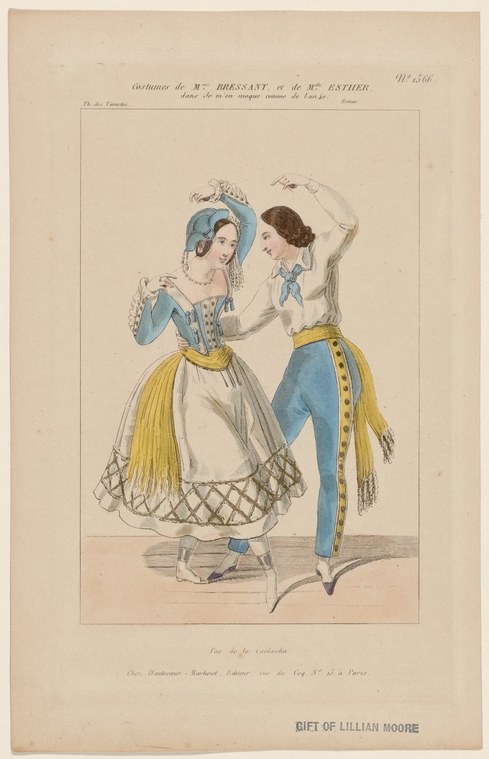
Costumes de Mme Bressant, et de Melle Esther, dans Je m'en moque comme de l'an 40. Revue
Unknown artist
Public Domain
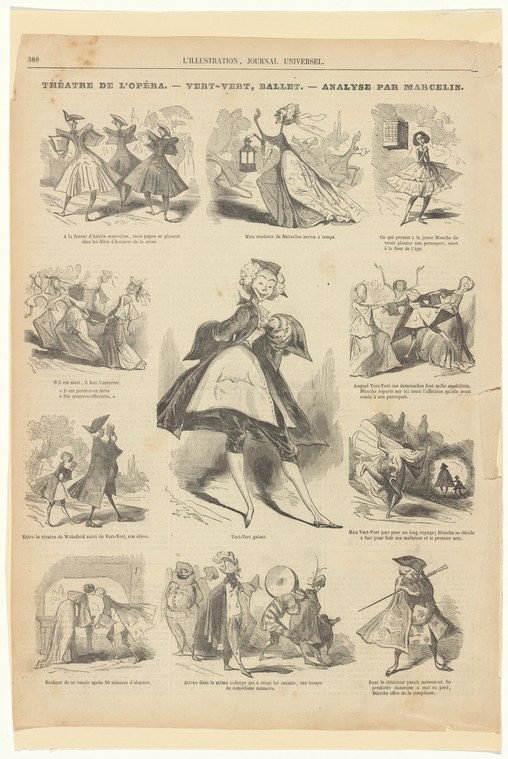
Dance prints from L'Illustration
Unknown artist
Public Domain
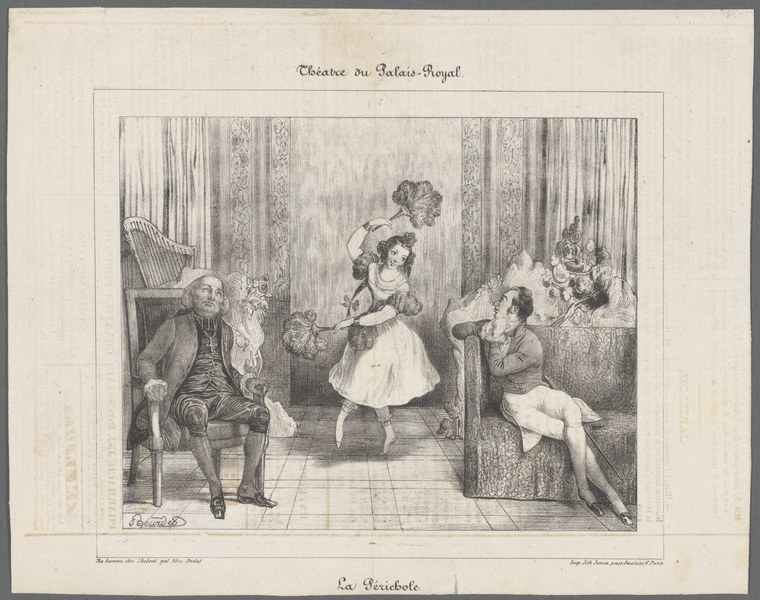
La Périchole
Unknown artist
Public Domain
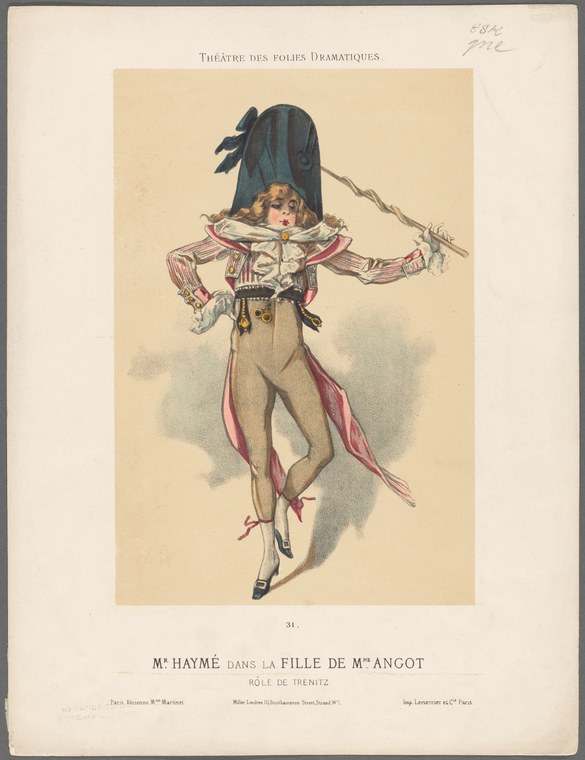
31. Mr. Haymé dans La fille de Mme. Angot, rôle de Trenitz, Théâtre des Folies Dramatiques
Unknown artist
Public Domain
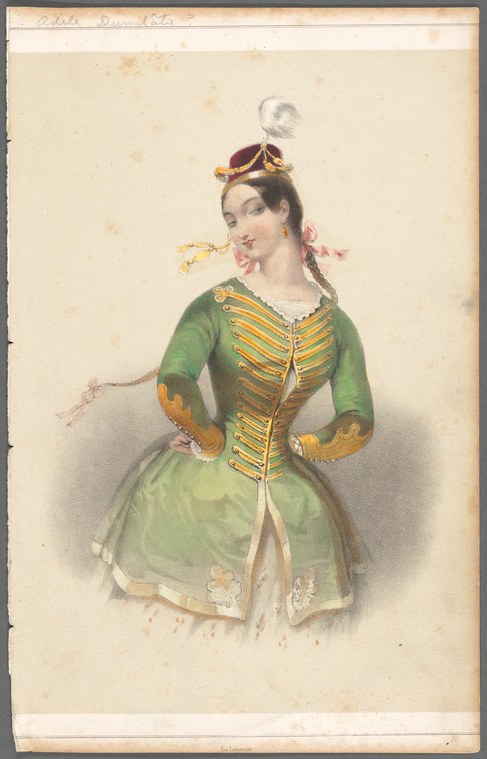
Woman in green military-style jacket and red shako with white feather, her arms akimbo
Unknown artist
Public Domain
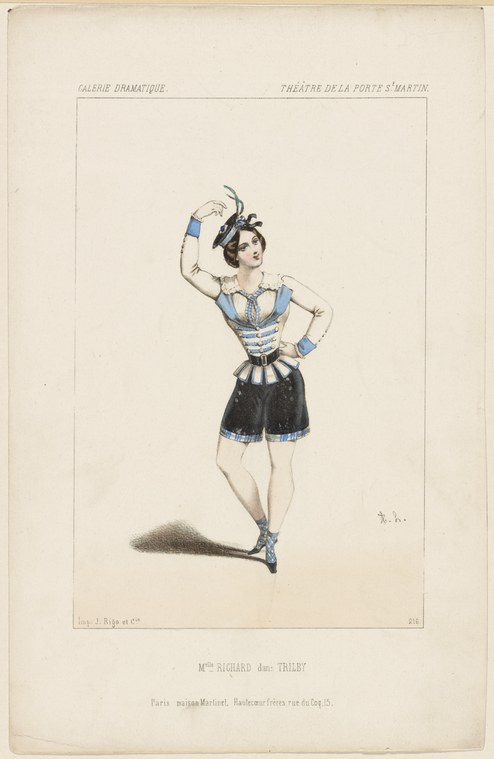
Melle Richard dans Trilby
Unknown artist
Public Domain
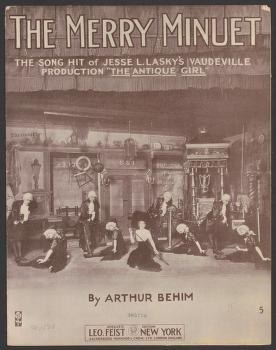
The Merry minuet
Unknown artist · 1912
Public Domain
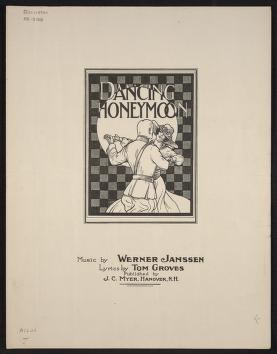
Dancing honeymoon
Unknown artist · 1918
Public Domain
Dance me around
Unknown artist · 1920
Public Domain
Continue Exploring
Lineage of Dance
500 years of dance evolution
Champions of Dance
Winners of marquee national & world titles
Language of Dance
161 dance terms & translations
Listening of Dance
Tempo, timing & musicality tools
Gallery of Dance
5,700+ artworks from museum collections
Attire of Dance
Evolution of dance dress across eras
Keep the thread going
Dance history, technique, and the occasional rabbit hole — in your inbox. Thoughtful, infrequent, unsubscribe anytime.
Free. No spam. One click to leave.