49 works in this view — arrow keys or swipe to move between them.
Dance in Art
Tempest
Jules Marre
- Collection:
- Fancy dress costume design
- Source:
- Victoria and Albert Museum
- Rights:
- Rights vary by item — check the source record before reusing this image. Source record ↗
- Recorded as:
- V&A — check rights per item
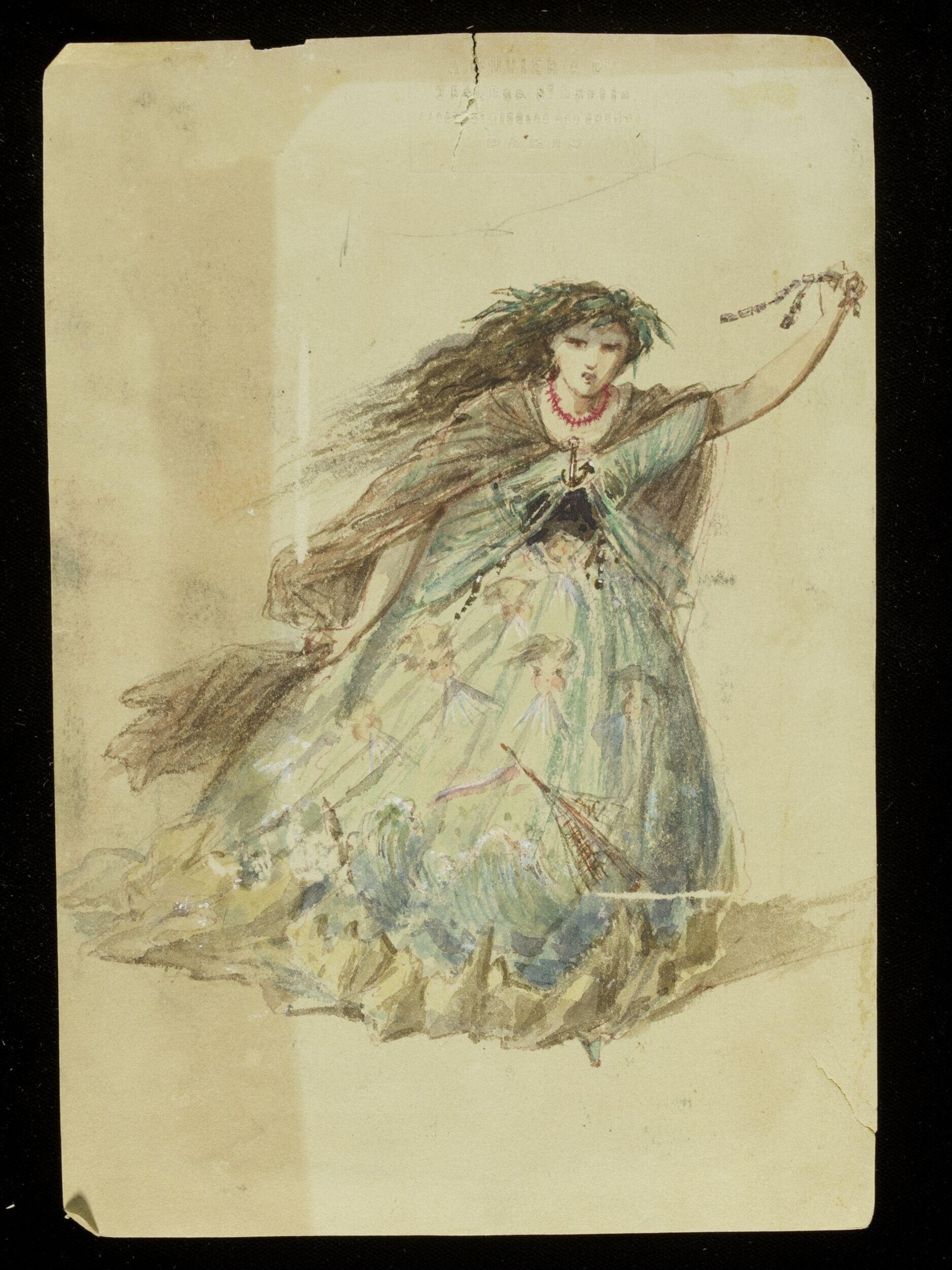
This drawing records how mid-nineteenth-century theatrical dance was imagined and realized: the gazes, silhouettes, and emotional codes that defined Romantic ballet for its audience. For dancers and historians, it shows the collaborative relationship between choreography, costume design, and the performance of character—and reveals how thoroughly the Romantic ideal of weightlessness and otherworldliness was embedded in the material culture of dance.
What you are looking at
A single female figure dominates the composition, rendered in watercolor and ink on aged cream paper. She stands in a dynamic pose with her body in three-quarter view, her weight shifted and her left arm raised high, holding what appears to be a garland or wreath of leaves and flowers. Her right arm is extended downward and to the side. Long, flowing dark hair streams around her shoulders; her face is pale and delicately featured, turned slightly toward the viewer with an expression of languorous intensity. She wears a diaphanous, voluminous gown in soft greens and blues with layered, translucent drapery that swells around her legs and trails across the ground. The dress is gathered at the bodice with darker striping, and she wears a coral or red beaded necklace. The pose suggests movement—the figure appears almost suspended in a moment of lyrical floating or swaying, rather than a grounded stance. The setting is minimal, suggested only by pale washes of color; the figure exists in an ethereal, undefined space. The style is romantic and theatrical, typical of mid-nineteenth-century costume design.
The dancing
The figure's body weight appears lifted and ethereal, with a slight contrapposto lean suggesting forward momentum or gentle flight. The raised left arm reaches upward and outward in a lyrical gesture; the extended right arm is lower, creating an asymmetrical, flowing arm line. The overall silhouette is one of upward lift and openness—the shoulders are relaxed, the torso elongated. The pose suggests neither the rigid formality of classical ballet technique nor the grounded earth-connection of folk dance, but rather the romantic languor of mid-century theatrical movement.
The dance depicted
This is almost certainly a costume design for a Romantic-era theatrical dance or pantomime, most likely representing an ethereal, supernatural female character—a sprite, sylph, or enchanted being. The soft, flowing aesthetic and the subject matter (particularly the garland of vegetation) suggest roles common to Romantic ballet of the 1850s–60s, when such imagery proliferated. The pose and costume are characteristic of how dancers in this tradition were conceived: weightless, otherworldly, and expressive of emotion through liquid gestures rather than technical display. The artist has prioritized decorative line and romantic reverie over anatomical precision or the depiction of actual technique.
How it was made
This is a watercolor and ink drawing on laid paper, typical of theatrical costume design from the mid-nineteenth century. The technique allows rapid, expressive rendering suitable for quickly communicating design ideas to seamstresses, milliners, and performers. Watercolor provides soft color transitions and transparency, perfectly suited to depicting the sheer, floating fabrics imagined for romantic characters. The combination of delicate ink line work with colored washes was the standard medium for European costume design in this period and implies an audience of theatre professionals rather than public exhibition.
About this work
This is a costume design drawing for a theatrical dance character from the mid-nineteenth century, attributed to Jules Marre and dated 1860. It depicts a female figure in an ethereal, romantic pose wearing a flowing, layered gown in pale greens and blues, her dark hair streaming, holding a garland aloft. The style and subject matter place it within the Romantic ballet tradition, when dancers embodied supernatural and allegorical figures through weightless, expressive movement and luxurious costume. Marre's design prioritizes the visual poetry of the complete theatrical picture—costume, hair, pose, and emotion—rather than the technical display of classical technique. The work belongs in a dance art collection because it documents both the aesthetic of a major historical dance style and the creative process by which that aesthetic was realized on stage.
How to look at it
Attend first to the moment the designer chose to freeze: not a step or a jump, but a sustained attitude of lyrical suspension. The raised arm and lifted body suggest not effort but weightlessness—the figure seems to float rather than stand. Notice how the costume is designed to amplify this impression: the voluminous, layered skirts obscure the legs and feet (where the weight-bearing would be), while the diaphanous fabrics suggest air and movement. The pale, melancholic face and the delicate hands complete the picture of an inner emotional world, not a displayed physical feat. This is how Romantic ballet asked its audience to read the female dancer: as a creature of emotion, otherworldliness, and visual beauty rather than technical virtuosity.
The artist
Jules Marre was a theatrical costume designer and illustrator active in France in the mid-nineteenth century. He worked in the tradition of romantic theatrical design, creating costume plates for opera, ballet, and pantomime. His practice was typical of specialized theatrical designers of his era, who combined fashion illustration technique with knowledge of stage requirements and character dramaturgy. Little is recorded of his individual biography, but his work places him within the large community of Parisian theatre professionals who served the flourishing dance and opera culture of the Second Empire.
The period
The 1860s were the tail end of the Romantic ballet era in Europe, when the aesthetic codified in the 1830s and 40s—weightless sylphs, tragic heroines, supernatural maidens—remained the dominant visual and kinetic language of theatrical dance. By 1860, the style was becoming codified and nostalgic, even as new directions in choreography and technique were emerging elsewhere. The costume design tradition Marre worked in was at its height: theatre was the primary visual entertainment, and costume design was a recognized, respected craft. The rise of photography in this decade meant that costume designs like this one began to coexist with photographic records of actual performers in role, gradually changing how theatrical imagery circulated.
Where it lives
The work is held in the Fancy dress costume design collection in the VA (Victoria & Albert Museum). It is a design drawing, not a photograph of an executed costume or a record of an actual performance—a working document created to communicate a theatrical vision to makers and performers.
Dance in this work
Questions about this work
Who was Jules Marre?
Marre was a mid-nineteenth-century French theatrical costume designer. Little detailed biography survives, but his work places him among the professional designers who served Paris's opera and ballet companies during the Second Empire, a period when theatrical design was a major art form and specialized craft.
What character was this costume for?
The design does not name a specific role, but the aesthetic—ethereal, surrounded by vegetation, dreamlike—points toward sylph, fairy, or enchanted maiden roles common in Romantic ballet. The garland of leaves suggests a connection to nature magic, possibly a character from works like *La Sylphide* or similar supernatural stories that dominated the period.
Was this costume ever actually worn?
The record does not indicate whether this particular design was executed and performed. It may have been unrealized, revised, or used for a small or forgotten production. Costume designs of this kind circulated widely and sometimes influenced multiple productions or were adapted by other theatres.
Why does the figure look so ethereal and weightless?
This was the central aesthetic goal of Romantic ballet in the 1830s–1860s: to make the female dancer appear to transcend gravity and physicality. The pose, the floating drapery, the pale face, and the raised arm all work together to communicate otherworldliness—a quality audiences of the time found beautiful and expressive of romantic emotion.
More dance artwork





