49 works in this view — arrow keys or swipe to move between them.
Dance in Art
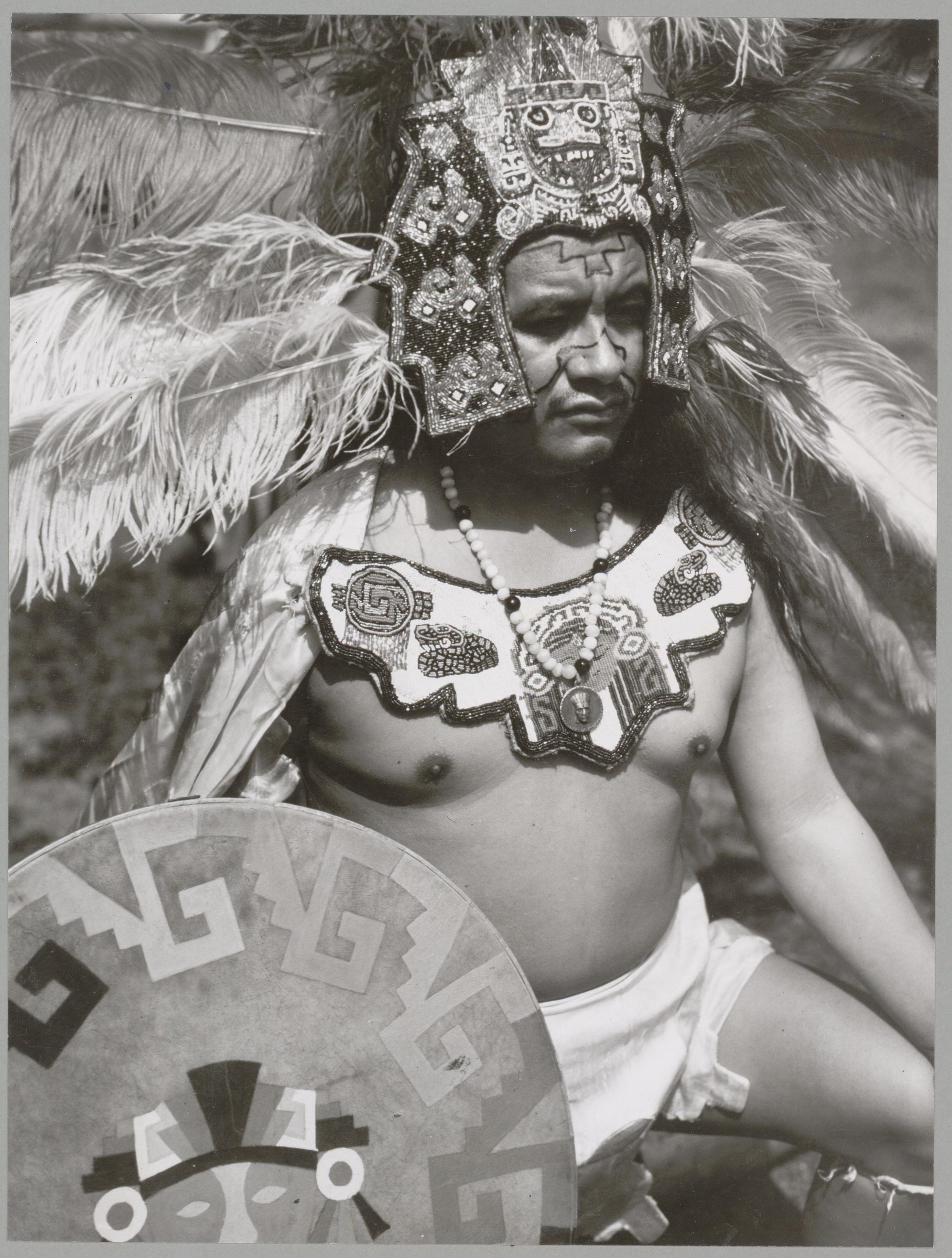
Oaxacan Feather Dancer.
Unknown artist
- Collection:
- Prints & Photographs
- Source:
- Library of Congress
- Rights:
- Rights vary by item — check the source record before reusing this image. Source record ↗
- Recorded as:
- Library of Congress — no known restrictions (verify per item)
Oaxacan feather dance represents a living continuity of pre-Columbian Mesoamerican ceremonial and warrior traditions, maintained through centuries of colonial and modern change. This photograph documents the visual richness and material sophistication of the tradition at a specific moment (1980), serving as both an artistic portrait and an ethnographic record for understanding indigenous Mexican dance practice.
What you are looking at
A male dancer stands frontally facing the camera, bare-chested and wearing a decorative white cloth around his waist. His body is framed by enormous feathered wings in white, spreading dramatically on either side. The dancer wears an elaborate headdress featuring intricate beadwork, embroidery, and a stylized face or mask motif mounted above his head. His face is painted with ceremonial markings. He holds a large decorated circular shield or dance ornament in his lower left hand, which displays geometric patterns in black and white. The photograph is black and white, well-lit, and appears to have been taken in an outdoor or studio setting with soft, diffused light that emphasizes the texture of the feathered costume and creates strong contrast with the decorated elements.
The dancing
The dancer is in a relatively static, frontal pose—weight evenly distributed, arms held at his sides with the shield resting low. His body faces the camera directly with no apparent movement or dynamic weight shift frozen in the frame. The pose is presentational rather than caught mid-motion, suggesting this is a portrait of the dancer in full ceremonial regalia rather than a capture of a specific choreographic moment. The scale of the wing costume dominates the composition and is clearly the primary visual element the photographer intended to emphasize.
The dance depicted
This is Oaxacan feather dance (Danza de los Plumas), a pre-Columbian and colonial-era ceremonial and festival dance tradition from the Oaxaca region of Mexico, particularly associated with Zapotec and Mixtec cultures. The feather dance remains an important element of Oaxacan fiestas and celebrations. The dancer is documented in full performance costume: the massive feathered headdress and wings reference the spiritual and martial symbolism of birds in Mesoamerican tradition, while the shield and facial markings indicate a warrior or deity persona. The static presentation suggests this is costume documentation or a formal portrait of a performer in full regalia rather than an action photograph of the dance in progress.
How it was made
This is a black and white photograph, likely a gelatin silver print or similar photographic print from the 1980 date. The quality of detail, the even lighting, and the controlled composition suggest professional studio or semi-controlled outdoor photography. The photograph was clearly made to document and showcase the costume's visual elements rather than capture the dance's movement; the frontal pose and careful lighting prioritize texture (the feathers, beadwork, embroidery) over dynamic action.
About this work
This photograph documents an Oaxacan feather dancer in complete ceremonial costume, a tradition rooted in pre-Columbian Mesoamerican dance and still performed at festivals and celebrations in Oaxaca, Mexico. The image captures the visual splendor of the costume—the enormous white feathered wings, the beaded and embroidered headdress, the painted face, and the decorated shield—as a formal portrait rather than as a moment of performance. It represents both an ethnographic record and an artistic composition celebrating the material culture and visual power of this indigenous Mexican dance tradition.
The work sits at the intersection of documentary photography, cultural preservation, and folk dance documentation. It belongs in a gallery of dance in art because the costume is inseparable from the dancer's body and the movement traditions it represents, even though the photograph freezes rather than shows motion.
How to look at it
Attend to the scale and geometry of the feathered wings—they are engineered structures requiring considerable skill to construct and wear, and they dominate the composition to emphasize their cultural and aesthetic importance. Notice the intricacy of the beadwork and embroidery on the headdress and the chest ornament, which would be invisible in motion but are rendered in precise detail by the still photograph. The formal, frontal pose invites you to read the costume as a complete visual statement rather than as part of a flowing choreography; this is intentional documentation of material culture as much as artistic representation.
The period
The 1980 date places this photograph in an era of renewed interest in folk and indigenous dance documentation in Mexico and the United States. By the late 20th century, anthropological and artistic interest in indigenous Mexican traditions, including the danzas of Oaxaca, was growing. Oaxacan feather dance had been continuously performed in local festivals and celebrations throughout the 20th century, and by 1980 it was increasingly documented by photographers, ethnographers, and cultural institutions seeking to preserve and celebrate indigenous Mexican heritage.
Where it lives
The photograph is held in the Library of Congress Prints & Photographs collection. It is catalogued as a documentary or ethnographic photograph from their holdings.
Dance in this work
Questions about this work
Is Oaxacan feather dance still performed?
Yes. The feather dance tradition remains an active part of Oaxacan festivals and celebrations, particularly in towns with Zapotec and Mixtec communities. It has been continuously performed since pre-Columbian times, through the colonial period, and into the present, making it one of Mexico's oldest living dance traditions.
What do the feathers represent?
The feathers reference the sacred role of birds—particularly quetzals and eagles—in pre-Columbian Mesoamerican cosmology and warfare. Birds symbolized divine power, the sun, and martial prowess. The dancer, wearing the feathered costume, embodies these spiritual and warrior qualities.
Why is this a photograph rather than a video or film?
The 1980 date and the Library of Congress holdings suggest this is an archival photograph made for documentation and preservation purposes. The static, formal pose and professional lighting indicate the photographer's intent to create a clear, detailed record of the costume and regalia rather than to capture movement.
More dance artwork





