49 works in this view — arrow keys or swipe to move between them.
Dance in Art
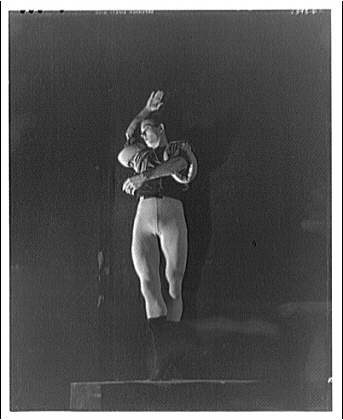
Ballet dancer. Ballet dancer at National Theater VI
Unknown artist
- Collection:
- Prints & Photographs
- Source:
- Library of Congress
- Rights:
- Rights vary by item — check the source record before reusing this image. Source record ↗
- Recorded as:
- Library of Congress — no known restrictions (verify per item)
This photograph records classical ballet as it was performed and presented in 1920, at a moment when ballet was establishing itself in European and American theater as a prestigious art form. The formal documentation itself is significant: early twentieth-century photographs like this one shaped how ballet was seen and understood by the public, and remain key evidence of how dancers moved, how they were dressed, and how their work was valued.
What you are looking at
A solitary female dancer stands spotlit against a dark background, captured in a moment of poised stillness. She wears a short, light-colored tunic or dress with what appears to be classical draping, her body held in an alert, upright posture. One arm is raised expressively overhead, the other bent at the elbow across her body in a controlled position. Her legs appear long and extended, with weight centered in an engaged stance. The photograph is taken from a low angle that emphasizes height and verticality, lending the figure an almost monumental quality. The stark lighting creates strong shadows and definition, isolating the dancer completely from any environmental context—no stage furniture, curtain, or wing is visible.
The dancing
The dancer's frame is balletic: shoulders are held back and down, the raised arm extends with control and lift rather than abandon, and the supporting leg is straight and engaged. The head is held with the upright carriage classical ballet demands. The bent arm suggests preparation or an intermediate position in a phrase of movement. Her musculature and the clarity of her line indicate formal training. The single figure, posed rather than caught in action, suggests this is a formal studio or production photograph rather than a candid moment.
The dance depicted
This is almost certainly a classical ballet photograph. The tunic dress, the balletic arm carriage, the weight distribution, and above all the formal studio setting all point to ballet training and performance. The 1920 date places this in the era of classical ballet's establishment in theatrical practice, when such documentation photographs were becoming common for soloists and featured dancers. The raised arm and controlled posture indicate a moment drawn from classical ballet vocabulary—possibly the beginning or preparation of a variation, or a pose held for the camera. The low camera angle and theatrical lighting suggest this was a professional production photograph rather than a casual studio record.
How it was made
This is a black-and-white photographic print, likely gelatin silver or similar silver halide process. The crisp contrast, the way the light models the form, and the grain structure are consistent with studio photography of the 1920s. The deliberate framing, the theatrical spotlight effect, and the careful posing indicate this was a commissioned or production photograph, probably made for circulation among critics, the press, or the company's archives. The photograph's formal qualities—its lighting design, composition, and technical execution—suggest it was made by a professional theatrical or dance photographer rather than a casual snapshot.
About this work
This is a formal studio photograph of a classical ballet dancer, dated 1920 and associated with the National Theater VI. The work captures a moment of composed poise in what appears to be a solo variation or formal portrait. The image is typical of early twentieth-century dance documentation, when theaters began to commission photographs to record performances and publicize their soloists. It belongs in a gallery of dance in art both as a document of ballet practice and costume in the 1920s, and as an example of how dance has been visually recorded and circulated—through the photographer's eye and the theater's need to preserve and promote its work.
How to look at it
Look first at the alignment of the body: how the weight is distributed, how the spine extends, how the arms relate to the torso. The raised arm is not casual but controlled and purposeful, characteristic of classical ballet's formal vocabulary. Notice the low camera angle, which was a deliberate choice to aggrandize the figure and create a monumental effect—this is not how we normally see dancers in the studio, but how the photographer chose to present her. The shadow work is equally important: the strong, sculptural shadows define the musculature and create a sense of solidity and presence. The complete absence of context—no stage, no other dancers, no props—makes this about the dancer's body and its formal arrangement, not about narrative or character.
The artist
The photographer is not recorded. The association with National Theater VI suggests this was made as part of the theater's documentation practice, possibly by an in-house photographer or a studio photographer commissioned for that purpose. The formal quality and professional execution indicate an experienced practitioner of theatrical photography.
The period
In 1920, classical ballet was entering a period of consolidation and international prestige, particularly following the success of the Ballets Russes in the 1910s. Ballet had begun to establish itself in permanent theater companies and teaching institutions across Europe. The photograph's formal qualities—its theatrical lighting and careful studio posing—reflect the increasing professionalization of dance documentation and the role of photography in creating and circulating the public image of dancers. This was an era when ballet companies recognized the value of promotional and archival photographs, and when the photographic medium was becoming the primary way most people encountered dance.
Where it lives
The photograph is held in the Library of Congress Prints & Photographs collection and derives from their holdings. Its association with National Theater VI suggests it was created as institutional documentation, likely intended for archival, promotional, or critical circulation within the theater world.
Dance in this work
Questions about this work
What theater was this dancer performing at?
The photograph is associated with National Theater VI, but the dancer's identity and precise role in the company are not recorded in the available catalogue information.
Is this a stage photograph or a studio portrait?
It appears to be a formal studio photograph taken specifically for documentation or publicity purposes, not a candid shot from a performance. The controlled lighting, composed posture, and studio backdrop are all characteristic of commissioned dance portraiture of this period.
Why was the camera positioned so low?
The low angle was a deliberate photographic choice to make the figure appear more imposing and monumental, and to emphasize the vertical extension and control of the dancer's body—standard practice in early twentieth-century dance photography.
What does the costume tell us?
The short tunic or dress is consistent with classical ballet of the 1920s, when such garments—derived from earlier Romantic ballet costumes—remained standard for soloists in classical repertory, particularly in European companies.
More dance artwork





