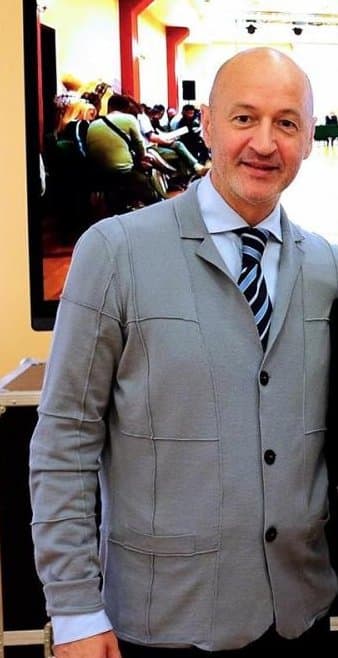
Competitive Champion · Teacher · Community Builder
Andrew Sinkinson
King of Foxtrot
Why They Matter
His mastery of Foxtrot technique and musicality set the benchmark for International Standard, and his London Ball competition became a prestigious fixture on the dance calendar.
Known For
Biography
Andrew John Sinkinson was born on April 16, 1964, in Southport, England, and became one of International Style Ballroom's most decorated amateur and professional competitors. Dancer and historian Jack Reavely recalled seeing the young Sinkinson perform at the Tower Ballroom in Blackpool at around eight years old with childhood partner Audrey Pankhurst, already marked by unusual focus and promise.
Sinkinson's defining partnership was with Irish dancer Loraine Barry. By the late 1980s, they had established themselves as a leading amateur couple, winning the British Open Amateur Ballroom championship at Blackpool in 1987, 1988, and 1989 in succession. Dance organizations also record them as World and European Amateur Ballroom champions. The pair turned professional after their third Blackpool victory.
In 1990, Sinkinson and Barry made their debut at the Professional British Open, winning the Slow Foxtrot section. The British Dance Council records them as British National Professional Ballroom champions in 1991 and 1992. After the partnership ended in 1993, Sinkinson competed with Amanda Owen (winning the British National title that year), Eleny Fotinos, Adele Preston (1996 British National champions), and Charlotte Jørgensen, with whom he won the 1997 British National Professional Ballroom championship and reached major professional finals including runner-up placings at the British Open, World, European, and UK championships.
Sinkinson's influence extended far beyond competition results. As a teacher, adjudicator, lecturer, choreographer, and organizer of the London Ball, he became globally recognized for preserving classical Ballroom principles: clear foot use, coordinated rise and fall, balance through the standing leg, and musical phrasing that avoided decorative distortion. Colleagues called him "Mr Foxtrot" and the "King of Foxtrot" for his distinctive musical continuity and technical precision. His show performances with Jørgensen became widely studied video references, while his lectures carried the same classical priorities to new generations of dancers worldwide.
Sinkinson died on January 11, 2025, one day after teaching with Loraine Barry. He was survived by his wife Irina and children Mark and Sophie. Institutional tributes from the British Dance Council and dance organizations worldwide emphasized both his competitive achievements and the scale of his lasting influence on ballroom teaching and technique.
Career Highlights
Won the first of three consecutive British Open Amateur Ballroom championships at Blackpool with Loraine Barry.
Retained the British Open Amateur Ballroom championship with Barry.
Won a third consecutive British Open Amateur Ballroom title and turned professional with Barry.
Won the Slow Foxtrot section at the couple's first Professional British Open; did not win the overall championship.
Won the British National Professional Ballroom championship with Barry.
Retained the British National Professional Ballroom title with Barry.
Won the British National Professional Ballroom championship with Amanda Owen.
Won the British National Professional Ballroom championship with Adele Preston.
Won the British National Professional Ballroom championship with Charlotte Jørgensen.
Died on January 11; the British Dance Council and international dance organizations issued tributes to his competitive and teaching legacy.
Legacy & Impact
Sinkinson's impact on ballroom dance rests on a rare combination: elite competition results across three decades and a teaching philosophy that preserved classical Standard technique through a period of increasing athleticism in the sport. Dancers continue to study his recorded Foxtrots as models of how technical mechanics—clear foot use, gradual rise and fall, weight through the standing leg—create rather than inhibit musical expression. His emphasis on classical principles, transmitted through lectures and partnerships with successive generations of competitors and teachers, remains a touchstone for those seeking continuity with ballroom's technical and musical foundations.


Explore More Legends
Discover the dancers, teachers, choreographers, and cultural icons who shaped how the world moves.
Keep the thread going
Dance history, technique, and the occasional rabbit hole — in your inbox. Thoughtful, infrequent, unsubscribe anytime.
Free. No spam. One click to leave.