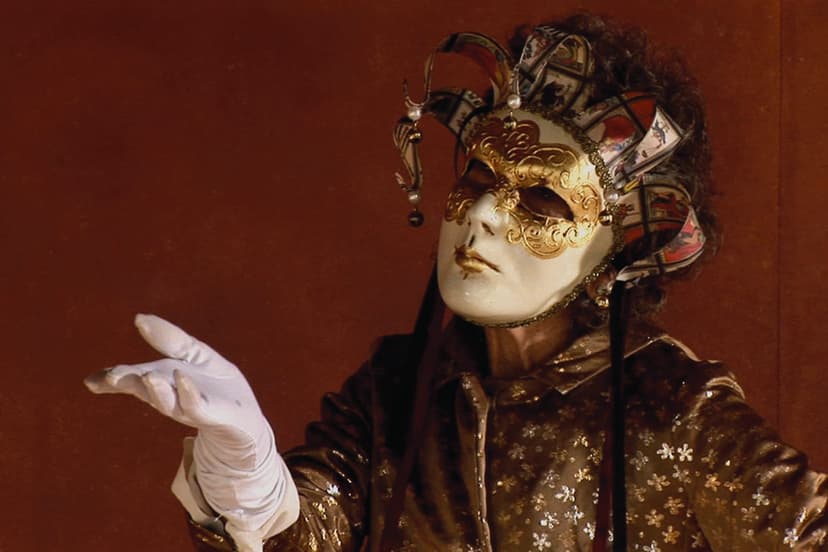
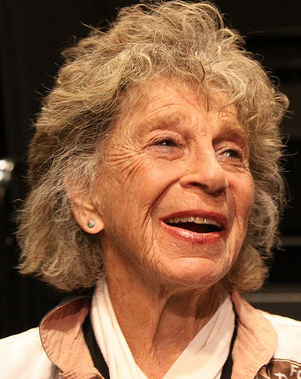
Anna Halprin
Legend of Dance
Why They Matter
Anna Halprin matters because she treated dance as an open creative process rather than a closed repertory of trained bodies and authored steps. Her workshops helped prepare the ground for postmodern dance, while her scores offered practical structures for improvisation and shared decision-making.…
Biography
Anna Halprin, born Anna Schuman in Illinois in 1920, became one of the most influential choreographers of the postmodern era by fundamentally reimagining what dance could be and who could make it. She studied at the University of Wisconsin with Margaret H'Doubler, graduating in 1944, then moved to New York where she worked with Hanya Holm and Martha Graham. Her relocation to the San Francisco Bay Area with her husband, landscape architect Lawrence Halprin, proved crucial: the distance from New York's established modern-dance institutions freed her to develop a radically different practice.
In 1955 Halprin founded the San Francisco Dancers' Workshop on an outdoor dance deck among redwoods that Lawrence designed. Here she displaced fixed step vocabularies with improvisation, task-based action, kinesthetic awareness, and experiments with chance. The Workshop became a laboratory where artists including Simone Forti, Yvonne Rainer, Trisha Brown, and Meredith Monk worked alongside collaborators from the wider avant-garde such as John Cage, Terry Riley, and La Monte Young.
Halprin's development of scores—graphic and written instructions that organized time, place, action, and participation without predetermining every movement—became her signature contribution. *Parades and Changes*, created in 1965, exemplified this approach. When the work was presented in New York in 1967, its inclusion of nudity provoked a ban and threatened arrests. Yet the controversy obscured the work's formal innovation: dressing, undressing, handling materials, and audience proximity became compositional resources in themselves.
During the late 1960s and 1970s, Halprin turned more directly toward social process. *Ceremony of Us*, which premiered in 1969 after workshops with Black participants in Watts and white participants in San Francisco, emerged from this commitment, though the archive notes the work both challenged and reproduced elements of the racial and class status quo of its moment. Her own experience with cancer redirected her further toward dance as a means of personal and communal inquiry. In 1978, Halprin and her daughter Daria co-founded Tamalpa Institute to systematize the Life/Art Process, linking movement with drawing, voice, reflection, psychology, education, and performance. In 1981, Halprin, James Hurd Nixon, and Russell Bass created the score for *Planetary Dance*, a participatory structure that began as local environmental ritual and grew into an internationally repeated dance for peace.
Halprin remained generative into old age, dying at her home in Kentfield, California, on 24 May 2021, at age 100. Her influence lies not in a codified technique but in permissions and methods: attend to sensation, draw from real experience, use a score, share authorship, work outdoors or in civic space, and make performance serve a purpose beyond display.
Career Highlights
Completed studies at the University of Wisconsin after working with dance educator Margaret H'Doubler. Source: [Anna Halprin Digital Archive] Source: [Anna Halprin Digital Archive
Formed the San Francisco Dancers' Workshop, a laboratory for improvisation, task movement, scoring, and interdisciplinary collaboration. Sources: [KQED, digital archive] Sources: [KQED
Developed Parades and Changes, later recognized as a landmark scored and participatory work. Source: [KQED] Source: [KQED
The New York presentation of Parades and Changes at Hunter College was banned after its nudity provoked official action. Source: [KQED] Source: [KQED
Ceremony of Us, made with the San Francisco Dancers' Workshop and Studio Watts School for the Arts, premiered at the Mark Taper Forum. Source: [Anna Halprin Digital Archive] Source: [Anna Halprin Digital Archive
Co-founded Tamalpa Institute with her daughter Daria Halprin. Source: [Tamalpa Institute] Source: [Tamalpa Institute
Co-created the Planetary Dance score with James Hurd Nixon and Russell Bass. Source: [Anna Halprin Digital Archive] Source: [Anna Halprin Digital Archive
Died at her Kentfield home on 24 May at age 100. Source: [Dances for Anna] Source: [Dances for Anna
Gallery
Legacy & Impact
Halprin matters because she treated dance as an open creative process rather than a closed repertory of trained bodies and authored steps. Her workshops helped prepare the ground for postmodern dance, while her scores offered practical structures for improvisation and shared decision-making. Later work extended those ideas into health, environmental ritual, and community conflict. Her legacy is both artistic and methodological: movement can be research, ceremony, civic encounter, and a way of making lived experience visible.


Explore More Legends
Discover the dancers, teachers, choreographers, and cultural icons who shaped how the world moves.
Keep the thread going
Dance history, technique, and the occasional rabbit hole — in your inbox. Thoughtful, infrequent, unsubscribe anytime.
Free. No spam. One click to leave.