Syllabus / System Builder · Cultural Preserver · Community Builder
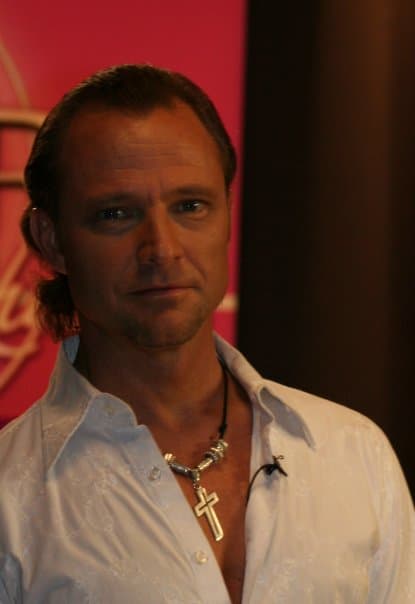
Bob Powers
Ballroom's Digital Archivist
Why They Matter
He made ballroom dance technical knowledge freely accessible online when it had previously been locked behind studio doors and expensive syllabi.
Known For
Watch
Bob Powers and Julia Gorchakova — American Rhythm lecture at the 2013 Ohio Star Ball
Dance Vision
Direct educational record of the partnership's post-competition teaching
Biography
Bob Powers came to ballroom dancing through popular culture rather than childhood competition. By his own account, seeing *Saturday Night Fever* inspired him to pursue dancing. He entered the Arthur Murray system, where he spent sixteen years as a teacher and manager—an apprenticeship that connected technique, teaching, business, and competition.
Powers met Russian dancer Julia Gorchakova in Saint Petersburg, and they formed both a professional partnership and a life partnership, eventually building their base in the United States. By 1993, they had begun their rise to national dominance. The National Dance Council of America's official records list Powers and Gorchakova as U.S. National Professional American Rhythm champions for each year from 1993 through 2004—twelve consecutive titles that established them as the defining partnership of the era.
Their competitive repertoire covered the full American Rhythm program: cha-cha, rumba, swing, bolero, and mambo. Their presentations emphasized musical contrast and distinct character work within each dance, setting them apart through their interpretive range. Beyond the national titles, the partnership is widely credited with achievements in World Mambo competition and a World Showdance final, performances that showcased their versatility.
After their championship run, Powers and Gorchakova continued as coaches, adjudicators, and studio owners. Dance Vision's archival material preserves both their competition-era footage and later educational presentations. Powers has become especially associated with discourse around how Professional American Rhythm can be standardized and taught without stripping away its distinct movement identity—the Cuban action, swing rebound, theatrical flair, and individual character that define the division.
Career Highlights
Inspired to begin dancing after seeing Saturday Night Fever, according to his later career biography. WikiDanceSport WikiDanceSport
Developed as a teacher and manager in the Arthur Murray system; the specialist biography reports sixteen years with the organization. WikiDanceSport WikiDanceSport
Formed a professional partnership with Julia Gorchakova after meeting her in Saint Petersburg. WikiDanceSport WikiDanceSport
Won the first of twelve consecutive U.S. National Professional Rhythm championships with Gorchakova. NDCA Champions NDCA Champions
Retained the national Professional Rhythm title for four more seasons. NDCA Champions NDCA Champions
Extended the uninterrupted championship sequence through the end of the decade. NDCA Champions NDCA Champions
Won three additional U.S. National Professional Rhythm titles. NDCA Champions NDCA Champions
Won the partnership's twelfth consecutive national Professional Rhythm championship. NDCA Champions NDCA Champions
Reported in specialist biographies as a DanceSport Hall of Fame inductee; institution-specific verification remains required. WikiDanceSport WikiDanceSport
Appeared with Gorchakova in an Ohio Star Ball lecture on American Rhythm preserved by Dance Vision. Dance Vision Dance Vision
Continued coaching, judging, studio work, and advocacy around Professional American Rhythm standards. Ballroom Dancing Podcast Ballroom Dancing Podcast
Legacy & Impact
Powers matters to dancers now because his sustained national dominance with Gorchakova across twelve seasons established a model for how American Rhythm could be performed at the highest level while remaining distinctive. His later work as a lecturer and coach bridges competition history to teaching: he has consistently asked how dancers can share recognizable technical principles while preserving the rhythmic, theatrical, and cultural qualities that make American Rhythm itself. His influence extends beyond titles into how the division is understood and transmitted.


Explore More Legends
Discover the dancers, teachers, choreographers, and cultural icons who shaped how the world moves.
Keep the thread going
Dance history, technique, and the occasional rabbit hole — in your inbox. Thoughtful, infrequent, unsubscribe anytime.
Free. No spam. One click to leave.