Daniel Nagrin
Legend of Dance
Why They Matter
Nagrin matters because he made the male modern-dance solo a vehicle for recognizable, conflicted people rather than abstract virtuosity alone. His Broadway experience strengthened his sense of timing and dramatic legibility, while his modern-dance training and political awareness gave ordinary gestu
Watch
Strange Hero
Daniel Nagrin Foundation
Primary visual evidence for Nagrin's dramatic solo method and 1948 repertory.
Dance in the Sun
Daniel Nagrin Foundation
Documents the 1950 solo through Shirley Clarke's dance-film adaptation.
Daniel Nagrin on Jazz and Modern Dance
Jacob's Pillow
Provides Nagrin's own perspective within a major dance institution's archive.
Biography
Daniel Nagrin was born in New York City on May 22, 1917, and became a major American male soloist who joined modern-dance character study, Broadway theatricality, social observation, improvisation, and teaching across a career of more than five decades. His training crossed several strands of American modern dance: he worked with Bill Matons and Anna Sokolow's Experimental Dance Unit, and studied with Martha Graham, Hanya Holm, Helen Tamiris, Elizabeth Anderson-Ivantzova, and Edward Caton. That unusually broad base helped him combine modern-dance weight and dramatic purpose with ballet preparation and theatrical craft.
Nagrin began performing professionally around 1940 and soon worked closely with Helen Tamiris, whom he married. In August 1942 they appeared together at Jacob's Pillow in *My Days Have Been So Wondrous Free*, a duet from *Liberty Song*. His early repertory developed alongside socially engaged American modern dance; his 1944 *Landscape with Three Figures: 1859* was centered on abolitionist John Brown.
From the mid-1940s through the 1950s, Nagrin moved between concert dance, Broadway, film, and national touring. His stage credits included *Up in Central Park*, *Annie Get Your Gun*, *Inside U.S.A.*, *Touch and Go*, and *Plain and Fancy*. He created durable solos including *Strange Hero*, *Man of Action*, and *Dance in the Sun*; filmmaker Shirley Clarke adapted the latter into a short dance film. His work in *Plain and Fancy* earned the 1955 Donaldson Award for best male dancer.
Nagrin and Helen Tamiris co-directed the Tamiris-Nagrin Dance Company during the 1960s. After Tamiris died in 1966, he continued as a solo artist and expanded his experiments with improvisation. In the early 1970s he organized the Workgroup, a collective-oriented company that treated improvisation as both performance practice and a means of investigating group action. His later solo repertory included politically and psychologically charged works such as *The Peloponnesian War*, *The Fall*, and *Jacaranda*.
Teaching and writing became increasingly important to Nagrin's later career. Arizona State University appointed him professor in 1982; he taught there through 1992 and remained professor emeritus. His books addressed longevity, performance presence, improvisation, acting for dancers, and choreography through the "specific image." Nagrin died in Tempe, Arizona, on December 29, 2008, leaving extensive archival holdings at the Library of Congress and New York Public Library and a foundation devoted to preserving and teaching his work.
Career Highlights
Began the professional performance career documented in archival biographies. Online Archive of California Online Archive of California
Appeared with Helen Tamiris at Jacob’s Pillow in My Days Have Been So Wondrous Free. Jacob’s Pillow Jacob’s Pillow
Premiered Landscape with Three Figures: 1859, a dance centered on John Brown. Library of Congress Library of Congress
Created the character solos Strange Hero and Man of Action. Daniel Nagrin Foundation video archive Association for Jewish Studies Daniel Nagrin Foundation video archive
Created Dance in the Sun, later adapted by Shirley Clarke as a short dance film. Daniel Nagrin Foundation Daniel Nagrin Foundation
Received the Donaldson Award for best male dancer for Plain and Fancy, according to the Library of Congress. Library of Congress blog Library of Congress blog
Co-founded the Tamiris-Nagrin Dance Company with Helen Tamiris. NYPL Archives NYPL Archives
Created The Peloponnesian War, extending his politically engaged solo repertory. Daniel Nagrin Foundation video archive Daniel Nagrin Foundation video archive
Joined Arizona State University as a full professor of dance. Arizona State University Arizona State University
Retired from his ASU professorship and became professor emeritus. University of Pittsburgh Press University of Pittsburgh Press
Daniel Nagrin on screen
Films and television featuring Daniel Nagrin, with the sequences we have indexed.
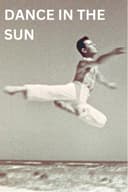
Poster artwork from TMDB.
 This site uses TMDB and the TMDB APIs but is not endorsed, certified, or otherwise approved by TMDB.
Legacy & Impact
Nagrin matters because he made the male modern-dance solo a vehicle for recognizable, conflicted people rather than abstract virtuosity alone. His Broadway experience strengthened his sense of timing and dramatic legibility, while his modern-dance training and political awareness gave ordinary gestures social consequence. The repertory survives not only as historic film but through reconstruction, scholarship, foundation stewardship, and archival collections, allowing dancers to study how character, action, jazz phrasing, and improvisational attention can coexist in one performance practice.


Explore More Legends
Discover the dancers, teachers, choreographers, and cultural icons who shaped how the world moves.
Keep the thread going
Dance history, technique, and the occasional rabbit hole — in your inbox. Thoughtful, infrequent, unsubscribe anytime.
Free. No spam. One click to leave.