F Matthias Alexander
Legend of Dance
Why They Matter
Alexander’s lasting importance lies in making the performer’s own habits of preparation and reaction into material for study. His teaching encouraged artists to treat coordination as a whole-person process rather than a set of isolated corrections. In dance and other movement practices, that legacy…
Known For
Biography
Frederick Matthias Alexander was born in Wynyard, Tasmania, in 1869 and built a career as an actor, reciter, and elocution teacher. During the early 1890s, recurrent voice loss during performance prompted him to undertake sustained self-observation. Rather than treating the problem as isolated to his voice, Alexander concluded that his difficulty could not be separated from habitual patterns involving his head, neck, breathing, vocal effort, and overall coordination. This investigation became the foundation of an educational method centered on conscious direction, the inhibition of immediate habitual response, and attention to the relationship between the head, neck, back, and the rest of the body.
Alexander taught and performed across Australia, Tasmania, and New Zealand throughout the 1890s. As his teaching developed, he shifted from correcting an isolated symptom toward helping pupils recognize habitual reactions and organize action with less unnecessary effort. He moved his main work to London and began presenting the method through both lessons and books. *Man's Supreme Inheritance* appeared in 1910, followed by *Constructive Conscious Control of the Individual* in the early 1920s and *The Use of the Self* in 1932. These publications connected his practical teaching to wider arguments about habit, education, and human coordination.
In 1931 Alexander opened his first formal course for training teachers at Ashley Place in London. Wartime disruption suspended the course in 1940, but teaching resumed in London in 1943. Through trained teachers and successive professional organizations, the work extended beyond speech and acting into music, dance, and other fields where efficient, adaptable coordination matters. Alexander continued refining and teaching the work until his death in London on 10 October 1955, leaving a teacher lineage that carried the method into performance and movement education.
Career Highlights
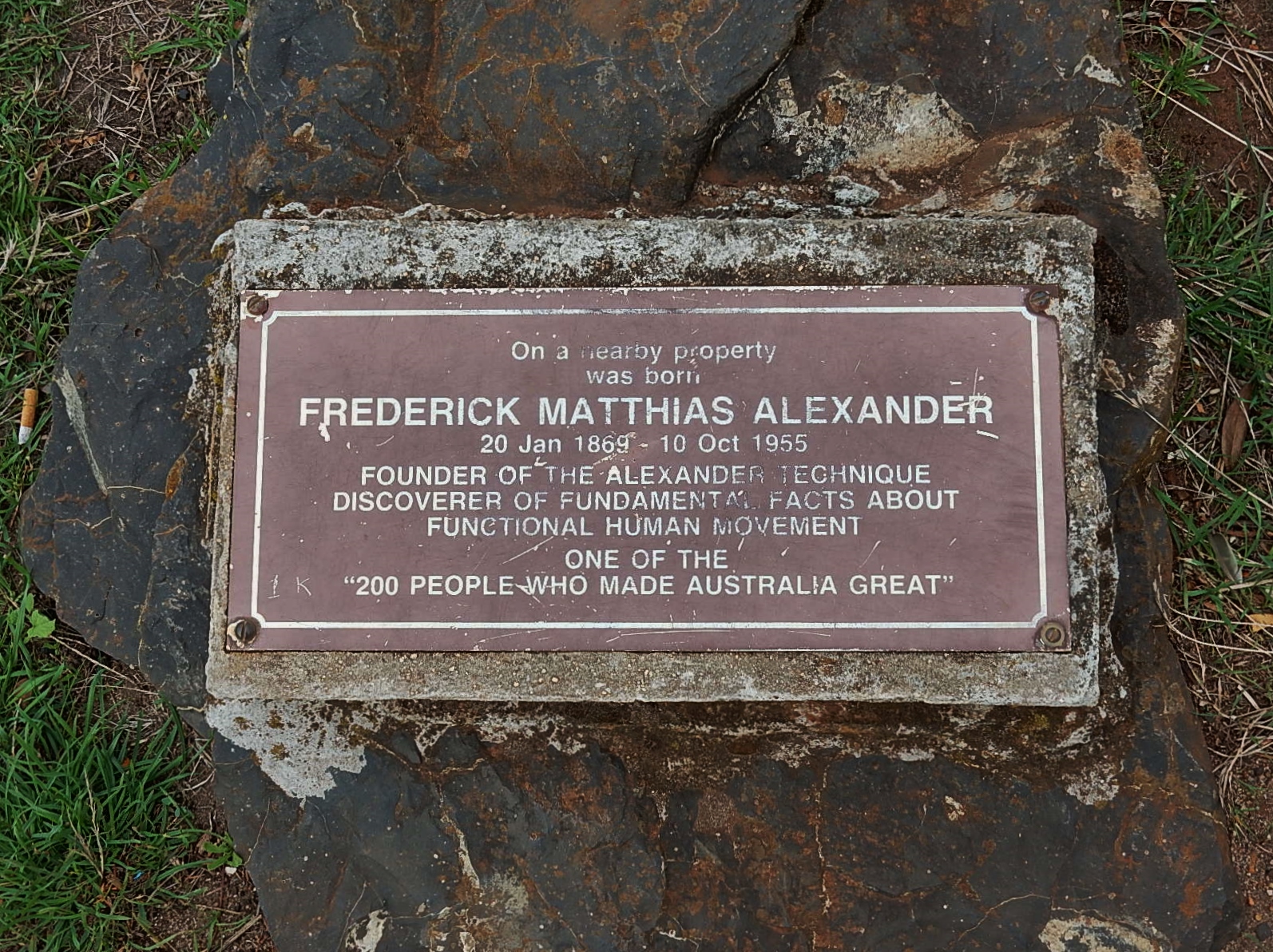
Frederick Matthias Alexander is born in Wynyard, Tasmania, on 20 January.
Recurrent voice loss during recitation prompts the self-observation that becomes the foundation of his method.
He works as a reciter and elocution teacher and tours in Australia, Tasmania, and New Zealand.
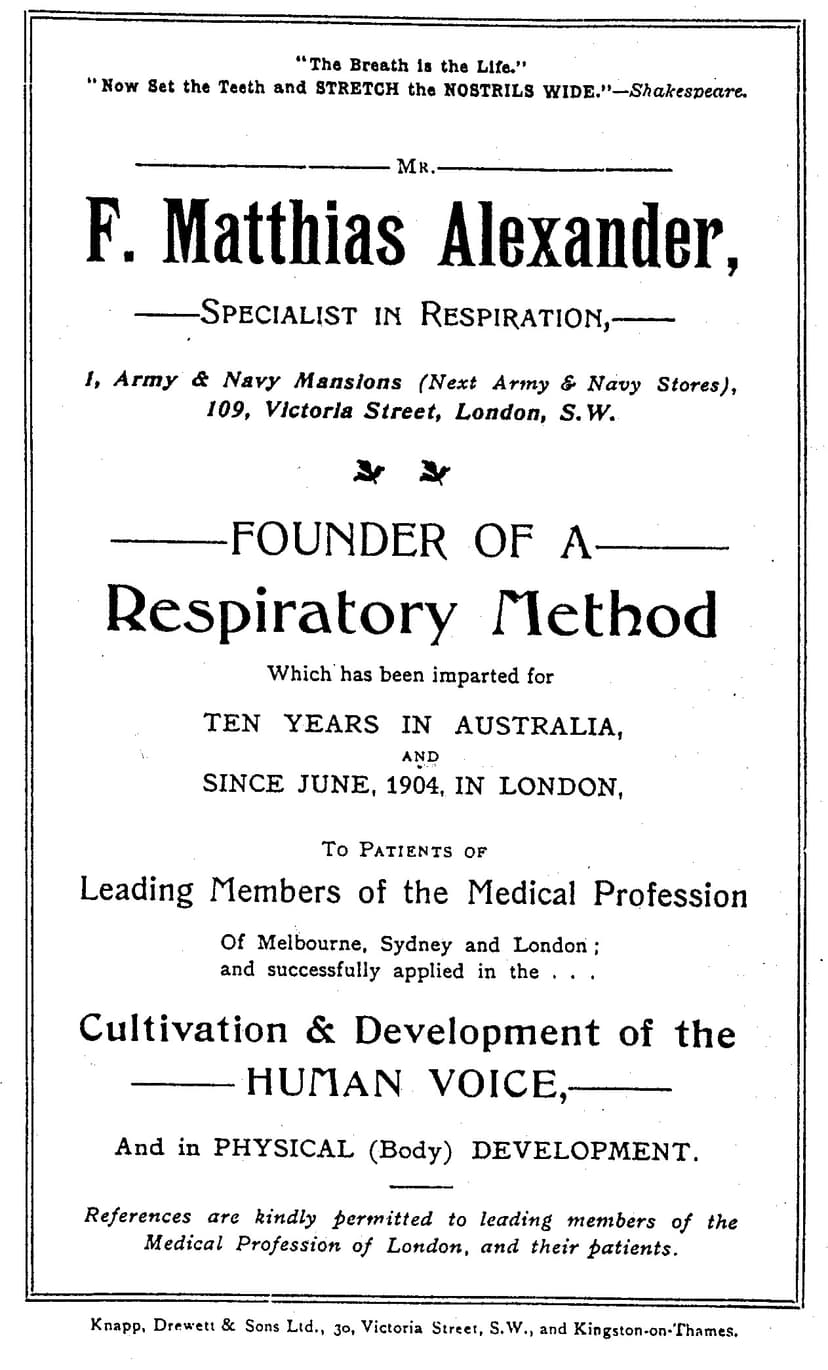
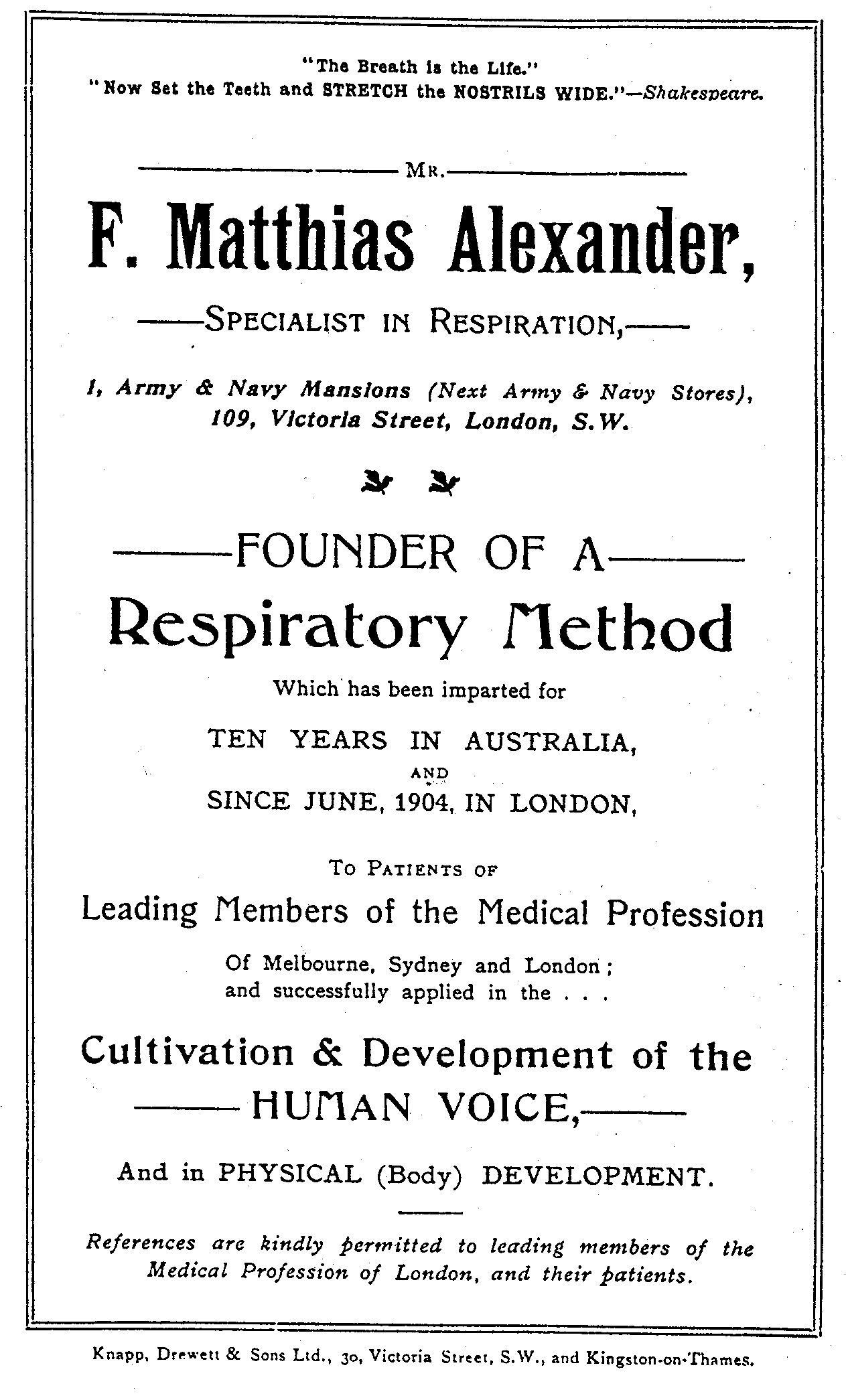
A surviving advertising poster promotes Alexander’s services during the period in which his teaching is becoming established.
He publishes Man’s Supreme Inheritance, his first book.
Constructive Conscious Control of the Individual appears first in the United States and then in the United Kingdom.
Alexander begins his first formal teacher-training course at Ashley Place in London.
He publishes The Use of the Self, setting out case histories and core principles of his teaching.
Wartime conditions suspend the training course; Alexander resumes teaching in London in 1943.
He dies in London on 10 October, leaving a teacher lineage that carries the method into performance and movement education.
Gallery
Legacy & Impact
Alexander's lasting importance lies in making the performer's own habits of preparation and reaction into material for study. He encouraged artists to treat coordination as a whole-person process rather than a set of isolated corrections. In dance and other movement practices, this legacy is visible in pedagogies that value awareness, choice, adaptable alignment, and reduced excess effort. He remains a foundational figure in somatic and performer education, shaping how dancers and other artists approach the relationship between intention, breath, balance, and responsive movement.


Explore More Legends
Discover the dancers, teachers, choreographers, and cultural icons who shaped how the world moves.
Keep the thread going
Dance history, technique, and the occasional rabbit hole — in your inbox. Thoughtful, infrequent, unsubscribe anytime.
Free. No spam. One click to leave.