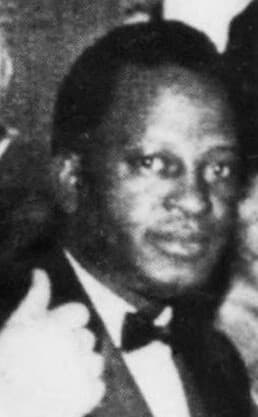
Fodeba Keita
Legend of Dance
Why They Matter
Keïta matters to dance because Les Ballets Africains established a powerful touring template: African artists could reframe regional dance, music, oral narrative and theatrical spectacle as modern professional authorship rather than colonial display. The company influenced later national ensembles a
Biography
Fodéba Keïta was born on 19 January 1921 in Siguiri, Guinea, and trained as a teacher at the École William Ponty in Senegal. His early practice crossed boundaries that later institutional histories often separate: teaching, poetry, popular music, theatre and dance were all vehicles for making modern African public culture. By the mid-1940s he had moved to Paris, where students and artists from French-ruled Africa were creating performance networks inside the colonial capital.
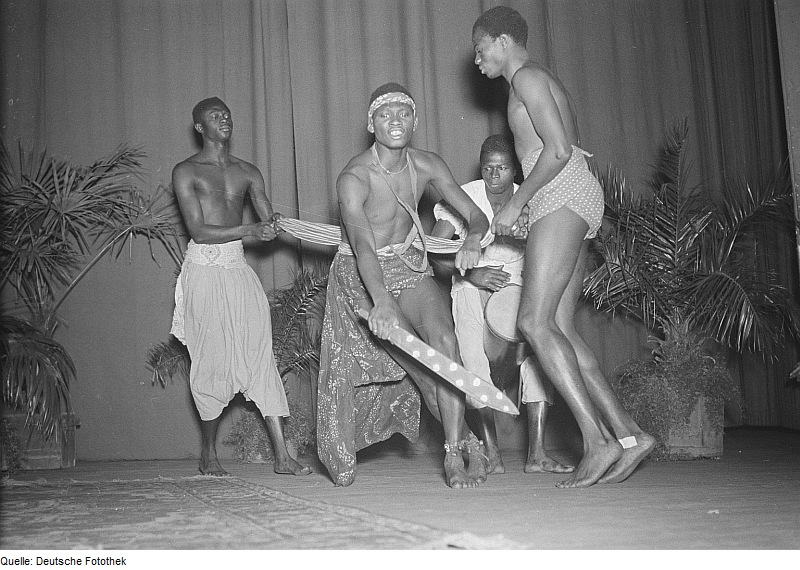
In 1949 Keïta founded the African Theater of Keita Fodeba; in 1952 the project took the name Les Ballets Africains. The company assembled artists from several African countries and diasporic communities, arranging music, dance, acrobatics and dramatic narration for proscenium stages and international touring. It was neither an untouched village tradition nor simply European dance in African costume. It translated heterogeneous practices into a professional theatrical form that could address foreign audiences and assert African authorship.
Keïta's literary work ran alongside the company. He published *Poèmes africains* and *Le Maître d'école*, and his theatre-poem *Aube africaine* used the 1944 Thiaroye massacre of West African veterans as the basis for an anti-colonial performance narrative. His work made choreography part of a larger dramaturgy: sung and spoken text, drums, ensemble patterns and staged scenes could carry historical memory and political accusation together.
After Guinea voted for independence in 1958, Les Ballets Africains became the republic's national company. Its tours offered the new state a mobile emblem of cultural sovereignty. Keïta also helped shape state cultural policy and contributed to the arrangement of *Liberté*, Guinea's national anthem, from an existing Maninka praise-song melody.
Keïta joined President Ahmed Sékou Touré's government in senior roles including finance, interior, and defense and security positions. His artistic prestige became entangled with political power. Scholarship treats him as both a pathbreaking artist and an architect of policy within a government that became violently repressive.
In 1969 the Touré regime accused Keïta of involvement in the alleged Labé plot, imprisoned him at Camp Boiro and killed him without a public trial on 27 May. The state violence that ended his life was part of the same authoritarian system in which he had served. Les Ballets Africains survived him and continues as Guinea's national dance company. His legacy is therefore inseparable from a central contradiction of decolonization: performance could create new international images of African dignity and collective nationhood, while the national machinery around it could discipline artists, histories and citizens.
Career Highlights
Founded the African Theater of Keita Fodeba in Paris. Les Ballets Africains Les Ballets Africains
Published Poèmes africains. Springer biographical reference Springer biographical reference
Renamed and reorganized the performance project as Les Ballets Africains. Les Ballets Africains Les Ballets Africains
Led Les Ballets Africains through major international touring before Guinea's independence. Los Angeles Philharmonic Los Angeles Philharmonic
Developed and staged Aube africaine, an anti-colonial theatre-ballet narrative rooted in the Thiaroye massacre; later editions are held by the African Union Library. African Union Library Caution: the AU catalogue dates its held edition to 1965, not the work's first staging. African Union Library
Les Ballets Africains became the national company of newly independent Guinea. Place des Arts Place des Arts
Contributed to the arrangement/adaptation of Guinea's national anthem, Liberté. Wikimedia Commons Wikimedia Commons
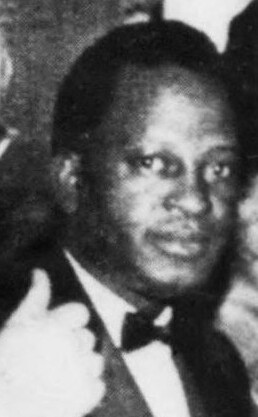
Appeared in New York at an NAACP–American Committee on Africa dinner while serving as Guinea's finance minister. Wikimedia Commons photograph.jpg) Wikimedia Commons photograph
Entered the defense and security portfolio in Sékou Touré's government; exact office titles and start dates vary by source. Routledge Encyclopedia of Modernism Routledge Encyclopedia of Modernism
Arrested after the alleged Labé plot and killed in custody at Camp Boiro on 27 May. Maitron Maitron
Gallery
Legacy & Impact
Keïta matters to dance because Les Ballets Africains established a powerful touring template: African artists could reframe regional dance, music, oral narrative and theatrical spectacle as modern professional authorship rather than colonial display. The company influenced later national ensembles and the international circulation of West African percussion and staged dance. His case also demands ethical precision. Cultural nationalism, artistic innovation and state power were not separate chapters of his life; they reinforced and eventually destroyed one another.


Explore More Legends
Discover the dancers, teachers, choreographers, and cultural icons who shaped how the world moves.
Keep the thread going
Dance history, technique, and the occasional rabbit hole — in your inbox. Thoughtful, infrequent, unsubscribe anytime.
Free. No spam. One click to leave.