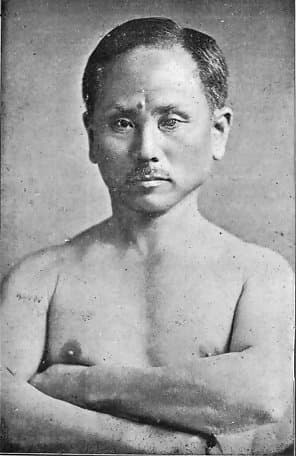
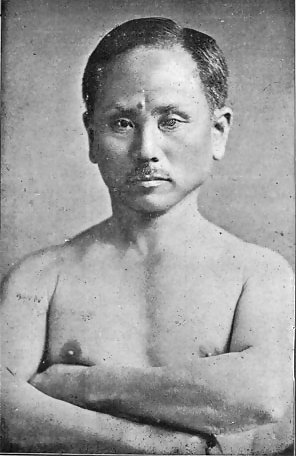
Gichin Funakoshi
Legend of Dance
Why They Matter
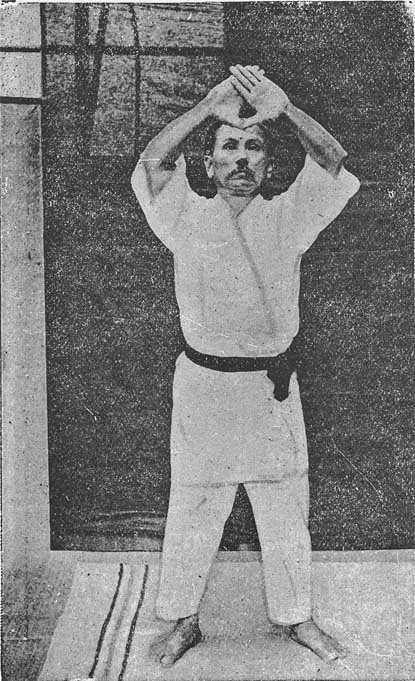
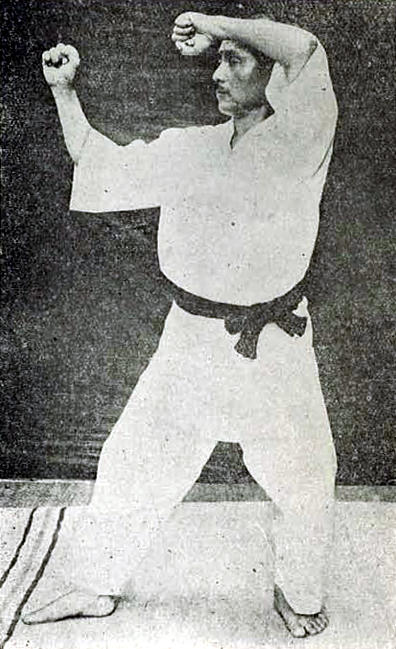
Funakoshi matters to movement history because he helped convert locally transmitted Okinawan fighting practices into a teachable modern discipline without reducing them to combat technique alone. Kata became a repeatable archive of rhythm, direction, balance, breath, timing, and ethical…
Known For
Biography
Gichin Funakoshi was born in 1868 in Shuri, Okinawa, in a region shaped by the history and recent incorporation of the former Ryukyu Kingdom. He trained under Anko Azato and Anko Itosu, and later worked as an educator at the Okinawa Teacher's School while chairing an Okinawan martial-arts society. In his era, karate circulated through teacher-to-student instruction rather than standardized public curriculum. Funakoshi's lasting contribution was organizational: he systematized material for teaching, reframed practice as ethical self-cultivation, and made karate legible within Japanese schools, universities, publications, and ranking systems.
In 1922, Funakoshi demonstrated Okinawan karate-jutsu at a Ministry of Education-sponsored physical-education exhibition in Tokyo. Jigoro Kano then invited Funakoshi and Gima Shinkin to demonstrate kata at the Kodokan. Encouraged to remain in Tokyo, Funakoshi began teaching at the Meiseijuku dormitory and published *Ryukyu Kempo Karate*, the first formal exposition of the art for mainland Japanese readers. As his student base grew, he issued dan-ranking certification in 1924 and expanded university teaching, revising terminology and kata names throughout the 1920s.
In 1929, Funakoshi adopted the name karate-do—"the way of the empty hand"—and articulated karate as an ethical discipline through his Twenty Precepts. His pen name, Shoto, meaning "pine waves," later gave the Shotokan dojo and lineage their name. He published *Karate-do Kyohan*, a major technical and philosophical text, in 1935. The Japan Karate Association dates the establishment of the Shotokan dojo to 1939, though some organizations record 1936. The building was destroyed during World War II, but students regrouped afterward.
In 1949, Funakoshi's students formed the Japan Karate Association and appointed him Supreme Master, creating an institutional base for postwar teaching and international transmission. He continued writing and teaching until his death on April 26, 1957, sixteen days after the Japanese Ministry of Education formally recognized the JKA as a legal entity. His legacy rests in an educational model: disciplined kata practice, etiquette, rank structures, written pedagogy, and character formation joined into karate-do as a coherent system.
Career Highlights
Demonstrated Okinawan karate-jutsu at the Ministry of Education-sponsored Physical Education Exhibition in Tokyo. Japan Karate Association Japan Karate Association
Demonstrated kata with Gima Shinkin at Jigoro Kano’s Kodokan and began teaching in Tokyo. Japan Karate Association Japan Karate Association
Published Ryukyu Kempo Karate, described by the JKA as the first formal Japanese exposition of karate-jutsu. Japan Karate Association Japan Karate Association
Issued dan-ranking certification as karate’s mainland institutional network expanded. Japan Karate Association Japan Karate Association
Adopted karate-do terminology and articulated karate as an ethical “way,” alongside his Twenty Precepts. Japan Karate Association Japan Karate Association
Published Karate-do Kyohan, a major technical and philosophical text. Shotokan Karate-Do International Federation Shotokan Karate-Do International Federation
Established the Shotokan dojo, according to the JKA chronology. Japan Karate Association Japan Karate Association
Became Supreme Master of the newly formed Japan Karate Association. Japan Karate Association Japan Karate Association
Published his autobiography, Karate-do: My Way of Life. Shotokan Karate-Do International Federation Shotokan Karate-Do International Federation
Died on April 26, shortly after the JKA received legal recognition. Japan Karate Association Japan Karate Association
Gallery
Legacy & Impact
Funakoshi transformed locally transmitted Okinawan fighting practices into a teachable modern discipline that integrated technique, ethics, and philosophy. Through kata—repeatable sequences organized by stance, breath, timing, and directional change—he created a portable archive that could be transmitted across generations and geography. His students and later institutions developed Shotokan in divergent directions, making his contribution best understood as a pedagogical framework and lineage rather than a fixed style. That framework enabled karate to spread internationally and remain grounded in structured practice and character development.


Explore More Legends
Discover the dancers, teachers, choreographers, and cultural icons who shaped how the world moves.
Keep the thread going
Dance history, technique, and the occasional rabbit hole — in your inbox. Thoughtful, infrequent, unsubscribe anytime.
Free. No spam. One click to leave.