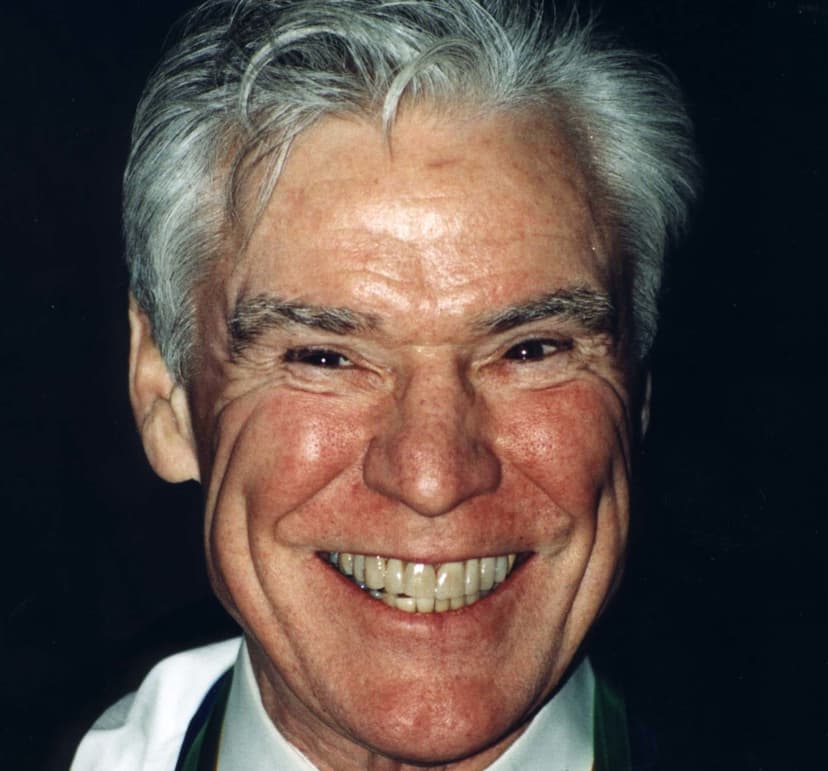
Jacques Damboise
Legend of Dance
Why They Matter
D'Amboise linked two forms of institution-building. Onstage, he helped establish a vigorous American image of the male classical dancer within Balanchine's repertory; beyond the stage, he built an educational system in which dance was practiced as a common language rather than an elite filter. NDI's
Watch
National Dance Institute founder Jacques d'Amboise in China
National Dance Institute
Shows d'Amboise extending dance practice into an international educational setting through his own organization.
Remembering the legend of dance ballet star Jacques d'Amboise
PBS NewsHour
A reputable institutional remembrance connects his New York City Ballet career with National Dance Institute.
Biography
Jacques d'Amboise, born Joseph Jacques Ahearn in Dedham, Massachusetts, on July 28, 1934, became one of the defining male dancers of American classical ballet and a transformative figure in arts education. He grew up in New York and entered the School of American Ballet at eight, studying under George Balanchine, Anatole Oboukhoff, and Pierre Vladimiroff. He danced child roles with Ballet Society from 1946 and joined New York City Ballet in 1949 at fifteen, becoming a principal dancer by age eighteen.
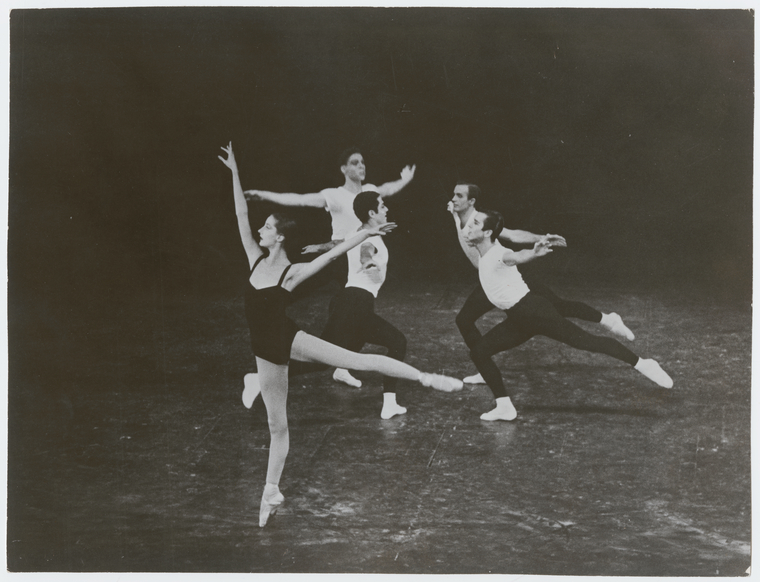
At New York City Ballet, d'Amboise became a central interpreter of Balanchine's vision for the male dancer. Roles were created for him in *Stars and Stripes*, *Tchaikovsky Pas de Deux*, *Episodes*, *A Midsummer Night's Dream*, *Jewels*, and many others. He brought a direct, youthful American energy to classical roles, most notably the title role in *Apollo*, combining formal line and authority with an open, conversational quality that made ballet feel contemporary. During his three-and-a-half decades with the company, he also choreographed more than fifteen works commissioned by NYCB.
Beyond the ballet stage, d'Amboise extended his reach into popular culture. He appeared in the Hollywood films *Seven Brides for Seven Brothers* (1954) and *Carousel* (1956), performed on Broadway in *Shinbone Alley*, and wrote and directed for theater, film, and television. These appearances helped make male ballet dancing legible and appealing to broad American audiences while he remained deeply committed to New York City Ballet, where he performed until 1984.
In 1976, while still an NYCB principal, d'Amboise founded National Dance Institute on a simple but radical premise: talent is widely distributed but access is not. Trained teaching artists could bring disciplined, joyful dance-making directly into public schools, reaching children who might never enter a conservatory. The organization reports that the model ultimately reached more than two million children worldwide through school programs and teacher training. The Academy Award-winning documentary *He Makes Me Feel Like Dancin'*, which won at the 1984 Academy Awards ceremony, brought his educational vision to a national audience.
After leaving the stage, d'Amboise concentrated on education, teaching, writing, and NDI's expansion. His honors included a 1990 MacArthur Fellowship, the 1995 Kennedy Center Honors, and the 1998 National Medal of Arts. He framed dance consistently as a means of expression, attention, collective responsibility, and confidence—a practice available to all, not a privilege reserved for future professionals.
D'Amboise died at his home in New York City on May 2, 2021, aged 86, following complications of a stroke. His dual legacy remains unusually coherent: performances that enlarged the possibilities for American male ballet dancing within the Balanchine repertory, and an educational institution that made dance participation a form of civic and artistic access.
Career Highlights
Began dancing children's roles with Ballet Society, the immediate predecessor of New York City Ballet. MacArthur Foundation
Joined New York City Ballet at age fifteen. National Dance Institute
Had become an NYCB principal dancer by age eighteen. MacArthur Foundation
Appeared as Ephraim in Seven Brides for Seven Brothers. MacArthur Foundation
Appeared in the film Carousel. MacArthur Foundation
Choreographed The Chase for New York City Ballet. MacArthur Foundation
Founded National Dance Institute while still an NYCB principal. National Dance Institute
Retired from New York City Ballet after roughly thirty-five years with the company. Associated Press obituary
He Makes Me Feel Like Dancin', documenting his NDI work, won the Academy Award for Documentary Feature at the 56th Academy Awards. Academy of Motion Picture Arts and Sciences
Named a MacArthur Fellow for his work in dance and arts education. MacArthur Foundation
Received the Kennedy Center Honors. Kennedy Center Honors history
Received the National Medal of Arts as a dancer, choreographer, and educator. National Endowment for the Arts
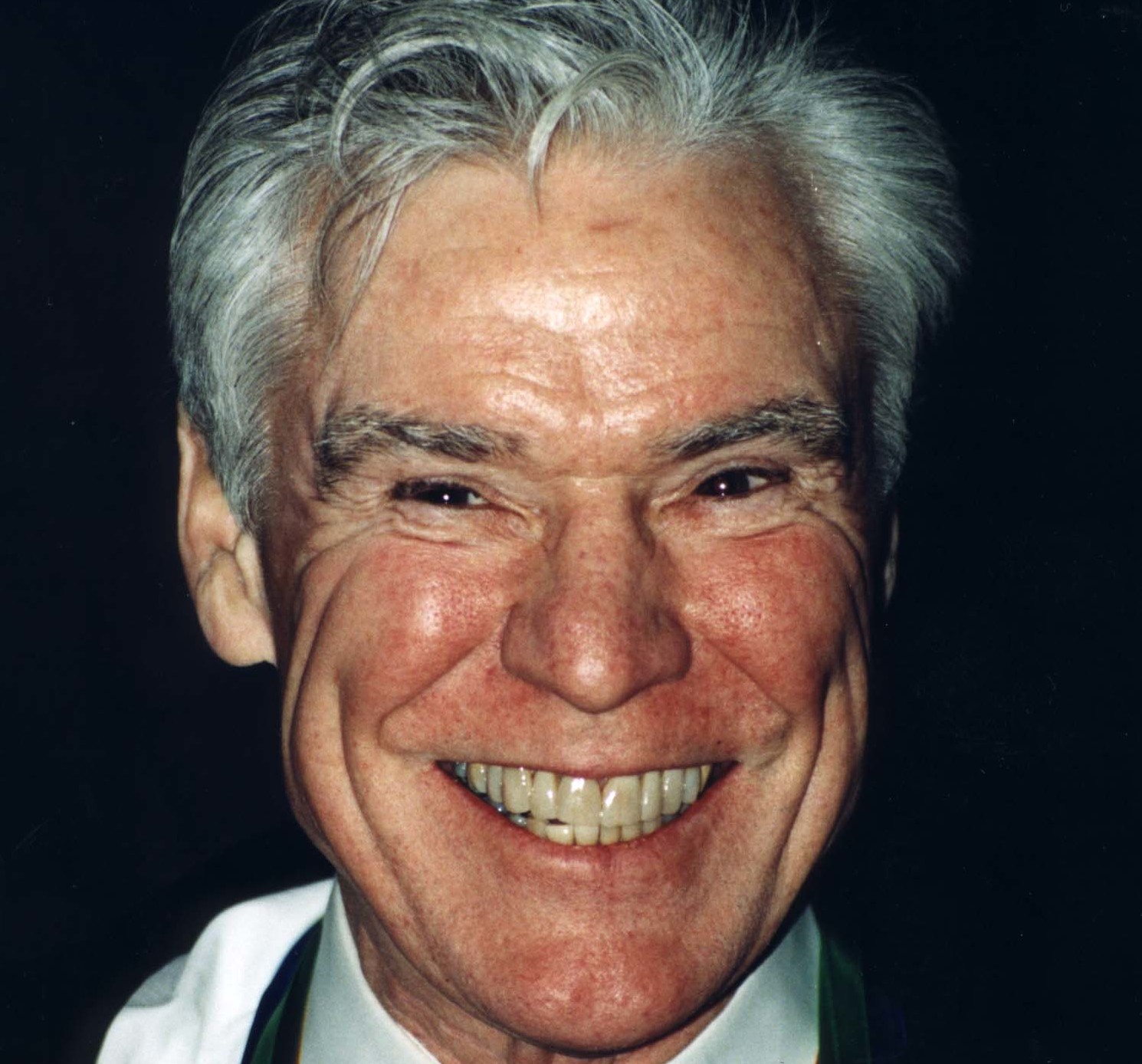
Gallery
Works
2 stage works credited to Jacques Damboise.
- Alborada del GraciosoBallet · Choreographer
- Tschaikovsky Suite No. 2Ballet · Choreographer
Credits sourced from Wikidata (CC0), one citation per field. Works without a recorded premiere date are listed last. Titles link to the work in Limelight.
Legacy & Impact
D'Amboise linked two forms of institution-building that remain inseparable in his legacy. Onstage, he helped establish a vigorous American image of the male classical dancer; beyond the stage, he built an educational system in which dance was practiced as a common language rather than an elite filter. National Dance Institute's school-based reach is not separate from his performing career but its ethical continuation: the same belief in rhythm, imagination, discipline, and full-bodied commitment was redirected toward children across the public-school system. His model of dance education as universal access remains influential for teaching artists and choreographers working in schools today.


Explore More Legends
Discover the dancers, teachers, choreographers, and cultural icons who shaped how the world moves.
Keep the thread going
Dance history, technique, and the occasional rabbit hole — in your inbox. Thoughtful, infrequent, unsubscribe anytime.
Free. No spam. One click to leave.