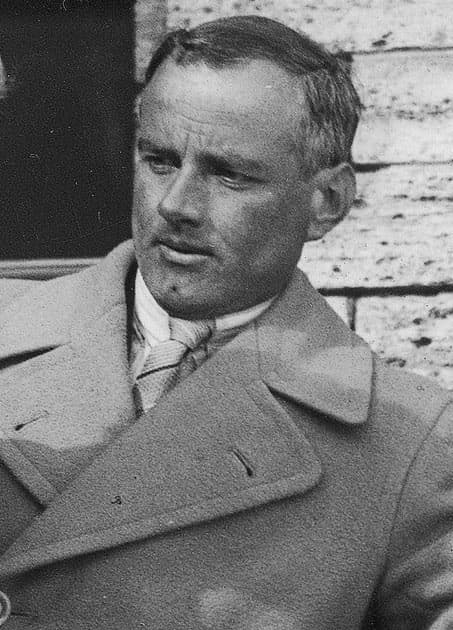
Jacques Gerschwiler
Legend of Dance
Why They Matter
Gerschwiler matters because he joined athletic-coaching theory to the exacting craft tradition of figure skating. His work sits at the junction of sport and dance: controlled edges, spatial geometry, posture, line, rhythm, and repeatable technical analysis. Colledge's competitive achievements made t
Biography
Jacques Gerschwiler was a Swiss-born figure skating coach whose systematic approach to technique and edge control helped define modern skating pedagogy. Born in Arbon, Switzerland, in 1898, Gerschwiler came from a notable skating family: Arnold was his half-brother, and Hans Gerschwiler, a Swiss world champion, was his nephew. Before establishing himself as a skating teacher, he studied athletic coaching in Berlin, where exposure to international skating styles prompted him to develop a theory of technique grounded in precision rather than inherited routine.
In 1929, after visiting London, Gerschwiler settled in Britain and began teaching at Queen's Ice Club in Bayswater. His arrival coincided with a period of rapid modernization in British figure skating. During the early 1930s, he also competed as a professional skater, placing in the British Open Professional Championships in 1933 and 1934, but his enduring influence came through teaching—particularly his mastery of turns, edges, and compulsory figures.
Gerschwiler's most celebrated pupil was Cecilia Colledge. After Colledge's mother recruited the Swiss coach following the young skater's training in Norway, Gerschwiler coordinated significant changes in her preparation, diet, and training methods, incorporating supplementary acrobatics work. Colledge went on to win Olympic silver in 1936, the world championship in 1937, and three European titles, becoming an important technical innovator in her own right. The development of advanced spins involved collaboration among Colledge, Gerschwiler, her acrobatics teacher Miss Lee, and earlier skating traditions—a shared achievement rather than a single invention.
Throughout the 1930s and 1960s, Gerschwiler taught at Queen's, Empress Hall at Earls Court, and Streatham, training Olympic champion Jeannette Altwegg and many other prominent British and European competitors. In 1936, he joined Howard Nicholson, Gladys Hogg, and Eric van der Weyden in founding the British Ice Teachers Association, described as the world's first coaches' organization. His teaching philosophy held that school figures were not mere examinations but the technical grammar of skating itself—the foundation for all expression and movement.
Gerschwiler's influence on the discipline extended beyond the rink. In 1976, he was inducted into the inaugural class of the World Figure Skating Hall of Fame. The following year, he and Otto Hügin published *The Technique of Skating*, a systematic instructional manual covering movement principles and foundational skills. He later returned to Switzerland, where he died in Geneva in 2000 at age 101. In 2004, Jacques and Arnold Gerschwiler were inducted together into the Professional Skaters Association Coaches Hall of Fame.
Career Highlights
Born in Arbon, Switzerland; the exact date is reported as 10 September.
Visited London, settled in Britain, and began teaching at Queen's Ice Club in Bayswater.
Began the long coaching relationship that developed Cecilia Colledge into an Olympic, world, and European medalist.
Competed in the British Open Professional Championship and promoted a comparable professional event in Switzerland.
Again competed in the British Open Professional Championship during his active professional-skating period.
Helped found the British Ice Teachers Association with Howard Nicholson, Gladys Hogg, and Eric van der Weyden.
Coached Cecilia Colledge during the season in which she won the world and European women's titles.
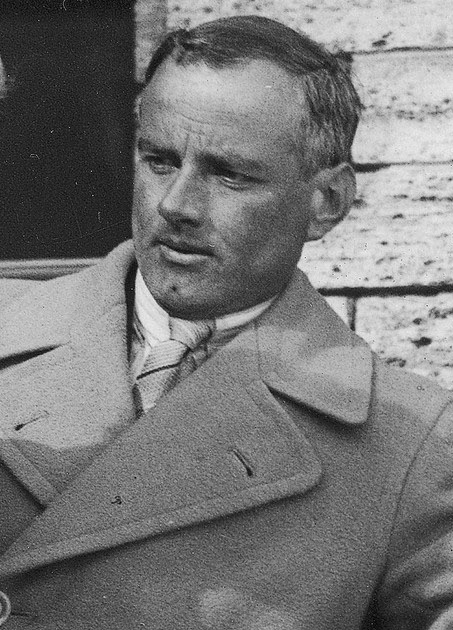
Photographed with Colledge and other skaters at the European Championships; the rights-cleared archive image is included in this package.
Concluded the principal British phase of a coaching career that had included Queen's, Empress Hall, and Streatham.
Inducted in the inaugural class of the World Figure Skating Hall of Fame.
Co-authored The Technique of Skating with Otto Hügin.
Inducted posthumously, with Arnold Gerschwiler, into the Professional Skaters Association Coaches Hall of Fame.
Gallery
Legacy & Impact
Gerschwiler bridged athletic coaching science and the craft tradition of figure skating, treating the blade edge as both the source of correctness and expression. His insistence that figures train spatial intelligence and that precise edges create movement appearing calm and inevitable shaped coaching as a professional, articulated discipline. His pupils' competitive achievements—particularly Colledge's innovations—made that pedagogy visible worldwide. Dancers and skaters still inherit his emphasis on controlled line, repeatable technical analysis, and the integration of ballet, acrobatics, and skating into a coherent whole.


Explore More Legends
Discover the dancers, teachers, choreographers, and cultural icons who shaped how the world moves.
Keep the thread going
Dance history, technique, and the occasional rabbit hole — in your inbox. Thoughtful, infrequent, unsubscribe anytime.
Free. No spam. One click to leave.