Lil Buck
Legend of Dance
Why They Matter
Lil Buck’s importance lies in expanding the contexts in which Memphis Jookin’ can be seen without presenting himself as its inventor. His career introduced many international viewers to the form, but his strongest projects continually redirect attention toward Memphis lineage, peers, and younger…
Biography
Charles "Lil Buck" Riley is an American dancer, choreographer, and cultural advocate who brought Memphis Jookin' to international concert stages, popular culture, and global audiences. Born in Chicago on May 25, 1988, Riley grew up in Memphis, Tennessee, where family memories collected by *Memphis magazine* describe him dancing with his sister Stephanie to Michael Jackson videos before discovering jookin around age twelve or thirteen—a freestyle tradition built from Memphis gangsta walking and neighborhood battle practices. As a teenager, he developed his name and reputation within the city's jookin community. At seventeen, Riley began ballet study at New Ballet Ensemble on scholarship, training for two years. Ballet supplied additional strength, line, and performance structure, but it did not replace his Memphis foundation; his signature work emerged from the dialogue between forms.
The turning point in Riley's international visibility came in 2011. At an Inner-City Arts event in Los Angeles, he improvised his version of "The Swan" while cellist Yo-Yo Ma played Camille Saint-Saëns. Filmmaker Spike Jonze recorded the encounter on a phone, and the resulting video circulated widely. Riley's control—especially his glides, toe balances, and elastic transitions—made jookin legible to audiences more familiar with ballet and concert music without erasing its Memphis identity.
After that breakthrough, Lil Buck moved among commercial, concert, and popular stages. He performed with Madonna at Super Bowl XLVI and on her *MDNA* tour, appeared in Cirque du Soleil's *Michael Jackson: One*, and collaborated with artists including Janelle Monáe, Alicia Keys, Benjamin Millepied, and Mikhail Baryshnikov. In 2014 he received *The Wall Street Journal*'s Innovator of the Year award. In 2015 he extended his work through a Versace capsule collaboration on sneakers and apparel.
His screen and production work widened his reach again. The documentary *Lil Buck: Real Swan* followed his story and creative process, while the Netflix series *MOVE* presented him to another global audience. His work also spans choreography and appearances across television, including the series *Blindspotting*.
In recent years, Lil Buck has paired performance with institution-building and cultural advocacy. *Memphis Jookin': The Show* places multiple Memphis dancers onstage rather than treating jookin as a one-person novelty. In 2025–26 he served as a Cultural Fellow at Oxford's Schwarzman Centre, collaborating with ZooNation, Body Politic Youth, and dancers from Memphis on the production *1776*. The June 2026 work used hip-hop and jookin to examine freedom, history, and kinship, linking local lineage with international exchange.
Career Highlights
Began ballet study at New Ballet Ensemble in Memphis at age seventeen, supplementing his existing jookin practice. Vogue Vogue
Performed his jookin interpretation of “The Swan” with Yo-Yo Ma at Inner-City Arts; Spike Jonze’s video brought international attention. Colorlines Colorlines
Served as an artist-in-residence at the Vail International Dance Festival. Colorlines Colorlines
Performed with Madonna during the Super Bowl XLVI halftime show and subsequently joined her MDNA tour. CBS Miami CBS Miami
Performed in Cirque du Soleil’s Michael Jackson: One. CBS News CBS News
Received The Wall Street Journal Innovator of the Year award and appeared in a New York City Ballet Art Series collaboration. Official biography; Vogue Official biography
Collaborated with Versace on sneakers and T-shirts for a capsule collection. Vogue Vogue
Lil Buck: Real Swan, a documentary centered on his life and creative process, premiered in the Tribeca Film Festival context reported by his official biography. Official biography Official biography
Toured Memphis Jookin’: The Show, presenting a company of Memphis dancers and the form’s shared cultural vocabulary. Virginia Tech Virginia Tech
Began a 2025–26 Cultural Fellowship at Oxford’s Schwarzman Centre in collaboration with St Hilda’s College and DANSOX. St Hilda’s College St Hilda’s College
Presented 1776, a collaboration connecting Memphis, London, and Oxford youth dancers through hip-hop and Memphis Jookin’. University of Oxford University of Oxford
Lil Buck on screen
Films and television featuring Lil Buck, with the sequences we have indexed.
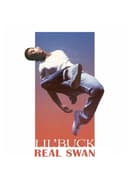
Poster artwork from TMDB.
 This site uses TMDB and the TMDB APIs but is not endorsed, certified, or otherwise approved by TMDB.
Legacy & Impact
Lil Buck's importance lies in expanding the contexts in which Memphis Jookin' can be seen without presenting himself as its inventor. His career introduced many international viewers to the form, but his strongest projects continually redirect attention toward Memphis lineage, peers, and younger dancers. By moving among battles, commercial stages, concert institutions, film, fashion, and education, he has argued through practice that a locally developed Black street-dance tradition belongs in the same critical and artistic conversations as ballet and modern dance.


Explore More Legends
Discover the dancers, teachers, choreographers, and cultural icons who shaped how the world moves.
Keep the thread going
Dance history, technique, and the occasional rabbit hole — in your inbox. Thoughtful, infrequent, unsubscribe anytime.
Free. No spam. One click to leave.