Performer · Stage Icon · Partnership Icon
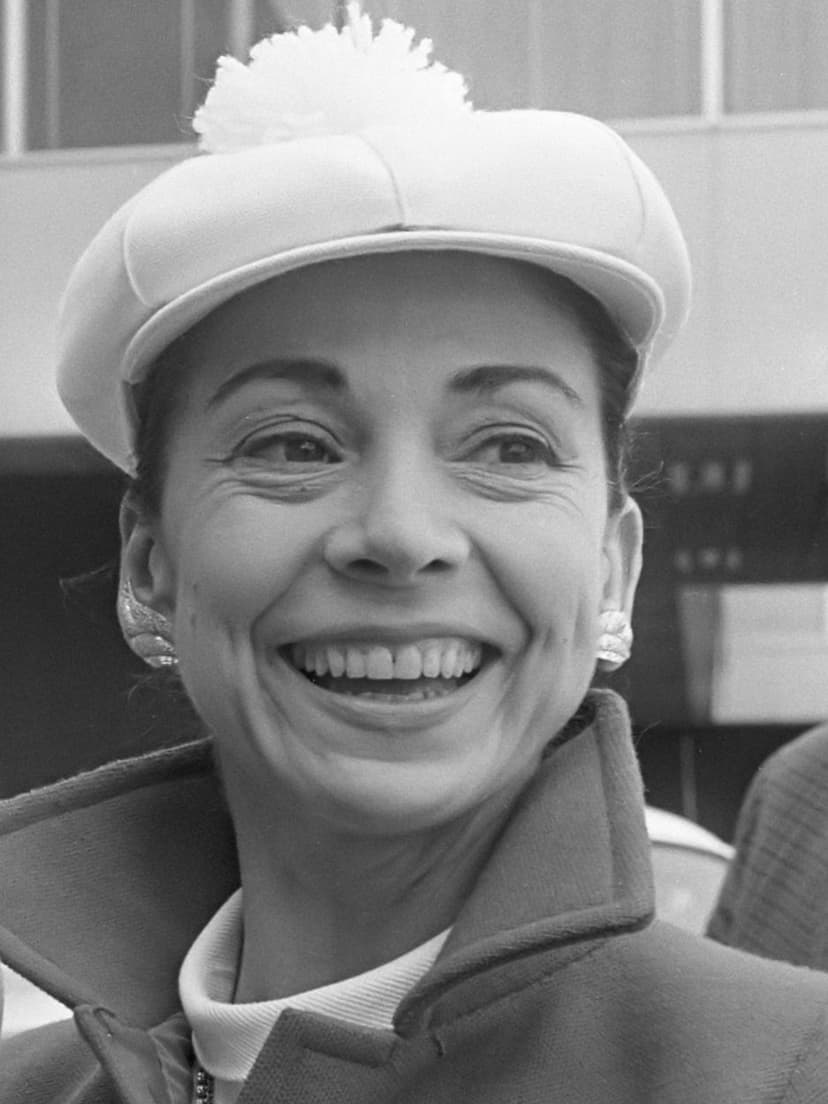
Margot Fonteyn
Prima Ballerina Assoluta
Why They Matter
Her partnership with Nureyev in her 40s proved that dance artistry deepens with maturity, and she made the Royal Ballet a world institution.
Watch
The Legacy of Margot Fonteyn (Royal Academy of Dance)
An authoritative institutional overview of Fonteyn's career and lasting influence on British ballet.
Fonteyn, the Person (Royal Academy of Dance)
Part of the RAD's 'Zoom in on The Fonteyn' series, on the woman behind the ballerina.
Fonteyn the Artist (Royal Academy of Dance)
The RAD examines her artistry - line, musicality and the integration of technique into character.
Rudolf and Margot - preview (BBC)
A BBC preview of the historic Fonteyn-Nureyev partnership and its theatrical electricity.
Dame Margot Safe Home (1959, British Pathe)
Archival newsreel of Fonteyn's return following the 1959 Panama episode.
On Point: Royal Academy of Dance at 100, at the V&A
The RAD centenary programme, placing Fonteyn's legacy within the academy's history.
Royal Academy of Dance Children's Syllabus, 1972 with Dame Margot Fonteyn
Royal Academy of Dance
Documents Fonteyn's educational and RAD role rather than only her celebrity performances
Biography
Margaret Evelyn Hookham was born in Reigate, Surrey, on 18 May 1919, and was known in childhood as Peggy. She began ballet lessons at the age of four in Ealing, and when her father's work took the family to China she studied in Shanghai with the Russian emigre teacher George Goncharov. Returning to England in 1933, she trained with Serafina Astafieva and entered Ninette de Valois's Sadler's Wells school, making early company and solo appearances as a student - among them Young Tregennis in de Valois's The Haunted Ballroom. Her professional name, Margot Fonteyn, adapted the surname Fontes from her mother's Brazilian family. (A few archival catalogue records give 1918 as her birth year, but the principal ballet institutions and commemorative sources support 1919.)
Her rise was extraordinarily rapid. After Alicia Markova left the Vic-Wells Ballet in 1935, Fonteyn inherited leading roles and became the young company's central ballerina, with Robert Helpmann as a crucial early partner. Even more consequential was her artistic relationship with the choreographer Frederick Ashton, who recognized not only her line and lyricism but her capacity to make choreography look psychologically inevitable. Across the following decades he made or shaped roles for her in works including Apparitions, Symphonic Variations, Cinderella, Daphnis and Chloe, Sylvia, Ondine, Homage to the Queen and, eventually, Marguerite and Armand. That dialogue between ballerina and choreographer became one of the foundations on which a distinct English ballet style and repertoire were built.
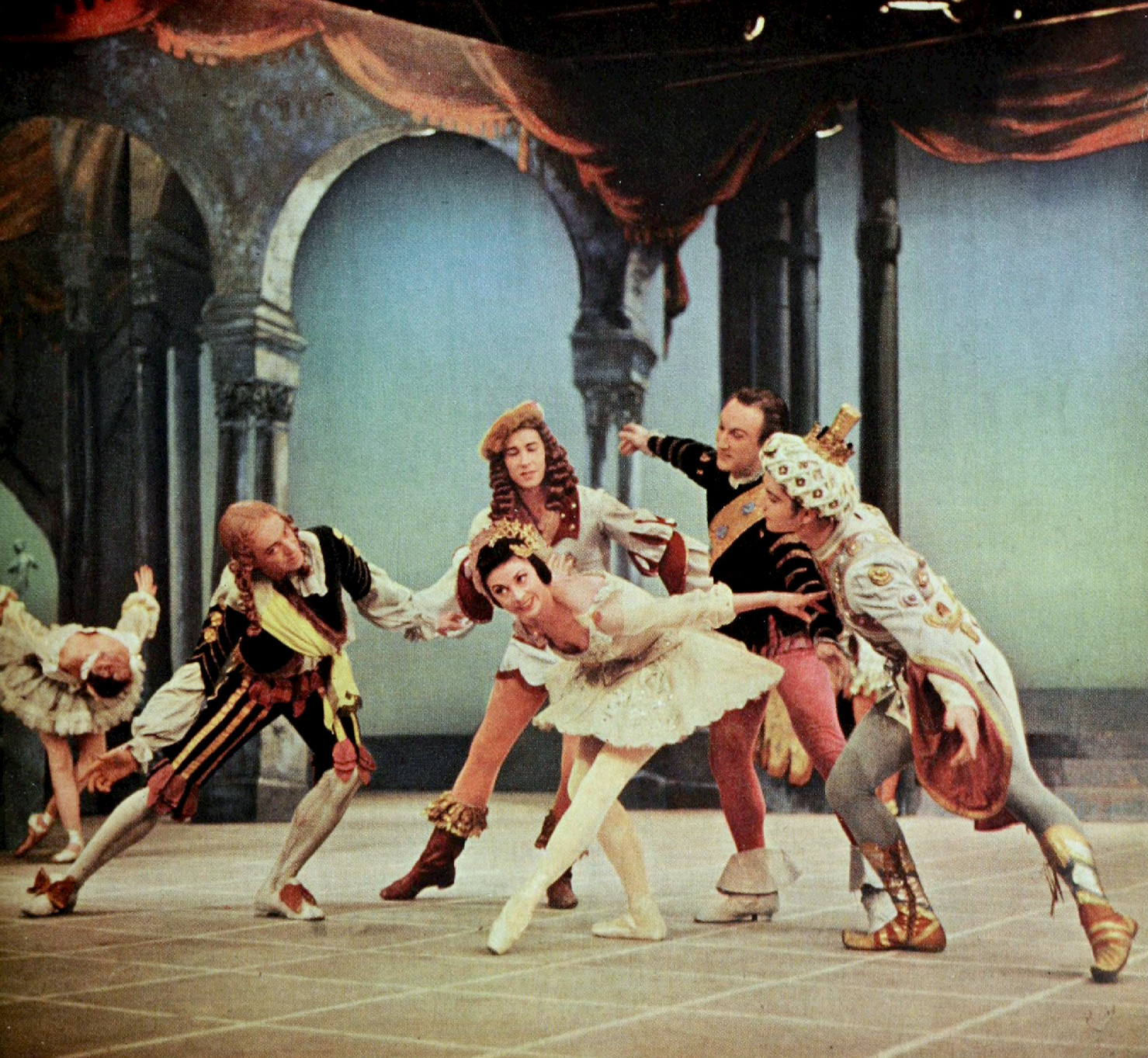
Fonteyn matured as an artist through the Second World War, when the company toured at home under difficult conditions and ballet became part of Britain's wartime cultural life. Her defining postwar moment came on 20 February 1946, when Sadler's Wells Ballet reopened the Royal Opera House with The Sleeping Beauty; Fonteyn danced Princess Aurora opposite Helpmann's Prince Florimund, announcing both the company's arrival at Covent Garden and her own authority in the grand classical repertory. Aurora remained inseparable from her public image - its clarity, poise, musical balance and unfolding dramatic maturity matched her gifts.
By the late 1940s and 1950s Fonteyn had become an international emblem of British ballet, her audience extended by tours, television and film. Michael Somes became a major partner in this period, and Ashton continued to reveal new colours in her artistry - radiant classicism, wit, romantic vulnerability and elemental mystery, most strikingly in the title role of Ondine (1958). She became president of the Royal Academy of Dancing in 1954, its longest-serving president, and in the 1956 New Year Honours was appointed Dame Commander of the Order of the British Empire for services to ballet. In 1955 she married Roberto 'Tito' Arias, a Panamanian diplomat, becoming formally Margot Fonteyn de Arias, and her life was drawn into Panamanian political history: in April 1959 she was detained amid the aftermath of an attempted uprising associated with Arias. Government records released decades later show the episode was more complicated than the once-popular picture of an uninvolved spouse, though the surviving accounts still call for cautious phrasing about motive and degree of agency.
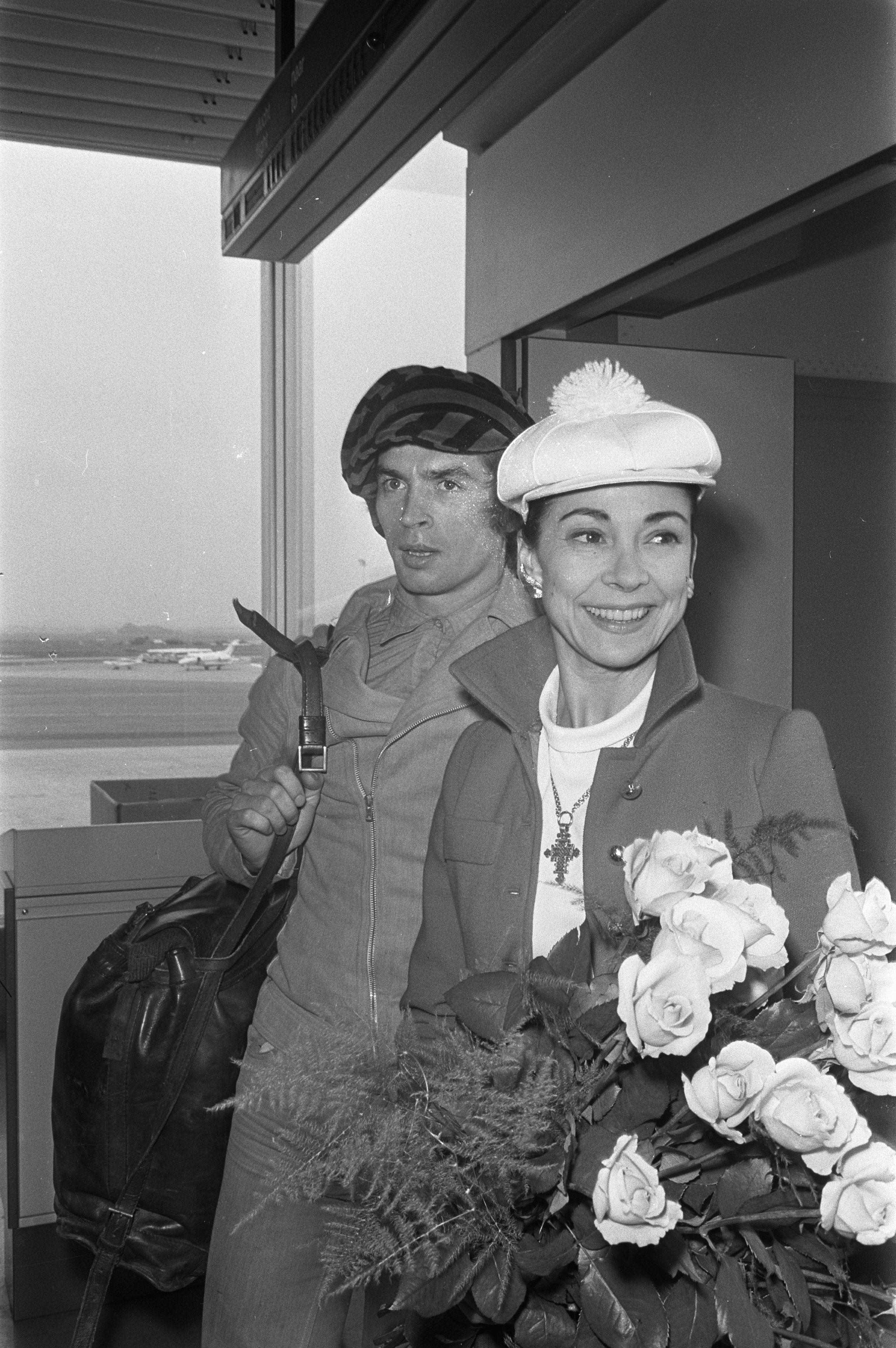
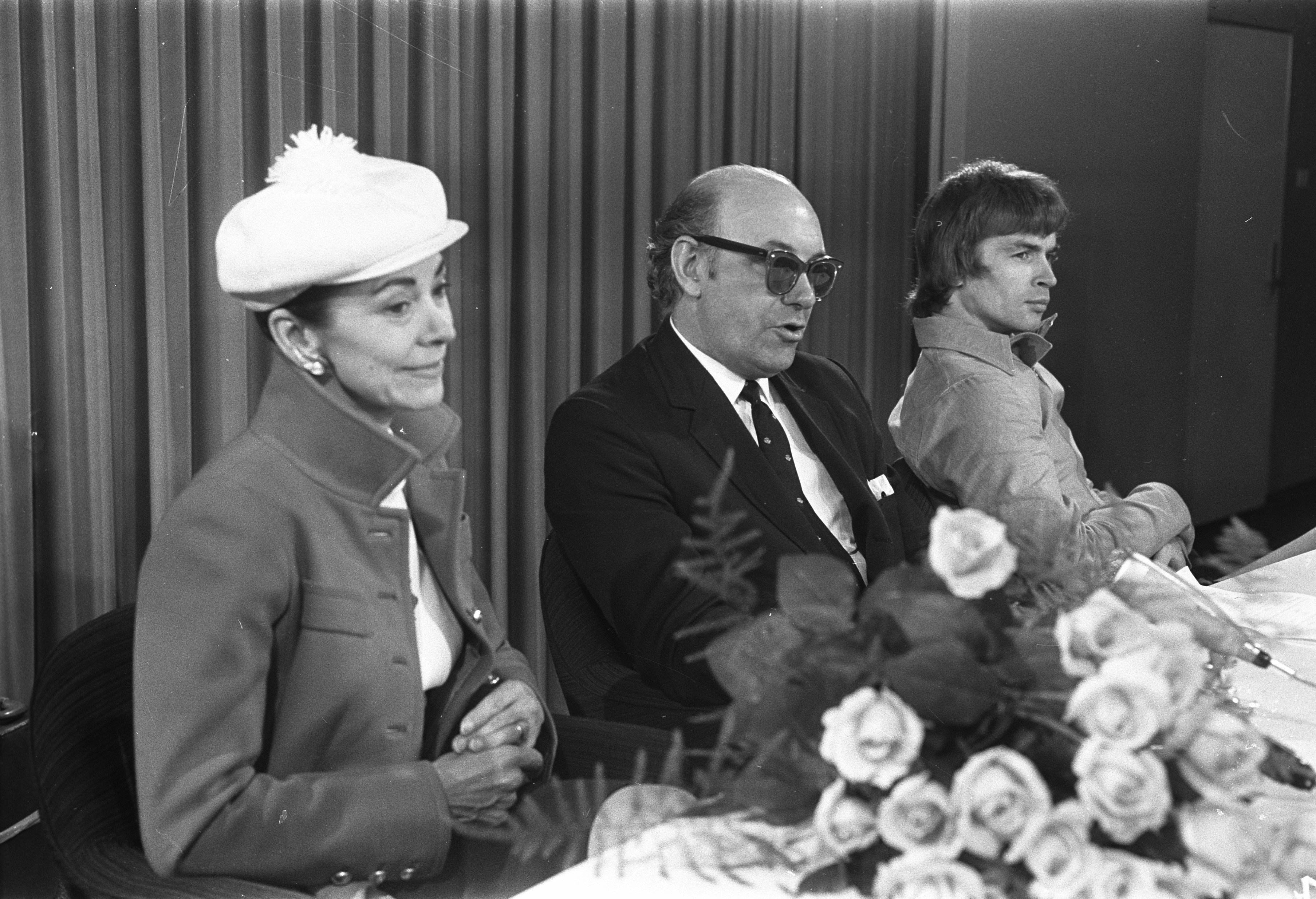
Fonteyn appeared to be approaching retirement when Rudolf Nureyev, nineteen years her junior, entered her artistic life after his 1961 defection. On 21 February 1962 they danced Giselle together at the Royal Opera House to an extraordinary reception. Their contrast generated unusual theatrical electricity: her cultivated equilibrium and dramatic restraint met his appetite for danger and expansion, and the partnership renewed her career while giving Nureyev a collaborator whose authority made their performances far more than displays of virtuosity. Ashton created Marguerite and Armand specifically for them, premiered on 12 March 1963, and the pair became international stars through Giselle, Swan Lake, Le Corsaire, La Bayadere and other repertory. Their bond is best understood as a documented artistic partnership and lifelong loyalty, not through the romantic speculation that later attached to it.
In 1964 Arias was shot in Panama and left with permanent, severe disability, and Fonteyn continued performing while helping to support and care for him. The following year she and Nureyev danced the title roles at the premiere of Kenneth MacMillan's Romeo and Juliet - though the roles were created on Lynn Seymour and Christopher Gable, so her celebrated Juliet was a mature interpretation of a part made through another dancer's body rather than choreographed on her. She went on dancing well beyond the age at which many ballerinas retire, and that longevity became part of her legend. The Royal Ballet marked her sixtieth birthday in 1979 with a gala - including Ashton's Salut d'amour a Margot Fonteyn - at which it recognized her as its prima ballerina assoluta. She retired to a cattle farm in Panama to care for Arias while retaining public roles, serving from 1981 until her death as Chancellor of Durham University, the first non-royal woman to hold a British university chancellorship. She made her final appearance in a role as the Queen in The Sleeping Beauty in Miami in February 1986, and died of cancer in Panama City on 21 February 1991, aged 71.
Career Highlights
As a Sadler's Wells student, made early company and solo appearances, including Young Tregennis in The Haunted Ballroom. Royal Ballet and Opera
Debuted as Aurora in the company's first complete The Sleeping Princess at Sadler's Wells. Museum of Music History
Danced Aurora when Sadler's Wells Ballet reopened the Royal Opera House after the Second World War. Royal Opera House Collections
Became president of the Royal Academy of Dancing, beginning the institution's longest presidential tenure. Royal Academy of Dance
Appointed Dame Commander of the Order of the British Empire for services to ballet. The London Gazette
Created the title role in Frederick Ashton's Ondine. Royal Ballet and Opera
First danced Giselle with Rudolf Nureyev at the Royal Opera House, launching their historic partnership. Royal Opera House Collections
Created Marguerite opposite Nureyev in Ashton's Marguerite and Armand. Royal Opera House Collections
Danced Juliet opposite Nureyev at the premiere of MacMillan's Romeo and Juliet (roles created on Lynn Seymour and Christopher Gable). Royal Ballet and Opera
Honoured at The Royal Ballet's sixtieth-birthday gala and recognized as its prima ballerina assoluta. Royal Ballet and Opera
Became Chancellor of Durham University, the first non-royal woman to hold a British university chancellorship, serving until 1991. Durham University
Made her final stage appearance in a role, as the Queen in The Sleeping Beauty in Miami. Museum of Music History
Gallery
Follow & Links
Legacy & Impact
Margot Fonteyn matters not simply because she was famous, but because her career became intertwined with the making of an institution and a national ballet tradition. She carried The Royal Ballet from its formative years through wartime touring, its postwar arrival at Covent Garden, international celebrity and the age of mass television. Ashton's choreography preserved an unusually exact dialogue between creator and performer, and the Nureyev partnership then showed that mature artistry could be renewed rather than merely prolonged. Her finest performances joined classical architecture to lucid human feeling, helping audiences read ballet as drama rather than decoration - a reputation for 'perfect line' that is best understood as sourced critical assessment, not a literal claim that she surpassed every dancer. The Royal Academy of Dance's continued celebration of her, including the competition now bearing her name, extends that legacy into the training and aspirations of new generations.


Explore More Legends
Discover the dancers, teachers, choreographers, and cultural icons who shaped how the world moves.
Keep the thread going
Dance history, technique, and the occasional rabbit hole — in your inbox. Thoughtful, infrequent, unsubscribe anytime.
Free. No spam. One click to leave.