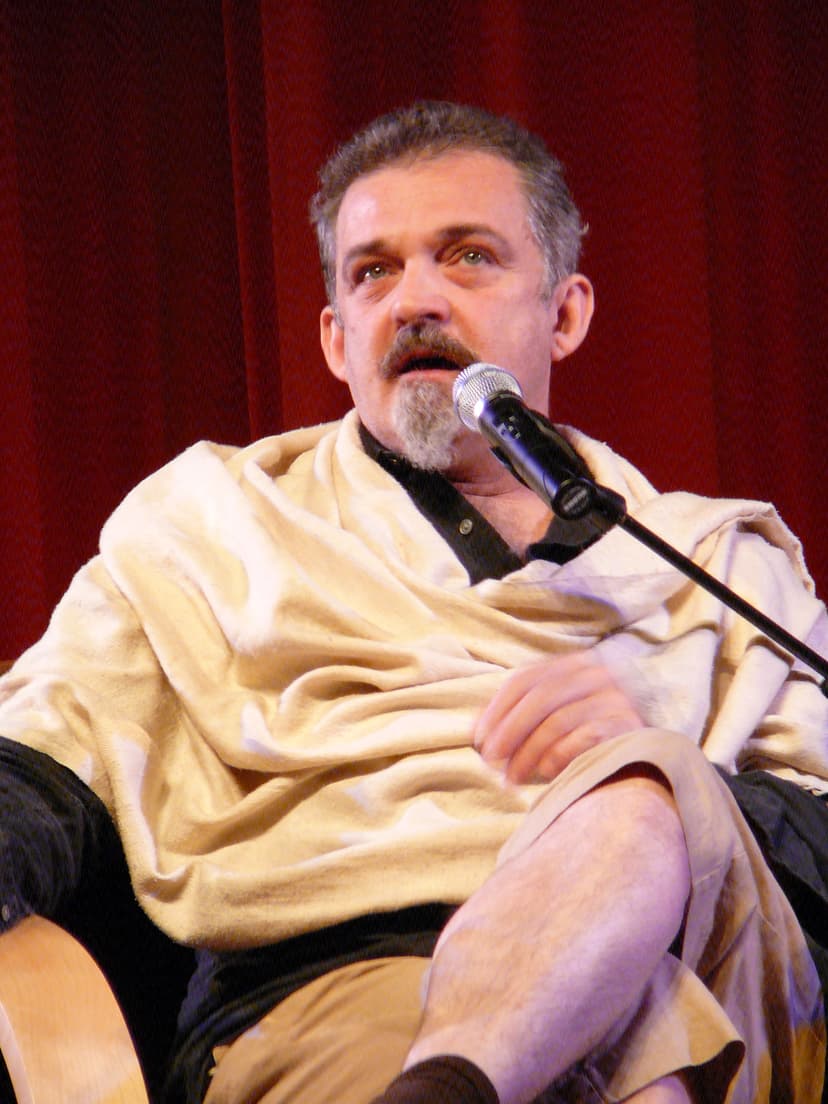
Mark Morris
Legend of Dance
Why They Matter
Morris matters because he made musical thinking—not merely musical accompaniment—the organizing intelligence of a major modern-dance repertory. His dances show that rhythmic exactness can coexist with wit, sensuality, theatrical scale, and generous attention to ensembles. He also built durable…
Watch
Meet Mark Morris
Mark Morris Dance Group
First-party introduction linked from the official MMDG biography page
Q&A with Mark Morris at The Kennedy Center
The Kennedy Center
Extended institutional interview useful for Morris's working methods and collaboration
Mark Morris on Pepperland
The Kennedy Center
Documents Morris discussing a specific music-driven work rather than inferring intent from performance alone
Biography
Mark Morris is an American choreographer, dancer, and artistic director born in Seattle in 1956. He is the founder and artistic director of the Mark Morris Dance Group, an ensemble he established in 1980 that has become one of the most significant forces in contemporary modern dance. Morris's early training was unusually wide-ranging: he studied with Verla Flowers and Perry Brunson and encountered flamenco, ballet, and European folk dance—a mix that shaped his lifelong appetite for rhythm, pattern, and communal forms of movement. Before founding his own company, he danced with the Koleda Balkan Dance Ensemble and with companies led by Lar Lubovitch, Hannah Kahn, Laura Dean, and Eliot Feld.
From its inception, the Mark Morris Dance Group became Morris's laboratory for exploring the relationship between movement and music with unusual structural sophistication. Early works such as *Canonic 3/4 Studies* (1982) established a defining principle: musical meter could be made visible through the body without reducing dance to simple illustration. Morris first performed at Jacob's Pillow in 1982; his company followed in 1986 and went on to establish an extensive history at the festival.
Morris's international profile expanded decisively during his tenure as Director of Dance at Brussels's Théâtre Royal de la Monnaie from 1988 to 1991. With access to an opera house's resources—orchestra, singers, designers, and extended rehearsal time—he created works of exceptional scale and ambition. His first Brussels production, *L'Allegro, il Penseroso ed il Moderato*, premiered on November 23, 1988, setting Handel's oratorio in a full-length dance environment. The following year, he choreographed and directed *Dido and Aeneas*, using Purcell's opera as the complete musical and dramatic frame, with singing and dancing remaining separate yet theatrically interdependent.
In 1990, Morris co-founded the White Oak Dance Project with Mikhail Baryshnikov, extending his choreographic influence through repertory created for mature, highly individual performers. That year also brought the premiere of *The Hard Nut* (1991), his contemporary reimagining of *The Nutcracker*, and a MacArthur Fellowship in 1991. The fellowship citation recognized the musicality, rhythmic exactitude, stylistic diversity, wit, and tradition-consciousness of his dances.
Morris continued to create extensively for his own company and for ballet and opera institutions while building institutional infrastructure around the work. In 2001, the Mark Morris Dance Center opened in Brooklyn as the company's home, offering classes, community programs, and subsidized rehearsal space. That same year, *V*, set to Schumann's Piano Quintet in E-flat major, premiered in London. Beginning in 2006, Morris began conducting performances for his company, and later conducted at institutions including Tanglewood, Lincoln Center, and BAM; in 2013 he served as music director of the Ojai Music Festival.
His honors include the 2007 Samuel H. Scripps/American Dance Festival Award for Lifetime Achievement and a 2016 Doris Duke Artist Award. More significant than individual accolades is the durable system he established: a resident company, live music as standard practice, a school and community center, an archive, and a repertory exceeding 150 works for MMDG alone. This institutional foundation has allowed his choreographic ideas to be transmitted through performance, teaching, revival, and documentation across generations.
Career Highlights
Formed the Mark Morris Dance Group. MMDG biography MMDG biography
Created Canonic 3/4 Studies and first performed at Jacob’s Pillow. University of Washington · Jacob’s Pillow University of Washington
Began a three-year term as Director of Dance at Théâtre Royal de la Monnaie; L’Allegro, il Penseroso ed il Moderato premiered there on November 23. MMDG biography · MMDG L’Allegro work page MMDG biography
Choreographed and directed Dido and Aeneas for La Monnaie, using Henry Purcell’s opera as the complete musical and dramatic frame. MMDG Dido and Aeneas MMDG *Dido and Aeneas*
Co-founded the White Oak Dance Project with Mikhail Baryshnikov. MacArthur Foundation MacArthur Foundation
Received a MacArthur Fellowship. MacArthur Foundation MacArthur Foundation
Premiered The Hard Nut at La Monnaie on January 12. MMDG Digital Archive MMDG Digital Archive
Opened the Mark Morris Dance Center in Brooklyn; V premiered in London on October 16. MMDG biography · MMDG Digital Archive MMDG biography
Began conducting performances for MMDG. MMDG biography MMDG biography
Received the Samuel H. Scripps/American Dance Festival Award for Lifetime Achievement. MMDG biography MMDG biography
Served as music director of the Ojai Music Festival. MMDG biography MMDG biography
Was named a Doris Duke Artist in dance. Doris Duke Foundation Doris Duke Foundation
Gallery
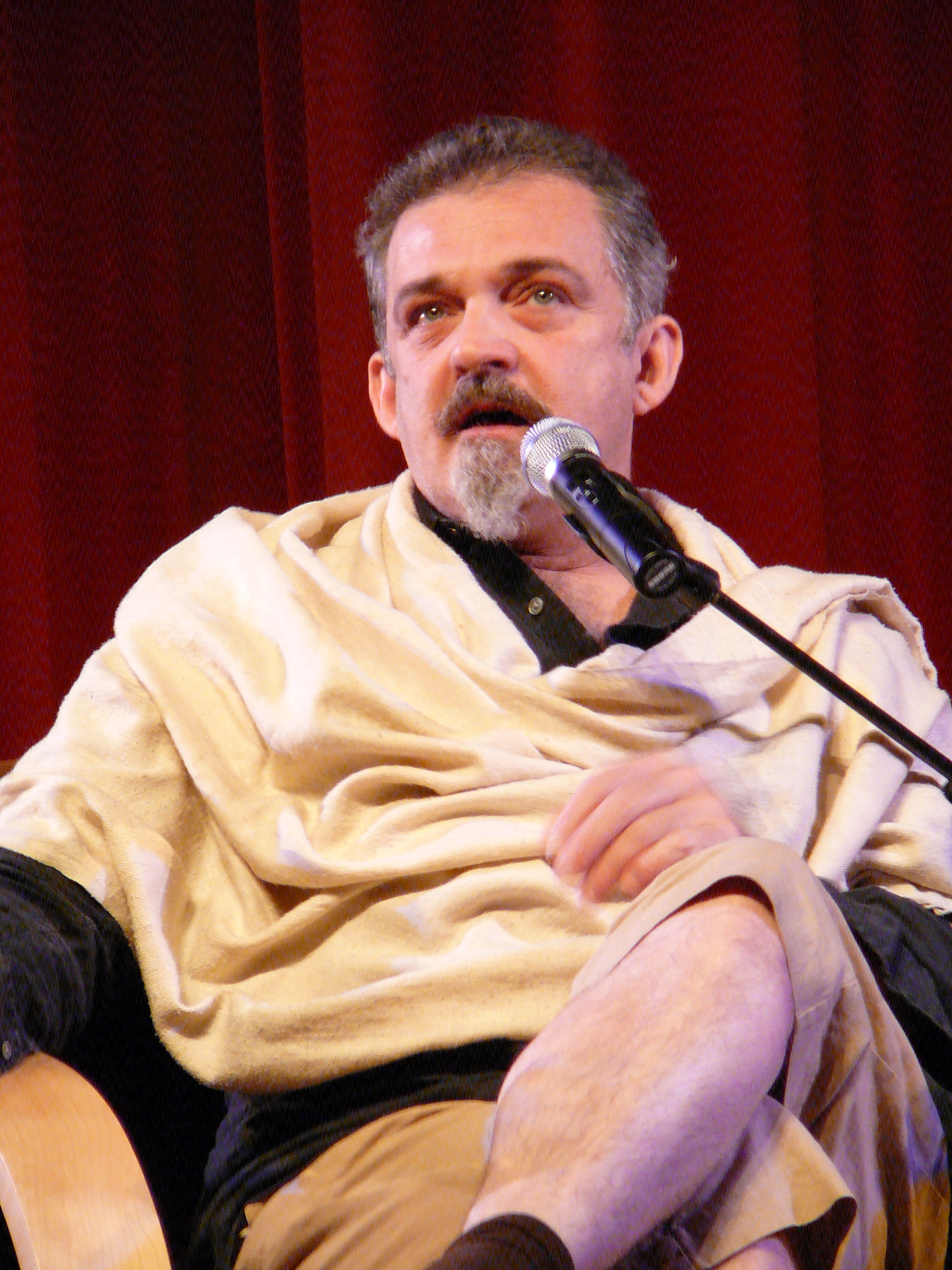
Works
One stage work credited to Mark Morris.
- Acis and Galatea (2014)Ballet · Choreographer
Credits sourced from Wikidata (CC0), one citation per field. Works without a recorded premiere date are listed last. Titles link to the work in Limelight.
Legacy & Impact
Mark Morris matters to dancers because he demonstrated that rigorous musical thinking could be the organizing intelligence of a major modern-dance repertory without sacrificing wit, sensuality, or ensemble generosity. His dances make musical architecture legible through spatial and temporal structure—through canons, counterpoint, shifted accents, and the strategic use of stillness. Beyond the choreography itself, Morris built durable conditions for that work to survive and evolve: a company, a music ensemble, a conducting practice, a Brooklyn center serving both professional and community dancers, and an archive preserving collaborators and performance histories. He modeled an approach to dance and music as equal, live partners rather than hierarchical elements.


Explore More Legends
Discover the dancers, teachers, choreographers, and cultural icons who shaped how the world moves.
Keep the thread going
Dance history, technique, and the occasional rabbit hole — in your inbox. Thoughtful, infrequent, unsubscribe anytime.
Free. No spam. One click to leave.