
Mats Ek
Legend of Dance
Why They Matter
Ek matters because he demonstrated that revisiting a canonical ballet can be an act of rigorous interpretation rather than cosmetic modernization. His Giselle, Swan Lake, Carmen, and Sleeping Beauty preserve recognizable dramatic cores while questioning inherited gender roles, social institutions, a
Biography
Mats Ek was born in Malmö in 1945 to choreographer Birgit Cullberg and actor Anders Ek. He appeared at eight in his mother's *Medea* and later studied Martha Graham technique, but his early professional path led through theatre. From 1966 to 1973 he worked in assistant-directing and directing roles at Stockholm's puppet theatre and Royal Dramatic Theatre, a trajectory that would shape his later movement language. In 1972 Ek began studying classical dance, and in 1973 he joined Cullberg Ballet as a dancer. He commenced choreographing for the company in 1976 with works including *The Officer's Servant* and *Saint George and the Dragon*, followed by *Soweto* in 1977. This route from theatre direction into performing and then choreography explains why dramatic situation remains central to his movement work.
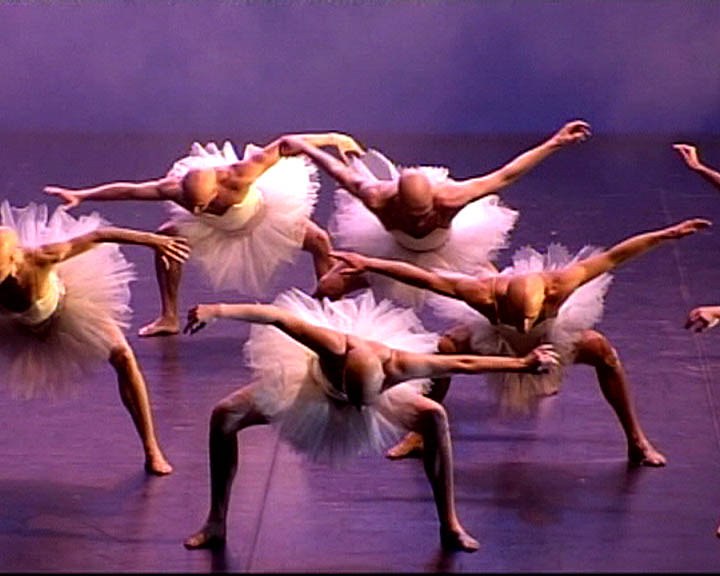
From 1978 to 1980, Ek co-directed Cullberg Ballet with Birgit Cullberg, and he led the company through 1993. A season at Nederlands Dans Theater as dancer and choreographer expanded his range. His 1982 *Giselle* became the first of several internationally influential reinterpretations of canonical ballets; *Swan Lake* followed in 1987, *Carmen* in 1992, and *Sleeping Beauty* in 1996. Rather than applying cosmetic updates to these classics, Ek reorganized character relationships and made social and psychological stakes visible through the body's weight and behavior, creating works with their own choreography, dramaturgy, and performance life.
After leaving Cullberg's leadership, Ek created for major companies internationally. Paris Opera Ballet acquired his *Giselle* in 1993 and premiered *Appartement* in 2000. Other commissions included *Sleeping Beauty* for Hamburg Ballet and *A Sort Of* for Nederlands Dans Theater. He extended his danced-theatre approach into spoken and musical theatre through directing plays and operas. His screen practice includes filmed ballets and dance films such as *The House of Bernarda*, *Wet Woman*, and *Smoke*, featuring performers including Sylvie Guillem and Niklas Ek. Collaborations have repeatedly foregrounded singular performers, including Ana Laguna, whose interpretive partnership is central to his repertory.
Ek's choreography often begins from a human situation rather than an abstract problem. Dancers squat, stamp, crawl, recoil, stare, carry, and lean with conspicuous weight; feet and hands can be flexed, and gesture may look domestic, animal, comic, or painfully exposed. Classical capacity remains available, but virtuosity is redirected toward character and consequence. Partnering frequently tests rather than erases gravity, especially for women, whose force and agency Ek has argued ballet should not suppress. Ordinary objects and rooms become dramatic partners, while repeated motifs make psychology visible without reducing movement to mime.
Ek received the XV Europe Theatre Prize in 2016, recognition that emphasized his practice across dance and theatre. He has continued creating: Paris Opera presented *Another Place* and *Boléro* in 2019, English National Ballet premiered his *The Rite of Spring* in 2022, and the Royal Swedish Ballet premiered *A Cup of Coffee* in 2025.
Career Highlights
Began a period of professional theatre directing and assistant-directing that continued through 1973. Opéra national de Paris Opéra national de Paris
Joined Cullberg Ballet as a dancer. Dance Reflections Dance Reflections
Began choreographing for Cullberg Ballet, including The Officer's Servant and Saint George and the Dragon. Opéra national de Paris Opéra national de Paris
Began co-directing Cullberg Ballet with Birgit Cullberg. Opéra national de Paris Opéra national de Paris
Created his influential reimagining of Giselle for Cullberg Ballet. Cullberg archive Cullberg archive
Created Swan Lake, another major reworking of the classical repertory. Opéra national de Paris Opéra national de Paris
Created Carmen for Cullberg Ballet. Opéra national de Paris Opéra national de Paris
Concluded his artistic leadership of Cullberg Ballet and transmitted Giselle to Paris Opera Ballet. Dance Reflections Opéra national de Paris Dance Reflections
Premiered Appartement with Paris Opera Ballet at the Palais Garnier. Opéra national de Paris Opéra national de Paris
Received the XV Europe Theatre Prize. Europe Theatre Prize Europe Theatre Prize
Created a new The Rite of Spring for English National Ballet. English National Ballet English National Ballet
Created A Cup of Coffee for the Royal Swedish Ballet. Opéra national de Paris Opéra national de Paris
Gallery



Legacy & Impact
Ek matters because he demonstrated that reinterpreting a canonical ballet can be an act of rigorous interpretation rather than cosmetic modernization. His *Giselle*, *Swan Lake*, *Carmen*, and *Sleeping Beauty* preserve recognizable dramatic cores while questioning inherited gender roles, social institutions, and ideals of beauty. Beyond those classics, works made independently established a danced-theatre language whose influence reaches ballet, contemporary dance, theatre, film, and performer-centered creation. His approach—making psychology and social consequence visible in movement, weight, and ordinary gesture—has become a reference point for how choreographers think about adapting narrative and engaging audiences.


Explore More Legends
Discover the dancers, teachers, choreographers, and cultural icons who shaped how the world moves.
Keep the thread going
Dance history, technique, and the occasional rabbit hole — in your inbox. Thoughtful, infrequent, unsubscribe anytime.
Free. No spam. One click to leave.