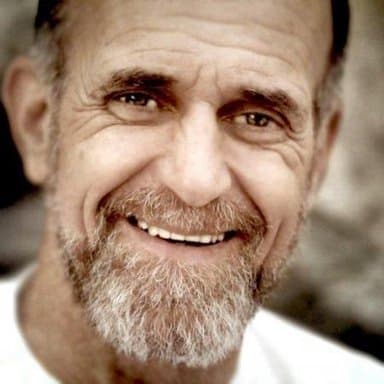
Mestre Camisa
Legend of Dance
Why They Matter
Mestre Camisa’s importance lies less in inventing a new collection of spectacular moves than in building a durable system for transmitting capoeira as a whole practice. ABADÁ made teacher preparation, technical progression, rodas, music and cultural study legible across a far-flung network, helping…
Known For
Biography
José Tadeu Carneiro Cardoso, known in capoeira as Mestre Camisa, was born on 28 October 1955 at Fazenda Estiva in the municipality of Jacobina, Bahia. His older brother Edvaldo Carneiro da Silva, called Camisa Roxa, introduced him to capoeira and encouraged his early training. After moving toward Salvador, Camisa trained in rodas associated with Mestres Waldemar and Traíra before entering Mestre Bimba's academy, linking him directly to the Capoeira Regional tradition.
In the early 1970s, Camisa toured Brazil with a folkloric performance company led by Camisa Roxa, where capoeira was presented alongside other Afro-Brazilian and popular forms. This theatrical work became part of his professional formation. In 1972 he settled in Rio de Janeiro, began teaching, and entered the city's capoeira networks, where he worked within the Grupo Senzala environment during much of the following period.
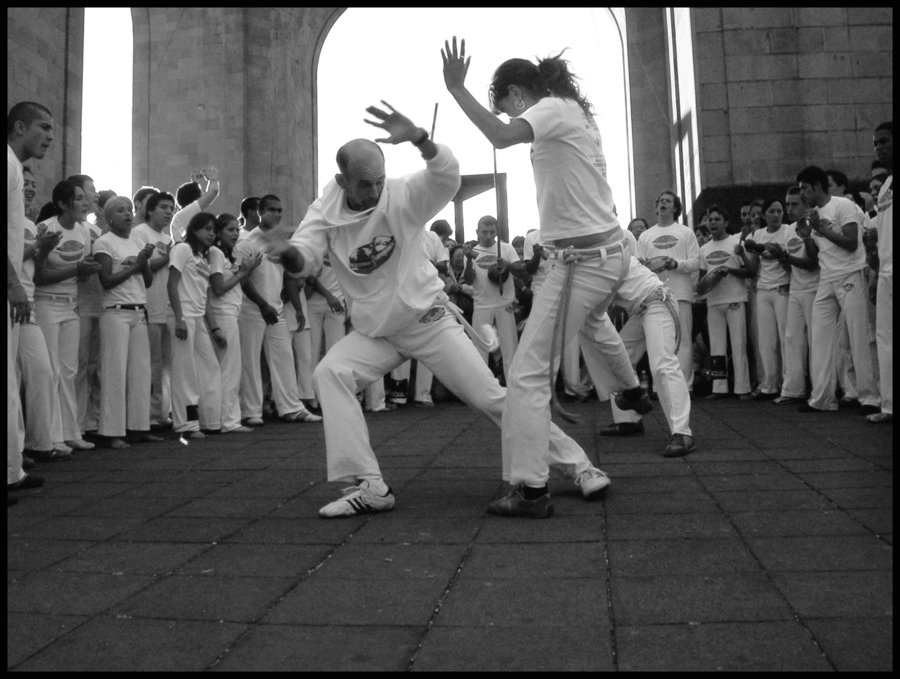
Camisa's experience as a teacher led him to systematize capoeira material that had often been transmitted informally. He developed progressive exercises, technical sequences, and a graduation structure while keeping the roda as the heart of practice—the place where timing, dialogue, strategy, and musical knowledge meet. His method draws openly from Mestre Bimba but reflects decades of Rio practice, performance, and his own experimentation rather than replicating Bimba's academy unchanged.
In 1988, Camisa founded the Associação Brasileira de Apoio e Desenvolvimento da Arte-Capoeira, known as ABADÁ-Capoeira. The organization combined technical training with teacher development, public events, and social-education work. ABADÁ branches subsequently spread across Brazil and internationally, establishing a network for transmitting capoeira as an integrated practice of movement, game, music, ritual, and social relationship.
Camisa's recorded cantigas and berimbau toques are part of his teaching ecology, integral to how ABADÁ transmits knowledge. In 2010, the Federal University of Uberlândia's university council approved the title Doctor Honoris Causa for José Tadeu Carneiro Cardoso in recognition of his mastery of Capoeira Regional. As of 2026, Mestre Camisa remained active in ABADÁ teaching and events, operating within the wider capoeira community recognized when UNESCO inscribed the capoeira circle on the Representative List of the Intangible Cultural Heritage of Humanity in 2014.
Career Highlights
Born on 28 October at Fazenda Estiva in Jacobina, Bahia. ABADÁ-Capoeira World
Began capoeira through the influence of his older brother Camisa Roxa and later trained in Salvador, including at Mestre Bimba’s academy. Três Lagoas municipal cultural notice
Settled in Rio de Janeiro after touring Brazil with a folkloric company and began teaching there. José Tadeu Carneiro Cardoso
Became an influential teacher within Rio’s Grupo Senzala environment while continuing to refine a personal methodology. José Tadeu Carneiro Cardoso
Founded ABADÁ-Capoeira in Rio de Janeiro. ABADÁ San Francisco
Released the documented LP Capoeira, preserving songs associated with his capoeira practice. Discogs release record
The Federal University of Uberlândia’s university council approved conferral of the title Doctor Honoris Causa on José Tadeu Carneiro Cardoso. UFU council record
Capoeira’s roda was inscribed by UNESCO as intangible cultural heritage; Camisa’s international pedagogy operates within this wider community heritage, not as the recipient of an individual UNESCO prize. UNESCO decision 9.COM 10.8
ABADÁ San Francisco marked his 70th birthday and described the organization as active in more than 60 countries. ABADÁ San Francisco
Continued to coordinate and teach within ABADÁ’s international event network. Bento Gonçalves municipal notice, 10 April 2026
Gallery
Legacy & Impact
Mestre Camisa's lasting importance lies in building a durable system for transmitting capoeira as a whole practice rather than as spectacle or isolated technique. ABADÁ made teacher preparation, technical progression, rodas, music, and cultural study legible across an international network, helping capoeira travel without reduction to fitness or combat alone. His legacy stands alongside that of Mestre Bimba, Camisa Roxa, Grupo Senzala colleagues, later ABADÁ mestres, and the communities that sustain each roda. Dancers and teachers today inherit both his structured pedagogy and his insistence that the game, the music, and the relationships are inseparable.


Explore More Legends
Discover the dancers, teachers, choreographers, and cultural icons who shaped how the world moves.
Keep the thread going
Dance history, technique, and the occasional rabbit hole — in your inbox. Thoughtful, infrequent, unsubscribe anytime.
Free. No spam. One click to leave.