
Moira Shearer
Legend of Dance
Why They Matter
Shearer matters to dance history both as a ballerina of the formative postwar Sadler's Wells generation and as the living technical center of one of cinema's most influential dance films. Her career warns against allowing a single screen role to erase a dancer's repertory, teachers, partners, and in
Biography
Moira Shearer King was born in Dunfermline, Scotland, in 1926 and spent part of her childhood in Northern Rhodesia, now Zambia. After returning to Britain, she trained with the Russian émigré teacher Nicholas Legat and entered the Sadler's Wells orbit during the Second World War. By her mid-teens she was performing professionally, joining Sadler's Wells Ballet in 1942 as the company established itself at the Royal Opera House after the war.
Shearer's rise through the postwar repertory was marked by technical clarity, long line, musical responsiveness, and a cool stage radiance that distinguished her from her contemporaries. She danced in the original 1946 Royal Opera House season of Frederick Ashton's *Symphonic Variations* and later performed in *The Sleeping Beauty*, *Cinderella* (December 1948), George Balanchine's *Ballet Imperial* (1950), and *Coppélia* (1951).
In 1948, filmmakers Michael Powell and Emeric Pressburger cast Shearer as Victoria Page in *The Red Shoes*. The film joined real ballet technique to expressive Technicolor design and fantasy editing, transforming Shearer into a global screen image. She also appeared in Powell and Pressburger's *The Tales of Hoffmann* (1951). By 1953 she had largely withdrawn from full-time ballet, though she made a brief guest return with London Festival Ballet in 1954. Shearer went on to act in film, write on ballet including a study of Balanchine from a dancer's perspective, lecture, and appear on television. Her later screen work included Michael Powell's *Peeping Tom* (1960). Shearer died in Oxford on January 31, 2006, leaving a legacy inseparable from the tension she herself articulated: *The Red Shoes* expanded ballet's popular reach, yet its fame threatened to overshadow the disciplined repertory career that made her performance possible.
Career Highlights
Joined Sadler's Wells Ballet, the company later known as The Royal Ballet. The Independent obituary
Danced in the original Royal Opera House season of Ashton's Symphonic Variations. Royal Ballet and Opera Collections
Starred as Victoria Page in Powell and Pressburger's The Red Shoes. BFI
Danced the title role in Ashton's Cinderella at the Royal Opera House on December 23. Royal Ballet and Opera Collections
Toured North America with Sadler's Wells Ballet after the international success of The Red Shoes. The Independent obituary
Danced in Balanchine's Ballet Imperial at Covent Garden. Royal Ballet and Opera Collections
Appeared in Powell and Pressburger's film The Tales of Hoffmann. The Independent obituary
Danced Swanilda in Coppélia at the Royal Opera House. Royal Ballet and Opera Collections
Returned briefly as a guest artist with London Festival Ballet. The Independent obituary
Appeared in Michael Powell's film Peeping Tom. The Independent obituary
Gallery

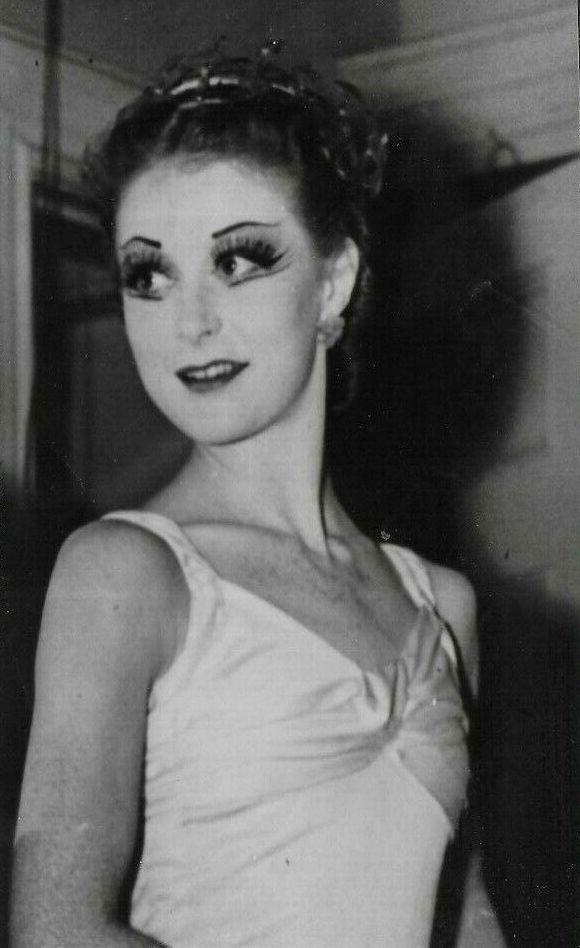
Moira Shearer on screen
Films and television featuring Moira Shearer, with the sequences we have indexed.

Poster artwork from TMDB.
 This site uses TMDB and the TMDB APIs but is not endorsed, certified, or otherwise approved by TMDB.
Legacy & Impact
Shearer matters to dance history both as a ballerina of the formative postwar Sadler's Wells generation and as the living technical center of one of cinema's most influential dance films. Her career warns against allowing a single screen role to erase a dancer's repertory, teachers, partners, and institutional context. At the same time, the worldwide afterlife of *The Red Shoes* shows how a trained dancer's embodied credibility can carry ballet beyond the opera house and shape generations of spectators.


Explore More Legends
Discover the dancers, teachers, choreographers, and cultural icons who shaped how the world moves.
Keep the thread going
Dance history, technique, and the occasional rabbit hole — in your inbox. Thoughtful, infrequent, unsubscribe anytime.
Free. No spam. One click to leave.