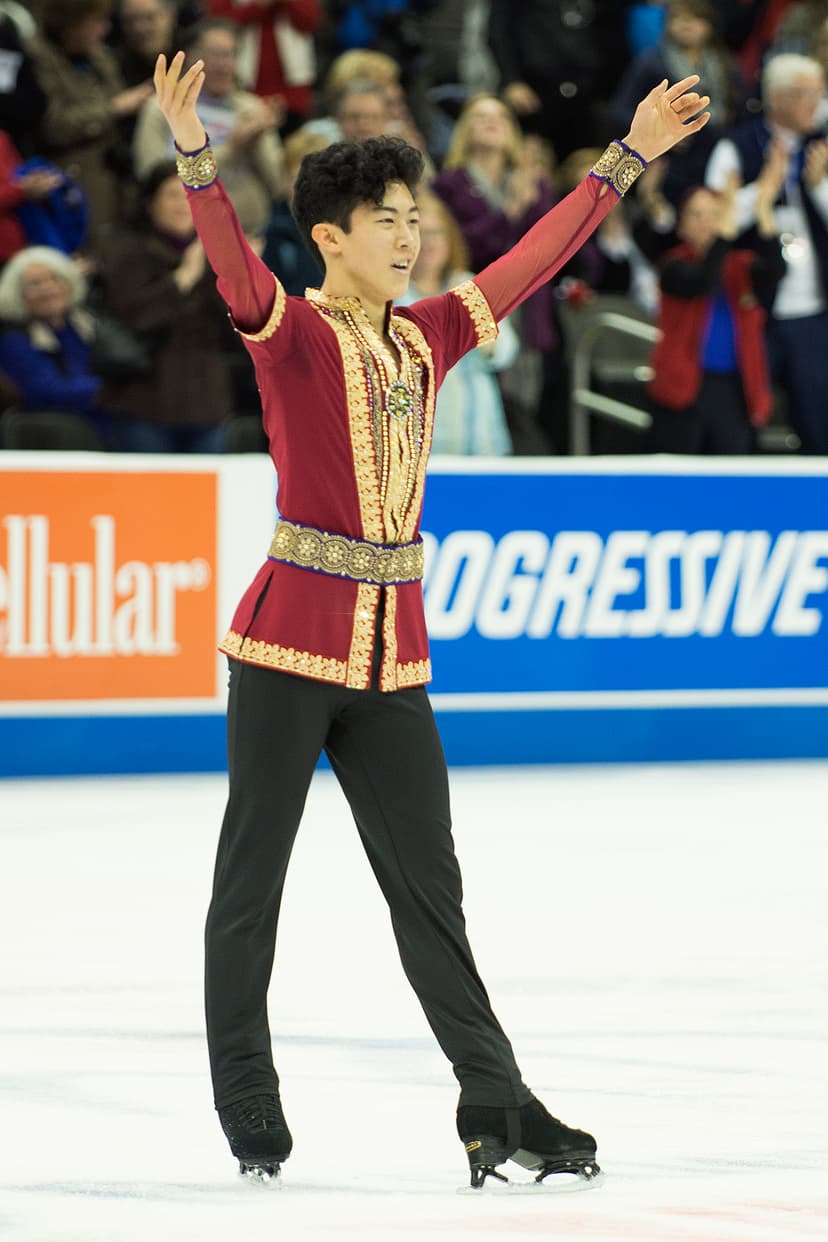
Nathan Chen
Legend of Dance
Why They Matter
Chen’s importance lies in how he normalized a breadth and density of quadruple jumps that had previously seemed exceptional, then used that vocabulary to build championship programs rather than isolated tricks. His Olympic title completed a four-year arc from PyeongChang disappointment to Beijing co
Watch
Nathan Chen: Becoming an Olympic Champion — Short & Free Programs
Olympics Figure Skating
Shows the two Beijing 2022 programs that completed Chen's Olympic title
Nathan Chen's Impressive Short Program to La Bohème
Olympics
Documents Chen's 2022 team-event short program and performance quality
Biography
Nathan Chen is an American men's singles figure skater who redefined the technical landscape of elite skating while building championship programs that paired exceptional jump density with responsive choreography. Born May 5, 1999, in Salt Lake City, Chen began skating at age three and grew up in the Olympic atmosphere surrounding the 2002 Winter Games. His athletic education was unusually broad: alongside figure skating, he competed in gymnastics and trained for more than six years at Ballet West Academy, developing rotation, air awareness, line, and coordination that would distinguish his skating throughout his career.
Chen rose through novice and junior competition before reshaping senior men's skating. By 2017, he became the first skater to land five quadruple jumps in one program and the first to land five different quad types in competition—a technical range that allowed more strategic distribution of difficulty across both the short program and free skate. That year he won the Four Continents title and began a run of six consecutive senior U.S. championships, along with three consecutive Grand Prix Final titles.
At the 2018 PyeongChang Olympics, Chen finished fifth in men's singles after a difficult short program, though he earned team bronze with the United States. He responded decisively, winning the 2018 World Championship and defending the title in 2019. While enrolled at Yale, he maintained an international winning streak and captured a third World title in 2021 after the pandemic canceled the 2020 championships.
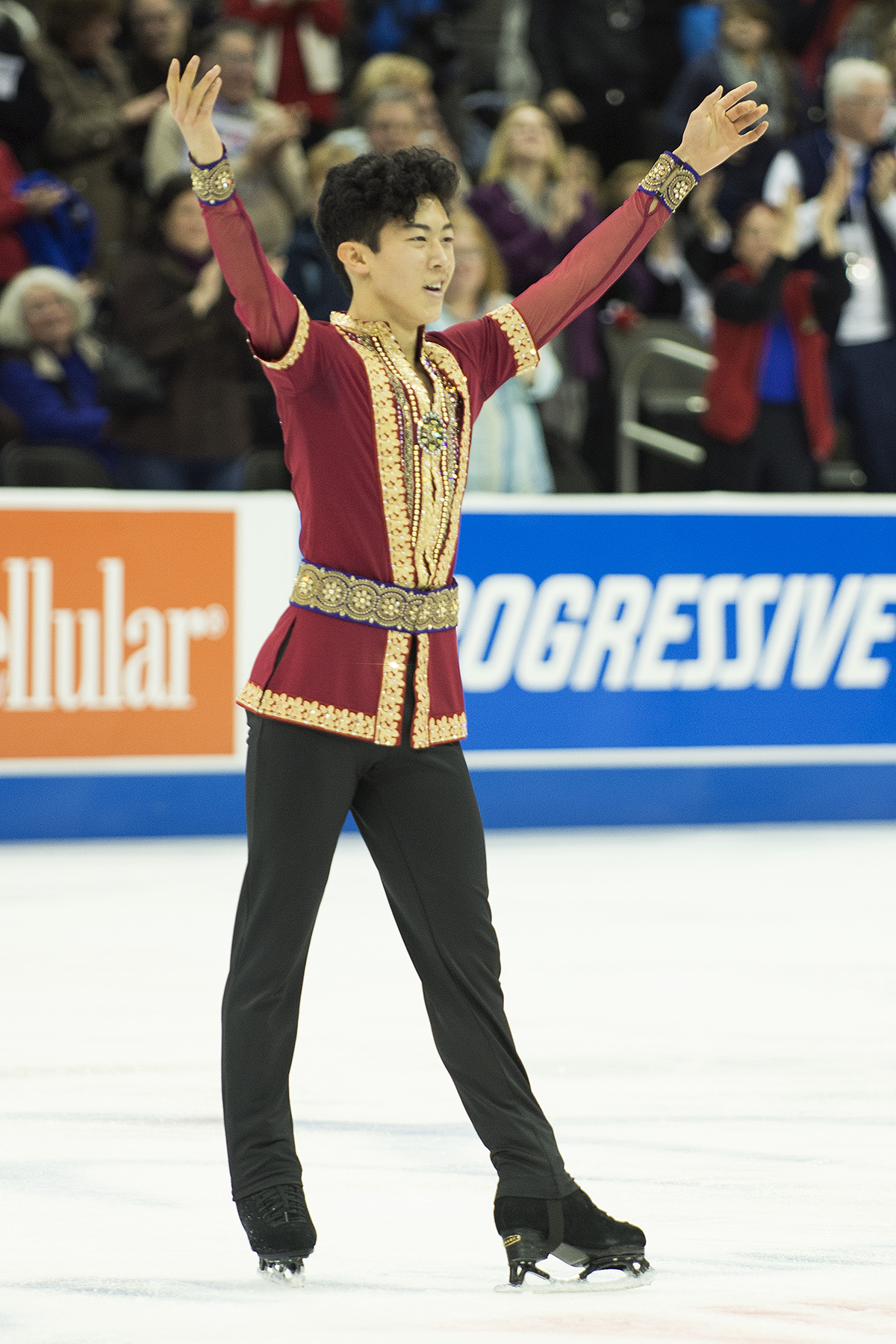
Chen's 2022 Olympic campaign brought the performance most firmly defining his competitive legacy. He set a record short program score of 113.97, then completed five clean quadruple jumps in his *Rocketman* free skate to win the men's singles gold medal with 332.60 points. He also competed in the team event; after the Kamila Valieva case reached final resolution, the United States team was awarded gold, making Chen a two-time Olympic gold medalist alongside one team bronze.
After stepping away from competition following the 2021–22 season, Chen returned to Yale and graduated in 2024 with a degree in statistics and data science. He confirmed in 2025 that he would not defend his title at the 2026 Olympics. U.S. Figure Skating inducted him into its Hall of Fame in 2026, recognizing a competitive record of six consecutive senior national titles, three World championships, three Grand Prix Final titles, two Olympic gold medals, and groundbreaking firsts in quadruple-jump performance.
Career Highlights
Entered his first figure-skating competition after beginning skating at age three. Official athlete website Official athlete website
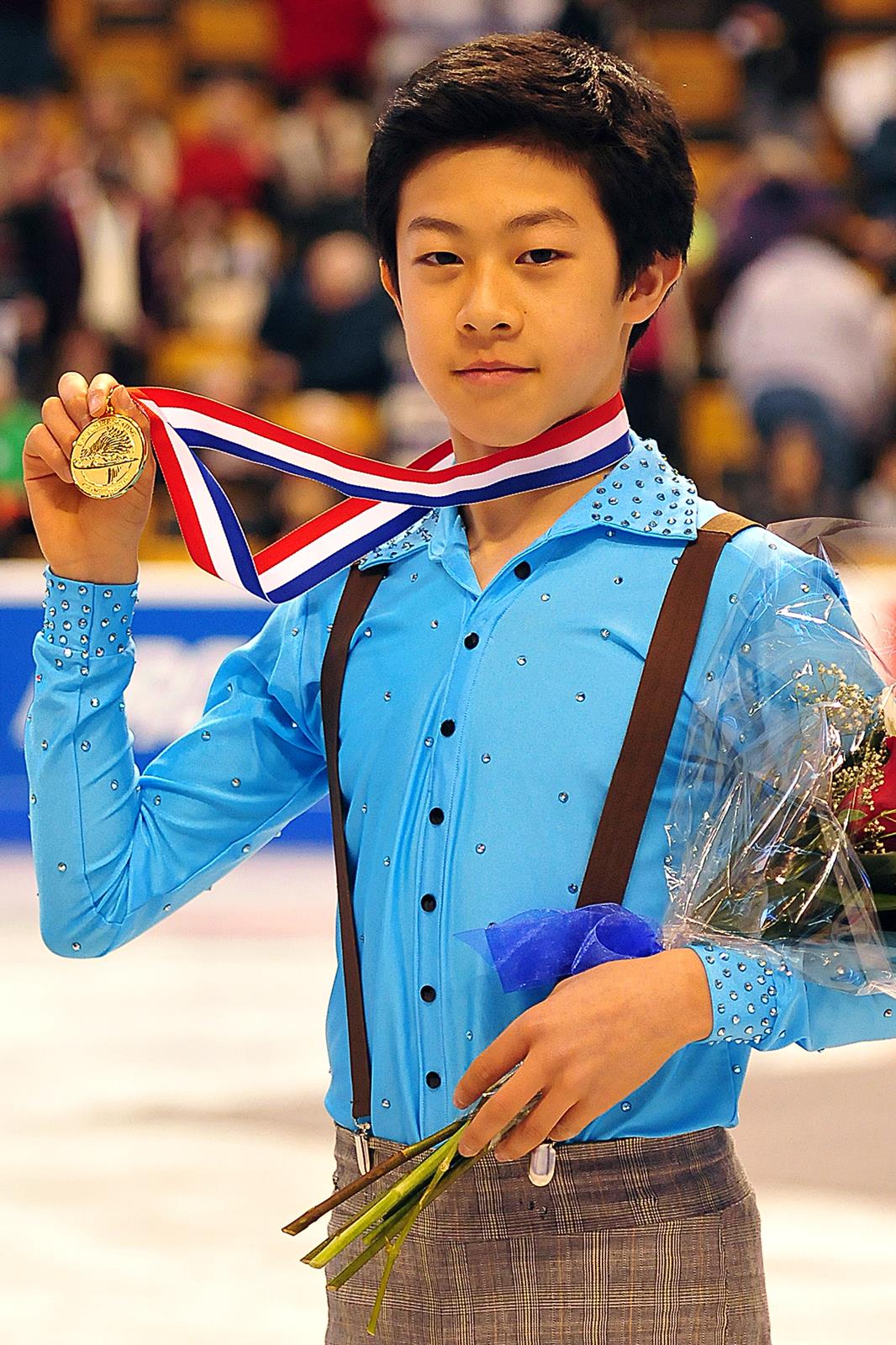
Won the U.S. novice men’s title; he repeated as novice champion in 2011. Official athlete website Official athlete website
Won his second U.S. junior men’s title. Official athlete website Official athlete website
Won Four Continents, began a run of six consecutive senior U.S. titles, landed five quads in one program, and became the first skater to land five different quad types in competition. ISU · U.S. Figure Skating ISU
Earned Olympic team bronze, placed fifth in men’s singles, and won his first World title. ISU · U.S. Figure Skating ISU
Defended the World title and won a third consecutive Grand Prix Final. U.S. Figure Skating · ISU U.S. Figure Skating
Won a third World title, becoming the first U.S. man since Scott Hamilton to win three consecutive World Championships. U.S. Figure Skating U.S. Figure Skating
Won Olympic men’s singles gold after a record 113.97 short program and a five-quad free skate. Team USA Team USA
Graduated from Yale after returning to complete a degree in statistics and data science. Yale News Yale News
Received the reallocated 2022 Olympic team-event gold medal with Team USA, making his Olympic total two golds and one bronze. U.S. Figure Skating U.S. Figure Skating
Entered the U.S. Figure Skating Hall of Fame. U.S. Figure Skating U.S. Figure Skating
Gallery
Legacy & Impact
Chen's influence extends beyond competition records into how elite figure skating conceptualizes technical breadth and artistic development. He normalized quadruple-jump vocabulary that had previously seemed exceptional, then demonstrated how that density could serve championship programs rather than exist as isolated achievement. His three World titles across a disrupted competitive cycle established sustained dominance, while his ballet training and increasing attention to line, phrasing, and musical contrast showed that skating technique and choreographic performance develop together rather than compete for priority.


Explore More Legends
Discover the dancers, teachers, choreographers, and cultural icons who shaped how the world moves.
Keep the thread going
Dance history, technique, and the occasional rabbit hole — in your inbox. Thoughtful, infrequent, unsubscribe anytime.
Free. No spam. One click to leave.