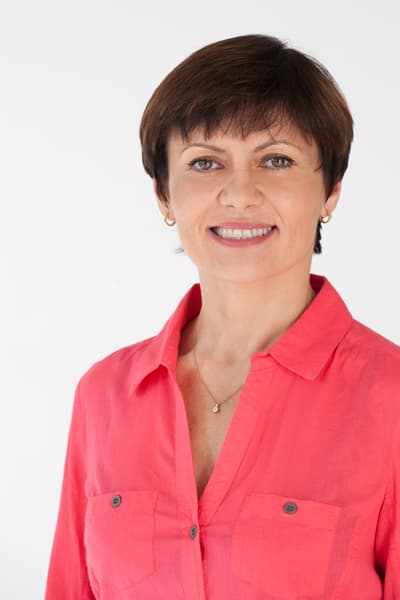
Competitive Champion · Teacher · Choreographer
Olga Muller-Omeltchenko
World Champion & WDSF Adjudicator
Why They Matter
Her career arc from World Champion to international adjudicator and choreographer shows how elite competitive knowledge shapes the rules and aesthetics of DanceSport itself.
Known For
Watch
Technique as the Key to the Performance
TheWDSFAcademy
A first-party pedagogical source connecting Müller-Omeltchenko's competitive expertise to her teaching philosophy.
Biography
Olga Müller-Omeltchenko was born in Moscow in 1972 and entered competitive dance around age ten, training across ballet, folk dance, and both Standard and Latin disciplines. She met German dancer Ralf Müller around 1990 and formed a partnership that became central to German International Latin DanceSport in the mid-1990s. On 11 May 1996, Müller and Müller-Omeltchenko won the IDSF European Championship Latin in Copenhagen. Later that year, on 9 November, they won the IDSF World Championship Latin in Kassel, defeating Michael Wentink and Beata Onefater. The couple then moved into professional competition and showdance, with specialist sources crediting them with consecutive World Professional South American Showdance titles from 1998 through 2000.
After concluding their primary competitive career, Müller-Omeltchenko concentrated on teaching, choreography, and adjudication. The WDSF records her as a German official holding General Adjudicator status with top-level licenses across Latin, Standard, Ten Dance, formations, Professional Division, and showdance categories. Her international judging assignments are documented from 2010 through January 2024. Her teaching philosophy is unusually well documented for a champion of her generation. In 2013 the WDSF DanceSport Academy published her lecture "Technique as the Key to the Performance," recorded at The Camp in Wuppertal. The lecture reveals her approach to the craft: she treats technical command as the enabling condition for expressive performance rather than as a separate pursuit from artistry. This philosophy, grounded in her own competitive experience and refined through years of coaching and judging, has shaped her influence on generations of dancers and adjudicators across European DanceSport.
Career Highlights
Formed a competitive and personal partnership with Ralf Müller, according to specialist DanceSport biography.
Began a documented run of German and international Latin success with Müller; detailed placements require event-by-event archives.
Won the IDSF European Championship Latin in Copenhagen on May 11, as recorded in the WDSF couple history.
Won the IDSF World Championship Latin in Kassel on November 9, verified by the official WDSF ranking.
Completed the WDSF-recorded season with multiple first-place International Latin results representing Germany.
Entered the professional phase of the partnership; specialist sources credit a British Open Professional Rising Star Latin title.
Began a three-year specialist-documented run of professional South American showdance world titles.
Concluded the couple’s primary competitive career after the third reported consecutive showdance world title.
Delivered “Technique as the Key to the Performance” at The Camp; WDSF published the lecture on August 26.
Served as a WDSF adjudicator at Latin competitions in Pforzheim; her official profile remained active in 2026.
Legacy & Impact
Müller-Omeltchenko's significance lies in the continuity between competitive achievement and institutional knowledge. Her 1996 World Championship title is archived in official WDSF records, while her subsequent work in judging, coaching, and pedagogy shows how a champion's understanding becomes embedded in selection criteria, training practice, and public instruction. The 2013 WDSF lecture offers a rare primary source for understanding her approach to the relationship between technique and performance—a principle that has influence beyond her own era.


Explore More Legends
Discover the dancers, teachers, choreographers, and cultural icons who shaped how the world moves.
Keep the thread going
Dance history, technique, and the occasional rabbit hole — in your inbox. Thoughtful, infrequent, unsubscribe anytime.
Free. No spam. One click to leave.