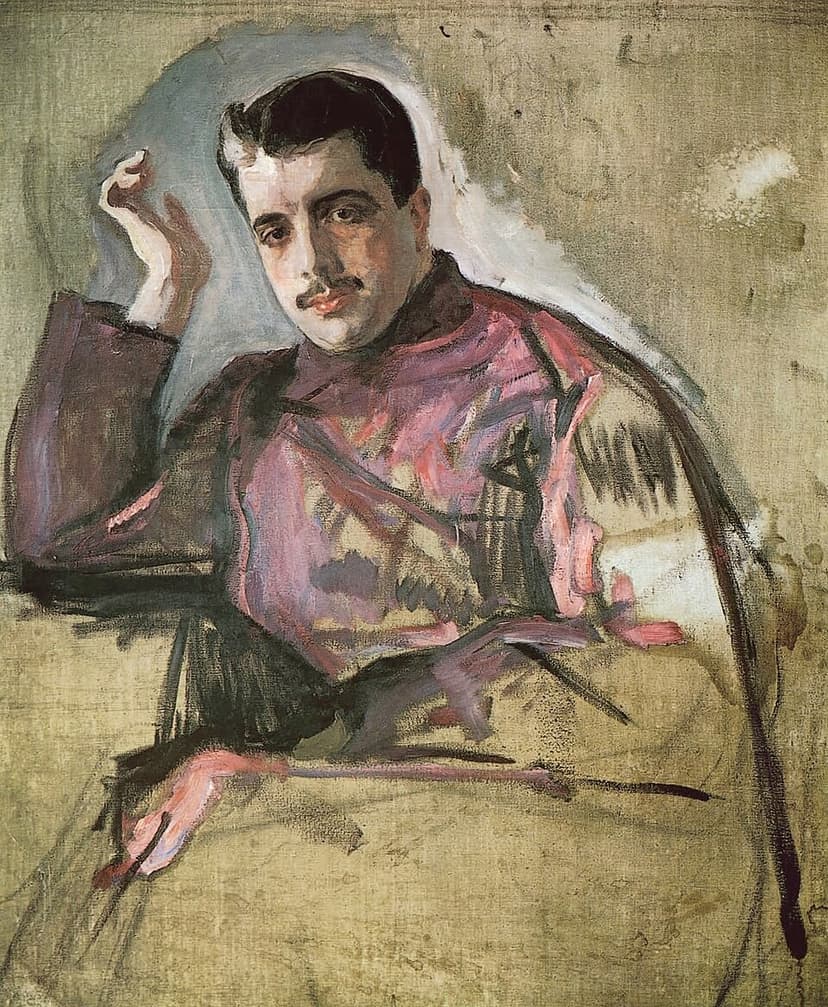
Sergei Pavlovich Diaghilev
Legend of Dance
Why They Matter
Diaghilev changed dance by redefining the impresario as an artistic author of relationships. He did not compose the scores, choreograph the steps or paint the sets, but his choices created an environment in which those media confronted one another. Ballets Russes alumni dispersed globally, carrying
Styles Sergei Pavlovich Diaghilev shaped
Each one links to the style’s own page — its origins, music, tempo and video.
Watch
Conservation: Diaghilev and the Ballets Russes
Victoria and Albert Museum
Shows how surviving objects preserve evidence of movement and production
Diaghilev at the Victoria and Albert Museum
Victoria and Albert Museum
Concise institutional introduction to Diaghilev and the company
Ballets Russes — Salome Costume | Fashion Unpicked
Victoria and Albert Museum
Demonstrates how design shaped the moving body in Ballets Russes production
The Ballets Russes: Courting the Exotic
Victoria and Albert Museum
Useful for contextualizing both innovation and the company's exoticizing imagery
The Ballets Russes: Turning French
Victoria and Albert Museum
Tracks the company's move beyond an early Russian-branded style
Ballets Russes — Festival of Narcissus (1920–1929)
British Pathé
Rare period moving-image context associated with Diaghilev's company
Biography
Sergei Pavlovich Diaghilev was born in 1872 in the Novgorod region of the Russian Empire and raised in a culturally active aristocratic family. While studying law in Saint Petersburg in the early 1890s, he formed important friendships with Alexandre Benois and Léon Bakst, whose shared interests crossed painting, music, theater and criticism. In 1899 they established *Mir iskusstva* (*World of Art*), with Diaghilev as editor in chief, creating a platform that treated artistic fields as interconnected rather than isolated.
Diaghilev first built authority as an editor, exhibition organizer and promoter of Russian culture. He mounted large exhibitions in Russia, presented Russian art in Paris in 1906, organized Russian music concerts in Paris in 1907, and in 1908 presented *Boris Godunov* in Paris. These ventures established both his international network and his method: select distinctive work, frame it dramatically, and bring artists into an event larger than any single contribution.
In 1909 he presented the first Paris season of Russian ballet that developed into the Ballets Russes. Early productions joined choreographer Mikhail Fokine, dancers including Anna Pavlova, Tamara Karsavina and Vaslav Nijinsky, and designers such as Benois and Bakst. Paris audiences encountered a concentrated fusion of dance, music and visual design that challenged the decorative and narrative conventions of established ballet.
Diaghilev's most consequential skill was commissioning. He invited Igor Stravinsky to create *The Firebird* (1910), *Petrushka* (1911) and *The Rite of Spring* (1913), while cultivating choreographers Fokine, Nijinsky, Léonide Massine, Bronislava Nijinska and George Balanchine. Visual collaborators included Bakst, Natalia Goncharova, Pablo Picasso, Henri Matisse and Giorgio de Chirico. Diaghilev used taste, pressure and the force of combinations to shape what emerged from these collaborations.
War, revolution and financial instability repeatedly disrupted the company after 1914. Yet Diaghilev rebuilt its repertory and identity, shifting from earlier Russian exoticism toward collaborations with Cubism, Futurism, Surrealism and contemporary fashion. *Parade* (1917), *The Sleeping Princess* (1921), *Le Train Bleu* (1924) and Balanchine's *Apollo* (1928) show how the enterprise continually recast what ballet could absorb. The company worked with Coco Chanel, Picasso, Erik Satie and Nijinska, each altering its public language.
Diaghilev died in Venice in August 1929. The Ballets Russes dissolved rather than continuing as a stable institution, but its dancers, choreographers, designers and repertory seeded companies and schools across Europe, the Americas and Australia. His legacy is therefore less a single technique than a model of cultural production: artistic direction as the construction of conditions in which different disciplines can transform one another.
Career Highlights
Born March 31 in Selishchi, Novgorod Governorate, Russian Empire. Wikidata
Co-founded and became editor in chief of Mir iskusstva (World of Art). The Met
Organized a vast historical portrait exhibition at the Tauride Palace in Saint Petersburg, consolidating his reputation as a curator. NGA press material
Presented a major exhibition of Russian art in Paris. NGA brochure
Organized Russian music concerts at the Paris Opera. NGA brochure
Presented Boris Godunov in Paris with Feodor Chaliapin. NGA brochure
Opened the first Paris ballet season that became the Ballets Russes. V&A
Commissioned Stravinsky's The Firebird and Petrushka, with choreography by Mikhail Fokine. NGA
Presented The Rite of Spring, with Stravinsky's score and Nijinsky's choreography, on May 29 in Paris. NGA press material
Presented Parade, joining Massine, Satie, Cocteau and Picasso. The Met
Presented Le Train Bleu, with choreography by Bronislava Nijinska and visual contributions associated with Picasso and Chanel. V&A collection
Presented Balanchine's Apollo and continued touring until his death in Venice on August 19, 1929. V&A
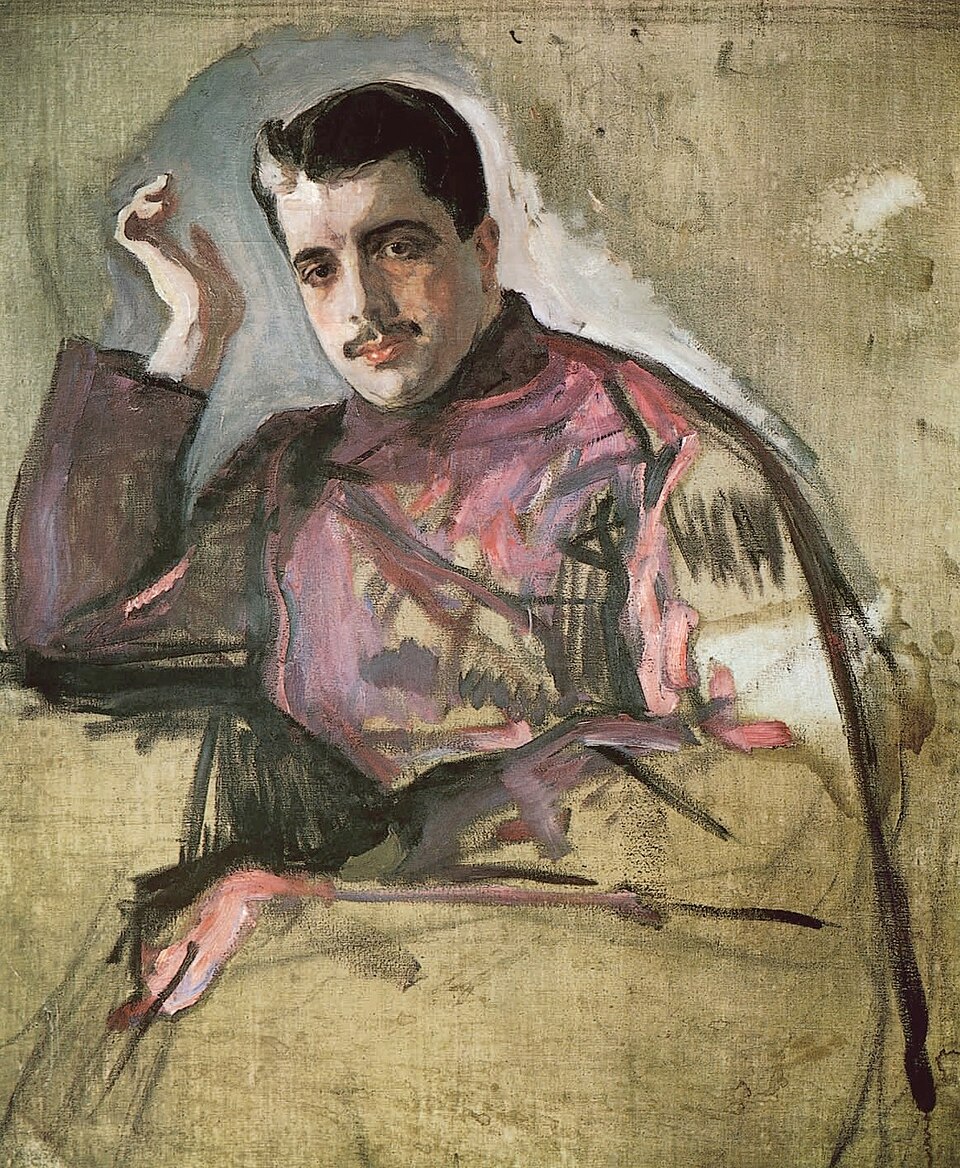
Gallery
Legacy & Impact
Diaghilev changed dance by redefining the impresario as an artistic author of relationships. He did not compose the scores, choreograph the steps or paint the sets, but his choices created an environment in which those media confronted one another. Ballets Russes alumni dispersed globally, carrying repertory and institutional knowledge into new companies. Its modernist collaborations also made ballet a central arena for visual art, fashion and music rather than a sealed theatrical specialty.


Explore More Legends
Discover the dancers, teachers, choreographers, and cultural icons who shaped how the world moves.
Keep the thread going
Dance history, technique, and the occasional rabbit hole — in your inbox. Thoughtful, infrequent, unsubscribe anytime.
Free. No spam. One click to leave.