Sophie Maslow
Legend of Dance
Why They Matter
Maslow matters because she joined modern-dance craft to collective historical experience without treating either as decoration. Her repertory connected Graham-era technique to folk music, labor politics, Depression migration, and Jewish memory; her work with New Dance Group also linked performance t
Watch
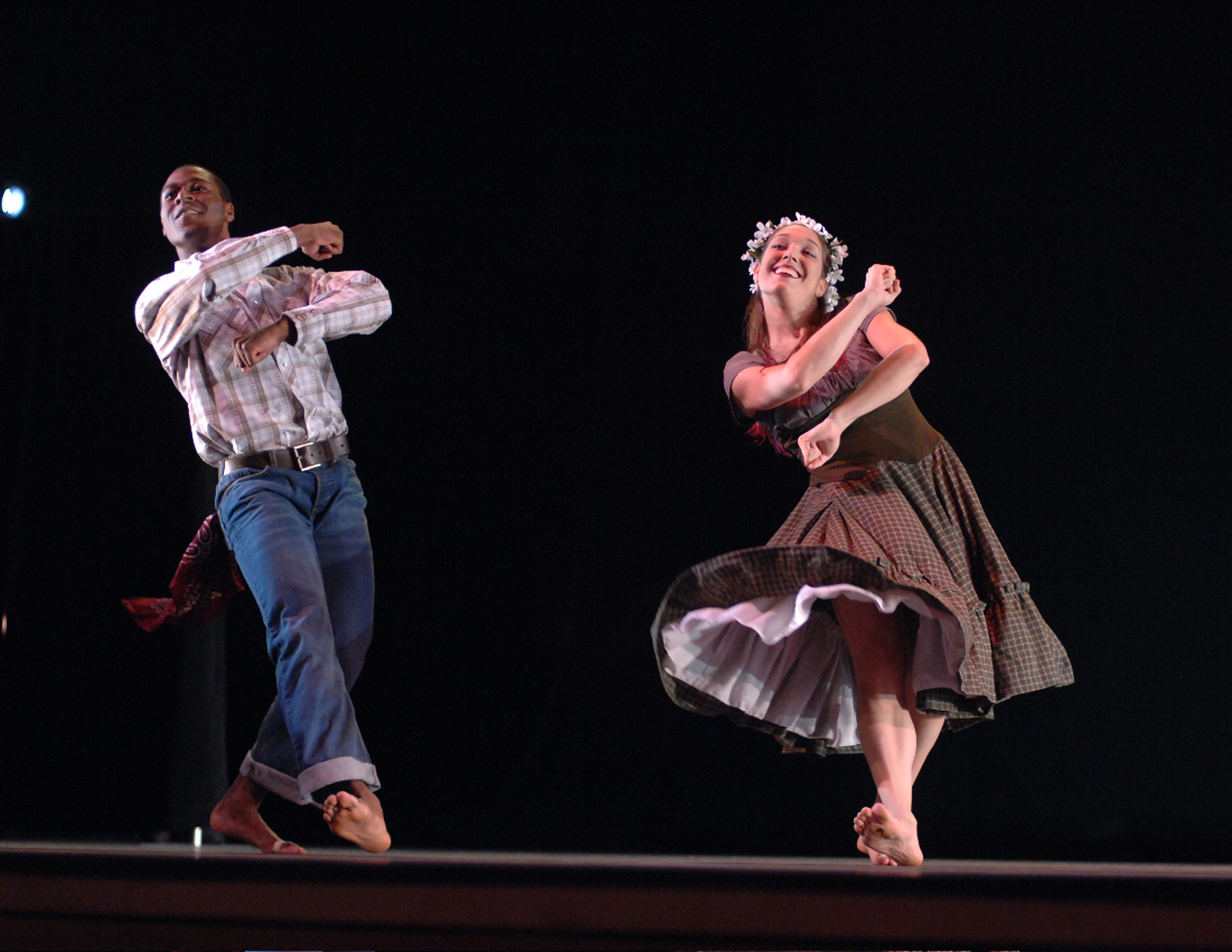
DNB -- "Sweet Betsy" from Folksay (1942) by Sophie Maslow
Dance Notation Bureau
Demonstrates how a section of Folksay is reconstructed from a Labanotation score
DNB -- "Aw Nuts" from Folksay (1942) by Sophie Maslow
Dance Notation Bureau
Provides a second, contrasting excerpt from Folksay staged from notation
DNB -- The Village I Knew (1949) by Sophie Maslow
Dance Notation Bureau
Shows later performers reconstructing Maslow's Jewish-memory repertory from Labanotation
Biography
Sophie Maslow was born on March 22, 1911, in New York City to a Russian-Jewish immigrant family. She trained at the Neighborhood Playhouse under teachers including Martha Graham and Louis Horst, grounding her in both rigorous modern-dance technique and the progressive educational milieu of immigrant New York. In 1931 she joined the Martha Graham Dance Company as a soloist, a position she held through the early 1940s while beginning to make her own choreography—work that addressed political subjects and working-class experience, treating concert dance as a public language rather than a retreat from contemporary life.
Maslow became an early member and leading artist of New Dance Group, an organization committed to socially purposeful dance and accessible training. In 1942 she formed the Dudley-Maslow-Bales Trio with Jane Dudley and William Bales; the trio toured widely during the 1940s and helped bring left-leaning modern dance beyond New York's metropolitan circle. She later led the Sophie Maslow Dance Company for more than three decades.
Two works from the early 1940s crystallized her artistic vision. *Dust Bowl Ballads* (1941) responded to Depression-era migration through Woody Guthrie's songs. *Folksay* (1942) combined Guthrie's music with text from Carl Sandburg's *The People, Yes*, and for its premiere Maslow invited Guthrie to perform live with her company—an unusually direct collaboration that required dancers to negotiate the variability of folk performance while the musician learned the precision choreography demanded.
Maslow's postwar repertory expanded from American populist subjects to Jewish history and memory. *The Village I Knew*, premiered at the American Dance Festival in 1950, drew on Sholem Aleichem's evocations of Eastern European Jewish village life. She also worked in opera and theater, created dances for New York City Opera, choreographed Chanukah festivals at Madison Square Garden, and served as a guest choreographer for companies in the United States, Canada, and Israel.
Maslow continued teaching, restaging, and making work into later life. Skidmore College awarded her an honorary Doctor of Humane Letters in 1984, and the American Dance Guild gave her its Award of Artistry in 1991. She died in Manhattan on June 25, 2006, aged ninety-five. The Library of Congress and New York Public Library preserve her papers, programs, photographs, and choreographic materials, allowing scholars and performers to study a repertory whose political and communal commitments remain visible.
Career Highlights
Born on March 22 in New York City. IBDB
Joined the Martha Graham Dance Company, beginning a twelve-year period as a soloist. Library of Congress
Created Themes from a Slavic People and Two Songs About Lenin, early examples of her politically engaged choreography. Jewish Women's Archive
Created May Day March, bringing labor politics directly into concert dance. Washington Post obituary
Made Dust Bowl Ballads to songs by Woody Guthrie, addressing Depression-era hardship and migration. Jewish Women's Archive
Premiered Folksay, with Guthrie appearing live and Carl Sandburg's The People, Yes supplying spoken text; also began the Dudley-Maslow-Bales Trio with Jane Dudley and William Bales. Library of Congress
Appeared with Dudley/Maslow/Bales during the first official Connecticut College season whose public series was called “An American Dance Festival.” American Dance Festival timeline
Premiered The Village I Knew at the American Dance Festival. American Dance Festival timeline
Created dances for New York City Opera and began a documented series of Chanukah Festival commissions at Madison Square Garden. NYPL
Premiered Suite: Manhattan Transfer at the American Dance Festival. American Dance Festival timeline
Received an honorary Doctor of Humane Letters from Skidmore College. Skidmore College
Received the American Dance Guild Award of Artistry. American Dance Guild
Gallery
Legacy & Impact
Maslow matters because she joined modern-dance craft to collective historical experience without treating either as secondary. Her repertory connected Graham-era technique to folk music, labor politics, Depression migration, and Jewish memory; her work with New Dance Group linked performance to teaching and access. Archival preservation and notation-based reconstructions have allowed later dancers to encounter not only her subject matter but her belief that choreography could organize bodies into a public image of cooperation and shared work.


Explore More Legends
Discover the dancers, teachers, choreographers, and cultural icons who shaped how the world moves.
Keep the thread going
Dance history, technique, and the occasional rabbit hole — in your inbox. Thoughtful, infrequent, unsubscribe anytime.
Free. No spam. One click to leave.