Performer · Stage Icon · Innovator
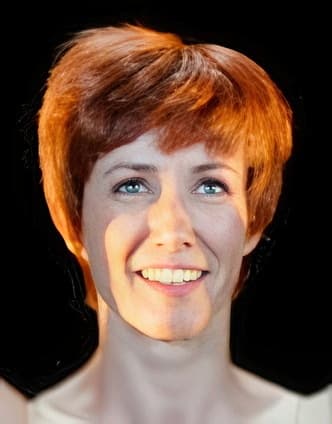
Sylvie Guillem
Ballet's Rebel Star
Why They Matter
She redefined what a classical ballet career could look like, championing artistic independence and proving that a ballet-trained body could excel equally in contemporary works.
Watch
Sylvie Guillem & Akram Khan - Sacred Monsters (Sadler's Wells)
From the 2006 collaboration that set her ballet training beside Khan's kathak and contemporary practice.
Sylvie Guillem and Russell Maliphant - PUSH (Sadler's Wells)
Her creative partnership with choreographer Russell Maliphant, where weight, suspension and lighting matter as much as line.
Sylvie Guillem - 6000 miles away (Sadler's Wells)
Her 2011 program gathering work by Mats Ek, William Forsythe and Jiri Kylian.
David Hallberg and Sylvie Guillem in Conversation (The Australian Ballet)
A reflective conversation on her career, technique and independence.
In the Studio: Rehearsing Don Quixote with Sylvie Guillem (The Australian Ballet)
Guillem coaching a new generation in 2025, long after her 2015 retirement from performance.
Sylvie Guillem inspires the next generation (Prix de Lausanne)
The Prix de Lausanne, which honored her with its 2026 Lifetime Achievement Award, on her example for young dancers.
Sadler's Wells shorts: Sylvie Guillem & Akram Khan in Sacred Monsters
Sadler's Wells
Concise institutional excerpt from Guillem and Khan's landmark cross-training collaboration.
Biography
Sylvie Guillem was born in Paris on 23 February 1965 and first trained seriously as a gymnast, with Olympic ambitions, before a decisive encounter with the Paris Opera Ballet School at age eleven turned her toward the stage. Ballet offered more than athletic difficulty: it gave her theatrical purpose and a direct relationship with an audience. She entered the school in 1977 and joined the Paris Opera Ballet company in 1981, aged sixteen, moving rapidly through the ranks under the company's annual promotion system. (Her own 2025 record gives 23 February; some aggregator metadata shows 25 February - the first-person institutional date is used here.)
Rudolf Nureyev became artistic director of the Paris Opera Ballet while Guillem was still near the start of her company career, first casting her in his Raymonda and then across an increasingly varied repertory. In December 1984, only days after she reached the rank of premiere danseuse, she danced her first Swan Lake; Nureyev came onstage afterward and publicly named the nineteen-year-old an etoile, the company's highest performing rank. The Praemium Imperiale calls her the Paris Opera Ballet's youngest-ever etoile - a superlative best kept attributed to the source. It would be wrong, though, to say Nureyev 'discovered' her in a way that erases her teachers, her school performances and her own labor; he accelerated and publicly confirmed an already rapid ascent.
At Paris she established herself in Nureyev's stagings of Swan Lake, Don Quixote, La Bayadere and Cinderella, while choreographers tested her outside the inherited classical repertory - most famously William Forsythe, who placed her at the center of In the Middle, Somewhat Elevated. From early on Guillem was already moving between academic clarity, theatrical characterization and formal experiment, complicating the familiar story of a technician known mainly for extreme extension. Wanting greater freedom to accept invitations beyond Paris, she resigned from the Paris Opera Ballet in 1988 and became a Principal Guest Artist of The Royal Ballet in 1989, using London as the base for an international guest career.
At The Royal Ballet she danced the central classical and dramatic roles in works by Frederick Ashton and Kenneth MacMillan - Cinderella, Marguerite and Armand, A Month in the Country, Romeo and Juliet, Manon and Winter Dreams - while also helping bring work by Forsythe and Mats Ek into her orbit. The guest arrangement mattered in itself: it let a major ballerina shape a repertory and schedule across companies rather than binding her identity to one institution. Her independence did not mean rejecting tradition; in 1998 she staged her own Giselle for the Finnish National Ballet, seeking clearer narrative logic and a more plausible village world, later reworking it for La Scala. Her most revealing classical performances were often those in which technical command served a sharply particular character - a survival-minded Manon, an emotionally exact Natalia Petrovna, a Kitri whose bravura stayed theatrical rather than merely exhibitionistic.
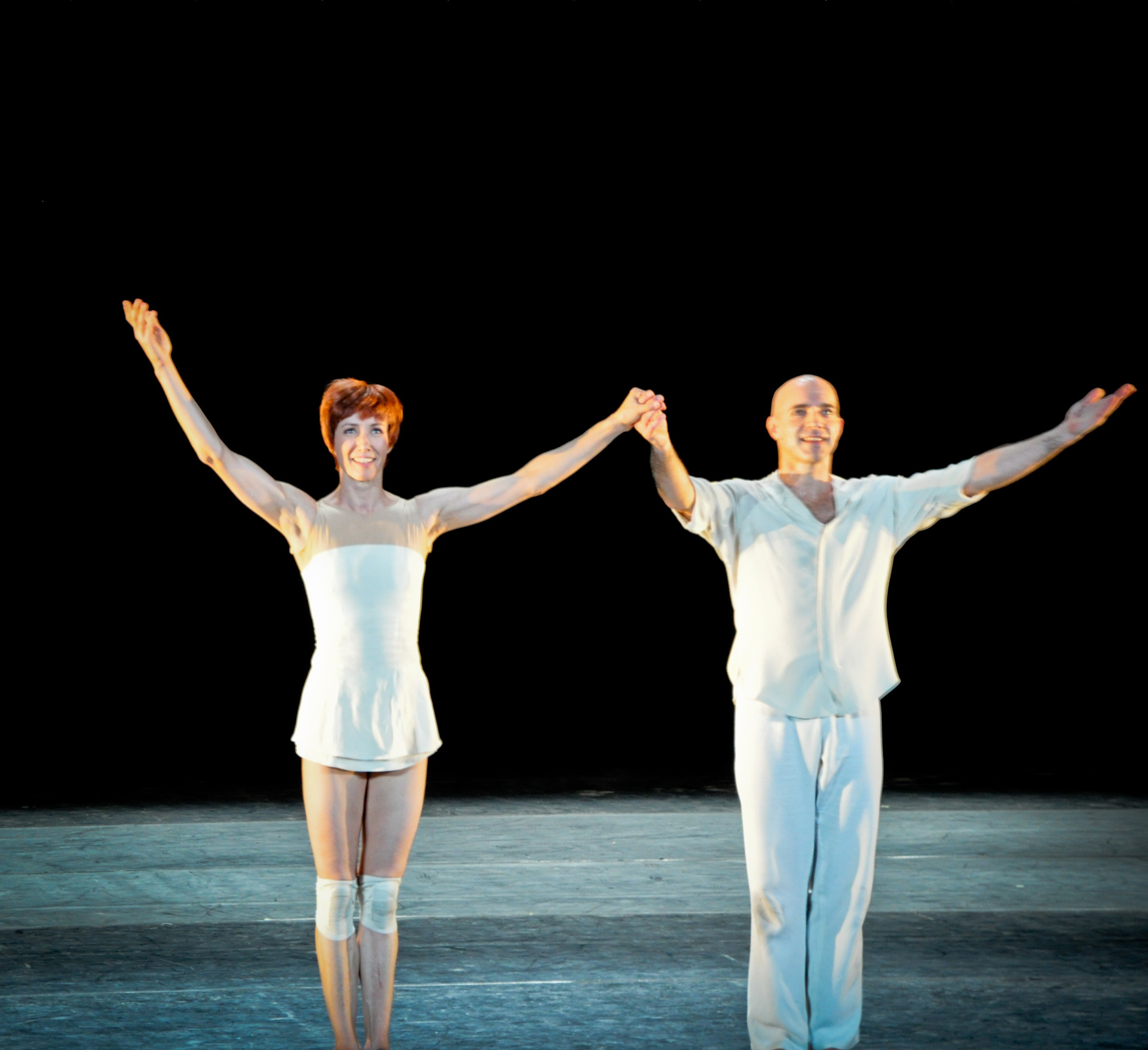
From the early 2000s contemporary collaboration became the center rather than the edge of Guillem's work. In 2003 she joined Michael Nunn, William Trevitt and choreographer Russell Maliphant for Broken Fall, which led to PUSH (2005), including a Guillem-Maliphant duet. With Akram Khan she premiered Sacred Monsters (2006), bringing her ballet history into conversation with Khan's kathak and contemporary practice and asking her to speak onstage; in 2009 she, Maliphant and theatre artist Robert Lepage created Eonnagata. Her 2011 program 6000 miles away gathered work by Mats Ek, Forsythe and Jiri Kylian and became associated with her support for Japan after the Tohoku disaster. These were not celebrity cameos but multi-year touring relationships in which collaborators, lighting, weight, text and theatrical architecture all mattered - and the choreography belonged to Forsythe, Maliphant, Khan and Lepage, not to Guillem.
Guillem announced that 2015 would be her final year onstage and built Life in Progress around works by Forsythe, Ek, Khan and Maliphant. Her final full farewell-tour performance took place in Yokohama on 30 December 2015; the next night she added a televised Bolero as a New Year's Eve coda - two events different sources both call her 'last.' That year also brought the Praemium Imperiale and a special Olivier Award, following the Venice Biennale's Golden Lion for Lifetime Achievement in 2012. Retirement did not erase her influence: in 2025 she coached Don Quixote dancers with The Australian Ballet, and in February 2026 the Prix de Lausanne presented her its Lifetime Achievement Award.
Career Highlights
Joined the Paris Opera Ballet company at sixteen. Prix de Lausanne
Named an etoile by Rudolf Nureyev after her first Swan Lake, at nineteen (called the company's youngest-ever etoile by the Praemium Imperiale). Praemium Imperiale
Became a Principal Guest Artist of The Royal Ballet after resigning from the Paris Opera Ballet in 1988. Sadler's Wells
Staged a new Giselle for the Finnish National Ballet, later reworked for La Scala Ballet. Prix de Lausanne
Premiered Russell Maliphant's Broken Fall with Michael Nunn and William Trevitt; the production won the 2004 Olivier Award for Best New Dance Production. Official London Theatre
Premiered Sacred Monsters with Akram Khan at Sadler's Wells, joining ballet with kathak and spoken text. Sadler's Wells
Created Eonnagata with Robert Lepage and Russell Maliphant. Praemium Imperiale
Received the Venice Biennale's Golden Lion for Lifetime Achievement. Prix de Lausanne
Received the Praemium Imperiale and a special Olivier Award, then completed the Life in Progress farewell tour and retired from performance. Praemium Imperiale
Received the Prix de Lausanne Lifetime Achievement Award. Prix de Lausanne
Gallery
Follow & Links
Legacy & Impact
Guillem's lasting importance lies not in a single physical signature but in the agency with which she connected technique, interpretation and career structure. She expanded expectations of what a ballerina's body could do - her range, strength and high extensions became famous - but she also insisted that virtuosity answer to character and that inherited gestures make theatrical sense; claims that she 'invented' any single position reduce that artistry to anatomy. Her move from resident etoile to internationally mobile guest artist showed unusual control over repertory and collaboration, and rather than repeat the roles that made her famous she invested her stature in contemporary partnerships that set ballet technique beside kathak, floor work, speech, experimental theatre and highly authored lighting. The result was a career that made independence itself an artistic practice.


Explore More Legends
Discover the dancers, teachers, choreographers, and cultural icons who shaped how the world moves.
Keep the thread going
Dance history, technique, and the occasional rabbit hole — in your inbox. Thoughtful, infrequent, unsubscribe anytime.
Free. No spam. One click to leave.