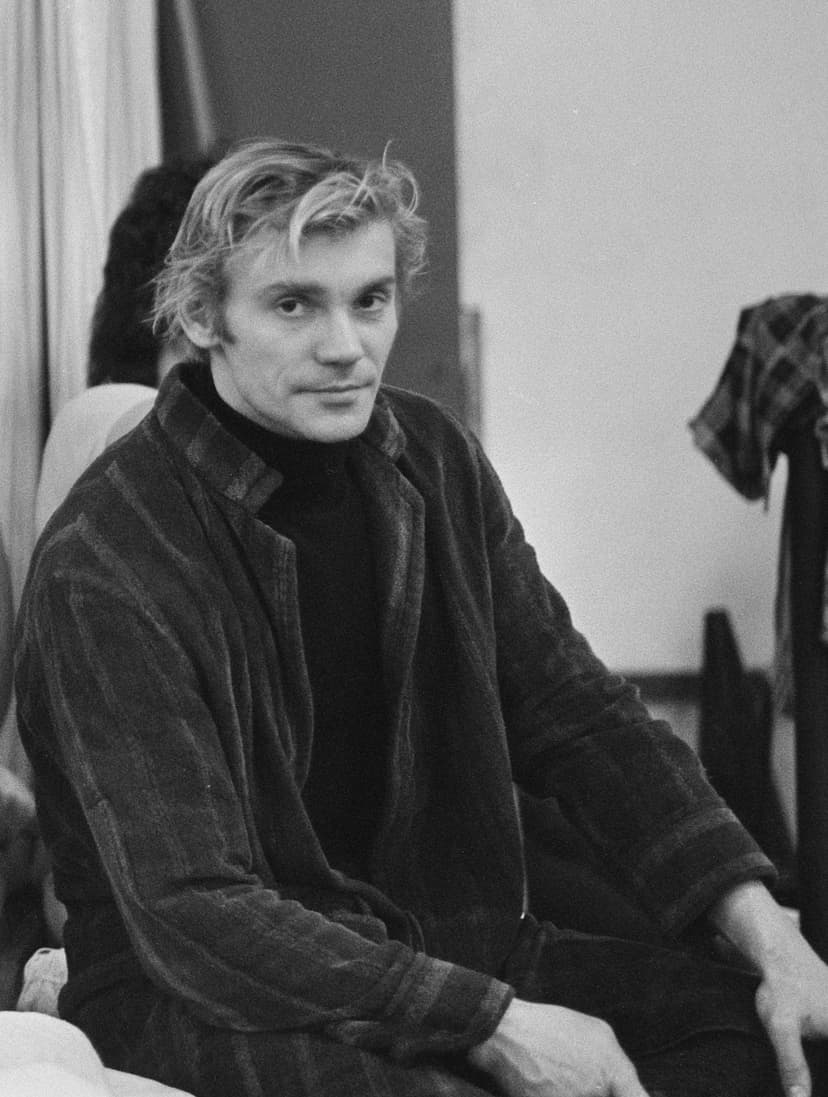
Vladimir Vasiliev
Legend of Dance
Why They Matter
Vasiliev matters because he made male virtuosity read as character rather than ornament. His career connected the Bolshoi's heroic Soviet scale to unusually specific dramatic choices, while his partnership with Maximova showed that bravura and attentive partnering could reinforce one another. As per
Biography
Vladimir Viktorovich Vasiliev was born in Moscow on 18 April 1940. He trained at the Moscow Choreographic School and graduated in 1958, the same year he joined the Bolshoi Theatre. By the company's first New York visit in 1959, he was already performing as a principal dancer, having won first prize at the World Festival of Youth and Students in Vienna that year.
At the Bolshoi, Vasiliev danced the classical repertory—Basil in *Don Quixote*, Albrecht in *Giselle*, Petrouchka, Frondoso in *Laurencia*, and Batyr in *Shurale*—while also creating roles in new works by Yuri Grigorovich and Kasyan Goleizovsky. Galina Ulanova selected him as a partner early in his career, a choice that marked his exceptional promise. His performance career at the Bolshoi extended until 1988.
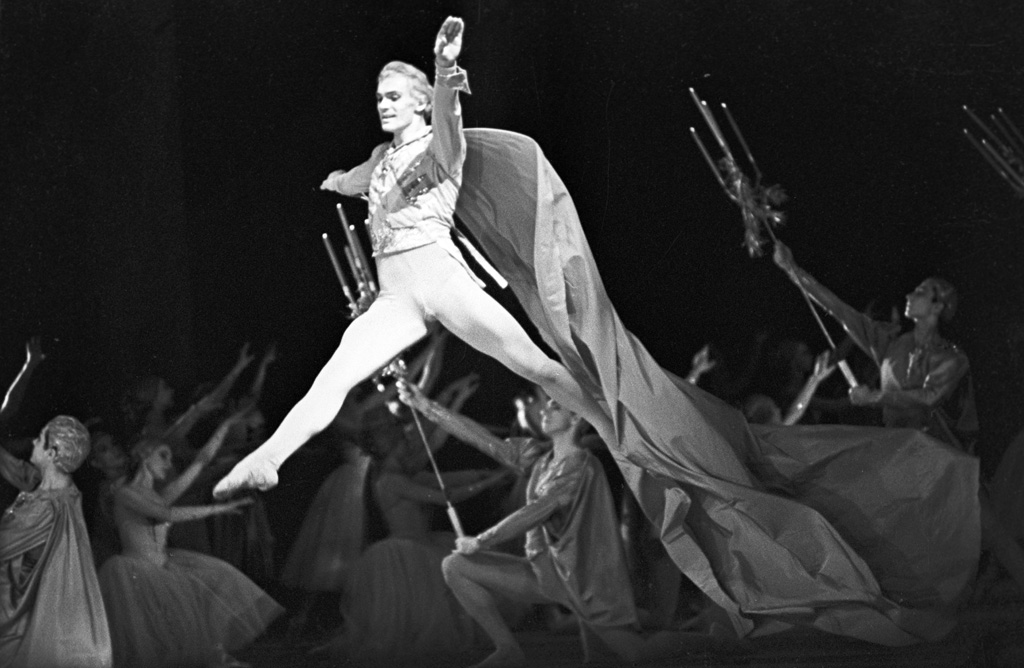
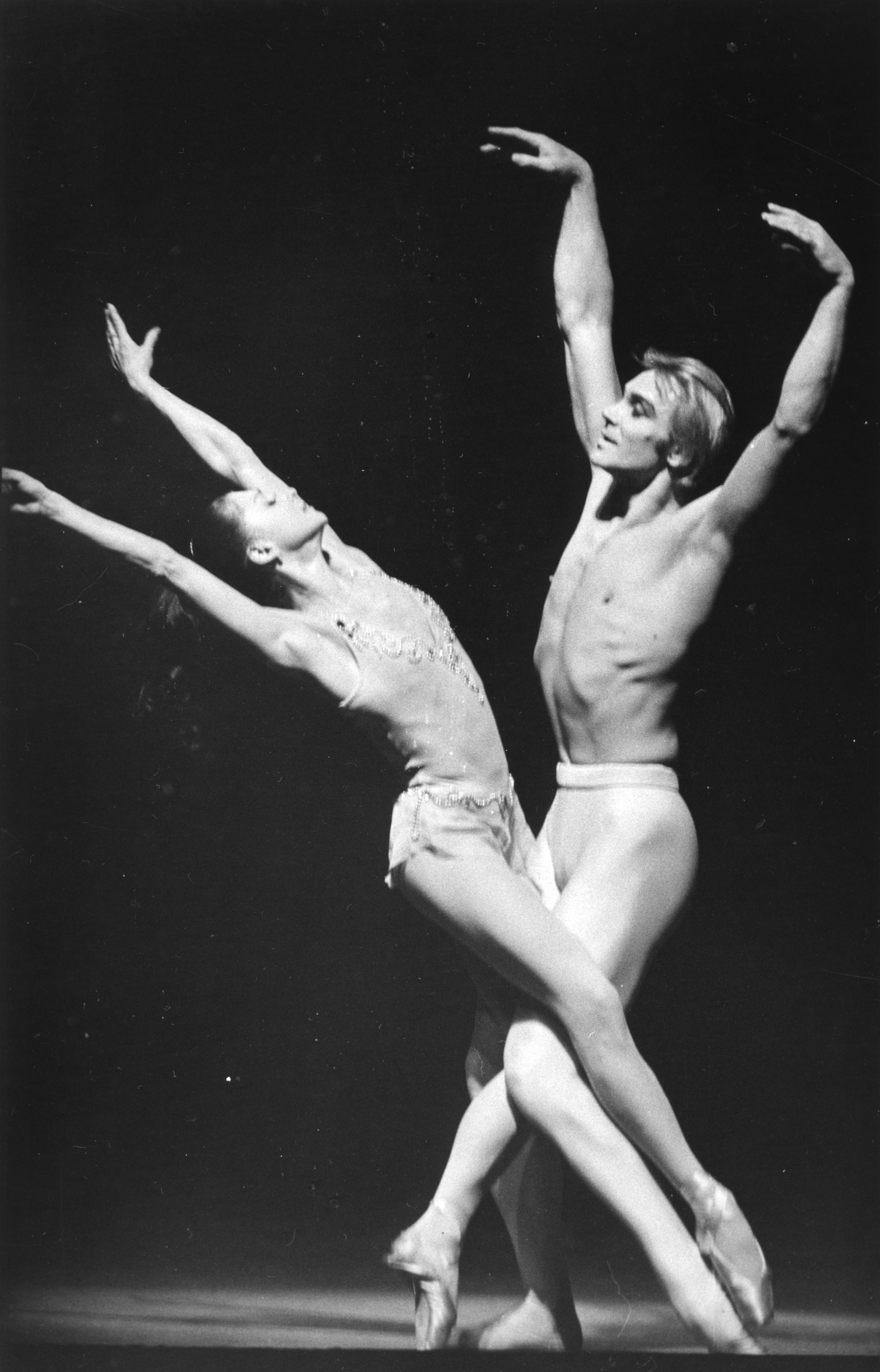
Vasiliev's defining creation was the title role in Yuri Grigorovich's *Spartacus*, which premiered at the Bolshoi in 1968. The role fused extraordinary male technique with sustained dramatic characterization: jumps, turns, and elevation became the physical language of heroic defiance and vulnerability rather than ornamental display. The performance earned him the Lenin Prize in 1970 and international recognition. His partnership with Ekaterina Maximova, both his Moscow school contemporary and wife, was central to his public identity, combining his propulsive scale with her musical responsiveness.
Vasiliev's ambitions extended into choreography and direction. He created *Icarus* for the Bolshoi in 1971 and went on to choreograph or stage *These Enchanting Sounds…*, *Macbeth*, *Anyuta*, *Romeo and Juliet*, *Don Quixote*, *Cinderella*, *Swan Lake*, and *The Red Poppy*. He completed the choreography program at GITIS in 1982, taught there, headed its choreography department from 1986 to 1995, and held the rank of professor from 1990. In 1973 he was named People's Artist of the USSR.
From 1995 to 2000, Vasiliev served as artistic director of the Bolshoi Theatre, overseeing institutional renewal and founding the Bolshoi Ballet School in Brazil. After his tenure ended, he remained active as a choreographer, teacher, coach, visual artist, and poet. Works created in his later years include *Grant Us Peace*, set to Bach's Mass in B minor (2015), and *And Let There Be Eternal Light*, set to Mozart's Requiem (2020). A Bolshoi exhibition in 2025 surveyed his creative biography and marked his 85th birthday.
Career Highlights
Graduated from the Moscow Choreographic School and joined the Bolshoi Theatre company. Mariinsky Theatre
Won first prize at the World Festival of Youth and Students in Vienna and appeared on the Bolshoi's first New York visit as a principal. (Mariinsky Theatre, Dance Magazine) Mariinsky Theatre
Won the Grand Prix at the inaugural International Ballet Competition in Varna. Varna IBC official history
Created the title role in Yuri Grigorovich's Spartacus at the Bolshoi. (Mariinsky Theatre, Dance Magazine) Mariinsky Theatre
Received the Lenin Prize for his performance as Spartacus. Mariinsky Theatre
Choreographed Icarus for the Bolshoi Theatre. Mariinsky Theatre
Was named People's Artist of the USSR. Mariinsky Theatre
Graduated from the choreography department at GITIS and began teaching there. Mariinsky Theatre
Began heading the GITIS choreography department and staged Anyuta for the Teatro di San Carlo and the Bolshoi. Mariinsky Theatre
Concluded his documented three-decade performing tenure at the Bolshoi. Mariinsky Theatre
Began a five-year term leading the Bolshoi Theatre. (Mariinsky Theatre, Dance Magazine) Mariinsky Theatre
Created Grant Us Peace, a choreographic work set to Bach's Mass in B minor. Mariinsky Theatre
Gallery
Works
One stage work credited to Vladimir Vasiliev.
- AnyutaBallet · Choreographer
Credits sourced from Wikidata (CC0), one citation per field. Works without a recorded premiere date are listed last. Titles link to the work in Limelight.
Legacy & Impact
Vasiliev redefined the male classical ballet protagonist by making virtuosity inseparable from character. His performance as Spartacus established that jumps, turns, and elevation could carry psychological and dramatic weight rather than serve as detachable display. As performer, choreographer, teacher, and institutional leader across three decades, he shaped both the image of the male ballet hero and the structures through which that image was transmitted to subsequent generations of dancers worldwide.


Explore More Legends
Discover the dancers, teachers, choreographers, and cultural icons who shaped how the world moves.
Keep the thread going
Dance history, technique, and the occasional rabbit hole — in your inbox. Thoughtful, infrequent, unsubscribe anytime.
Free. No spam. One click to leave.