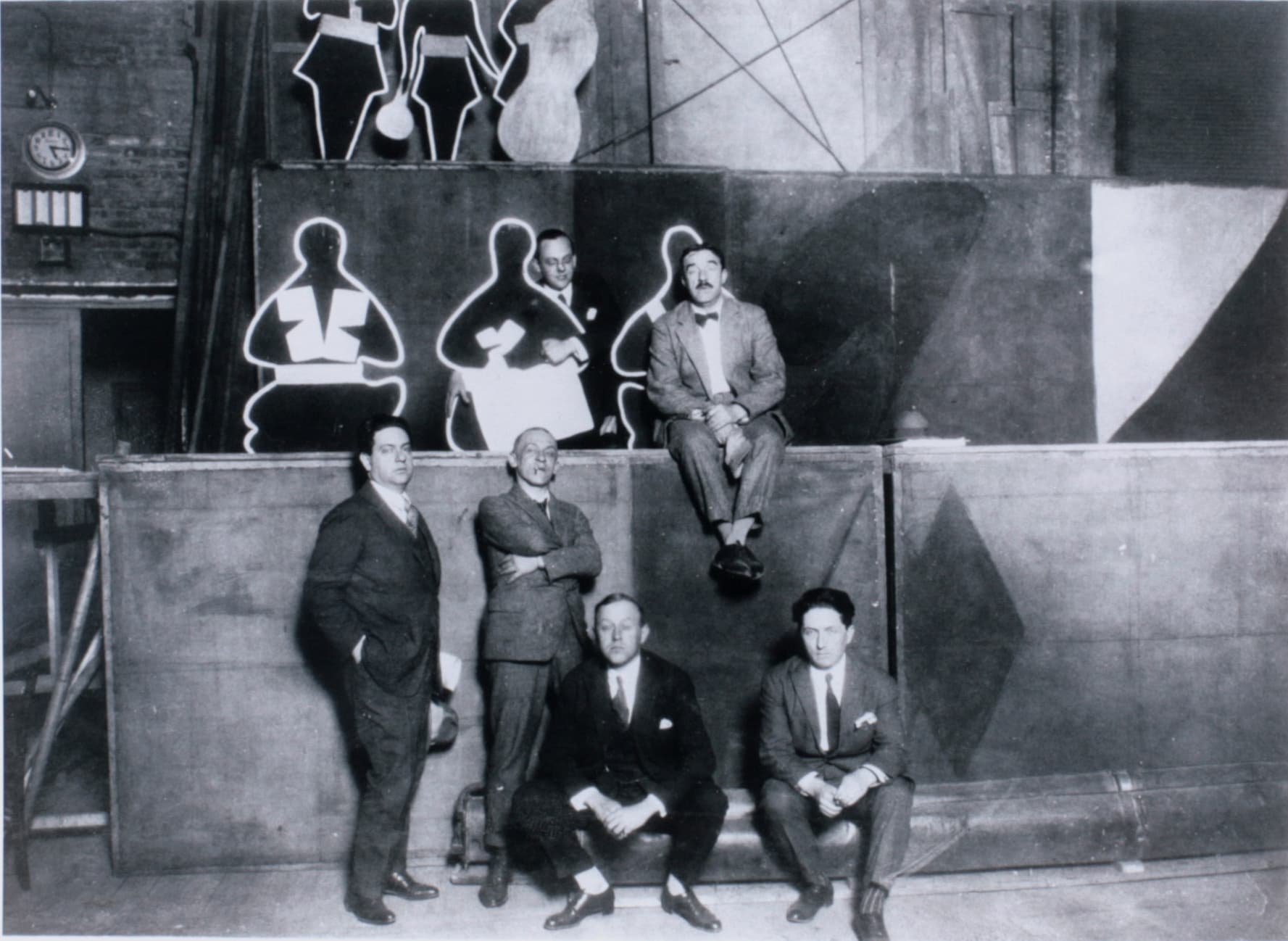
L'Homme et son désir is a wordless-vocal ballet, Op. 48, composed by Darius Milhaud in 1917–18 to a scenario by the poet and diplomat Paul Claudel, written while Milhaud served as Claudel's secretary during his ambassadorship in Rio de Janeiro. The scenario itself was prompted by a Rio visit of the Ballets Russes with Vaslav Nijinsky, making the piece a direct, if indirect, response to Diaghilev's touring company from within Milhaud and Claudel's own collaboration.
What is danced
The article gives a scenario-structure rather than a choreographic account: eight titled episodes played as a single continuous movement, moving from 'Apparition de la lune' through a sleeping man haunted by the phantom of a dead woman, the forest's creatures gathering around him, a 'Danse de la passion', and the woman's return as she draws the man into a slow turning movement around herself, ending as two moons vanish in succession and black hours give way to white ones. Beyond these scene-titles, no steps, holds, or technique are described, and the choreographer is not named in the article — it credits the choreography only to the Ballets suédois as a company.
Context
The work was written in 1917–18 in Rio de Janeiro, where Milhaud was serving as Claudel's diplomatic secretary; the article states explicitly that the passage of the Ballets Russes with Nijinsky through Rio triggered the scenario, situating the piece as a Brazilian-exile response to the touring Ballets Russes phenomenon. It marks Claudel's first venture into collaborating on a musical stage work — a pattern he repeated later with major composers such as Honegger — and is counted among Milhaud's earliest ballets, scored unusually for wordless voices, small orchestra and an outsized percussion section including a whip and a whistle.
Staging history
According to the article, the premiere took place on 6 June 1921 with choreography credited to the Ballets suédois and orchestral direction by Désiré-Émile Inghelbrecht; no individual choreographer is named. The article records no later revivals, restagings, or companies beyond this premiere.
How to watch it
Watch for how the eight scene-titles translate into stage action across a continuous 20-minute span — a sleeping man, a ghostly woman, forest apparitions, and a turning duet-like passage where the woman draws the man around her — since the article frames the work as scenario-driven rather than as a display of set dance numbers. Listen for the wordless vocal quartet and unconventional percussion (whip, whistle) as structural markers of the scene changes rather than a conventional ballet score.
Structure
- Scène IOpening episode of the continuous eight-part structure; no specific action described beyond the title.
- Apparition de la luneThe moon appears, marking a scenic/atmospheric episode.
- L'Homme endormi et le fantôme de la femme morteA sleeping man is visited by the phantom of a dead woman.
- L'Homme qui dort debout, oscillant comme dans un courant d'eau et comme sans aucun poidsThe man sleeps standing, described as swaying as if in a current of water and weightless.
- Toutes les choses de la forêt qui viennent voir l'homme endormiForest creatures/things come to observe the sleeping man.
- Danse de la passionA named dance episode titled 'Danse de la passion'.
- Réapparition de la femme qui entraîne l'Homme peu à peu en tournant lentement devant lui sur elle-mêmeThe woman reappears and draws the man into slow turning movement around her.
- La lune I a disparu la première. La lune II disparaît à son tour...Two moons vanish in succession as black hours pass and the first white hours appear.
Structure read from an encyclopaedia article, not from a libretto or score we hold. Confirm against a programme before treating the numbering as authoritative.
Credits
- composer: Darius Milhaud
More from Darius Milhaud
Other staged works in the register connected to this one by author or lineage.


