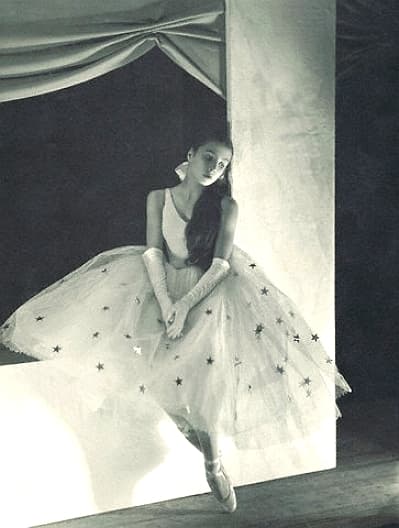
L'éventail de Jeanne (1929)
L'Éventail de Jeanne is a French children's ballet assembled in 1927 as a private commission: the Parisian salon hostess Jeanne Dubost asked ten composer friends each to write one short, stylised dance for the pupils of her children's ballet school, drawing the pieces together like leaves of a fan (hence the title, "Jeanne's Fan"). The result is a ten-movement suite — Fanfare, Marche, Valse, Canarie, Bourrée, Sarabande, Polka, Pastourelle, Rondeau and a Finale (Kermesse-Valse) — each movement titled after a historic dance or ceremonial form, choreographed as a single continuous children's ballet.
What it contains
- Classical Ballet · The whole ten-movement suite as staged, danced by pupils of a children's ballet school — Staged as a formal ballet with a costumed corps of children and at least one featured child soloist dancing a lead role at the Paris Opera Source: "is a children's ballet choreographed in 1927 by Alice Bourgat and Yvonne Franck"
- Bourrée — Bourrée (Delannoy) · The fifth movement, titled Bourrée, composed by Marcel Delannoy — Movement is named and composed as a bourrée, one of the ten stylised dances in classic form commissioned for the ballet Source: "Marcel Delannoy (Bourrée)"
- Canarie — Canarie (Roland-Manuel) · The fourth movement, titled Canarie, composed by Alexis Roland-Manuel — Movement is named and composed as a canarie, one of the ten stylised dances in classic form commissioned for the ballet Source: "Alexis Roland-Manuel (Canarie)"
- Sarabande — Sarabande (Roussel) · The sixth movement, titled Sarabande, composed by Albert Roussel — Movement is named and composed as a sarabande, one of the ten stylised dances in classic form commissioned for the ballet Source: "Albert Roussel (Sarabande)"
What is danced
The article documents the work almost entirely through its musical structure rather than a step-by-step account of the choreography, so what can be said with confidence concerns the shape of the piece: ten short numbers, each named for a period or social dance type and each composed by a different hand, danced in sequence by pupils of Jeanne Dubost's children's ballet school and staged as a formal ballet (with a set design using mirrors, and the dancers in fairytale costume). At the 1929 public premiere at the Paris Opera the lead role was danced by the ten-year-old Tamara Toumanova, indicating that the piece carried at least one demanding solo part built for a child dancer of exceptional technique rather than being purely ensemble work.
Because several movements are titled after named historic dance forms — a Canarie, a Bourrée, a Sarabande, a Polka — it is reasonable to infer these sections were choreographed in the character of those dances, in the French tradition of stylised concert-suite pastiche (as in works like Le Tombeau de Couperin). The article states outright that the composers were asked to write "a stylised dance in classic form," which supports this reading, but it gives no description of actual steps, holds or technique for any single number, so vocabulary claims below are made cautiously and at low confidence.
Context
The piece belongs to the wave of 1920s Parisian collaborative and occasional works in which fashionable hostesses and patrons commissioned short pieces from groups of leading composers (Les Six were closely associated with this milieu, and six of the ten composers here — Milhaud, Poulenc, Auric among them — were connected to that circle or its orbit). It began as private salon entertainment, danced by children for an audience of Dubost's own social and artistic circle, with Ravel himself at the piano for the first performance, before crossing over two years later into the full apparatus of the Paris Opéra as a public premiere.
Staging history
The work had two distinct lives: a private premiere at Jeanne Dubost's Paris salon on 16 June 1927, with Maurice Ravel playing a piano transcription of the score, and a public premiere at the Paris Opera on 4 March 1929, with the child dancer Tamara Toumanova in the lead role. The Opera premiere was notable for being the first time Darius Milhaud's music was heard there, and he was reportedly annoyed enough at debuting with what he considered a trifling occasional work that he boycotted the performance himself. Individual movements, particularly Ravel's Fanfare and Poulenc's Pastourelle, have circulated separately in concert and recording; the first complete recording of the suite was made only in 1984, by the Philharmonia Orchestra under Geoffrey Simon.
How to watch it
Because each of the ten short movements was written by a different composer and carries its own dance-form title, watch for the suite structure itself — a Fanfare or Marche functioning as an entrance or processional, moving through waltz, polka and pastoral-styled sections, to a full-ensemble Kermesse-Valse finale. Given its origin as a children's ballet-school showcase, expect a demonstration piece built around a featured young soloist within a larger group of pupils rather than a plot-driven narrative ballet.
Structure
- Fanfare (Ravel)Opening movement of the ten-part suite, composed by Maurice Ravel.
- Marche (Ferroud)Second movement of the suite, composed by Pierre-Octave Ferroud.
- Valse (Ibert)Third movement of the suite, composed by Jacques Ibert.
- Canarie (Roland-Manuel)Fourth movement, styled as a canarie, composed by Alexis Roland-Manuel.
- Bourrée (Delannoy)Fifth movement, styled as a bourrée, composed by Marcel Delannoy.
- Sarabande (Roussel)Sixth movement, styled as a sarabande, composed by Albert Roussel.
- Polka (Milhaud)Seventh movement, styled as a polka, composed by Darius Milhaud.
- Pastourelle (Poulenc)Eighth movement, styled as a pastourelle, composed by Francis Poulenc.
- Rondeau (Auric)Ninth movement, styled as a rondeau, composed by Georges Auric.
- Finale: Kermesse-Valse (Schmitt)Closing full-ensemble finale, composed by Florent Schmitt.
Structure read from an encyclopaedia article, not from a libretto or score we hold. Confirm against a programme before treating the numbering as authoritative.
Credits
- composer: Albert Roussel
- composer: Darius Milhaud
- composer: Florent Schmitt
- composer: Francis Poulenc
- composer: Georges Auric
- composer: Jacques Ibert
- composer: Marcel Delannoy
- composer: Maurice Ravel
- composer: Pierre-Octave Ferroud
- composer: Roland-Manuel
Related works
Other staged works in the register connected to this one by author or lineage.
 BoléroBallet · 1928Music by Ravel · video
 La valseBallet · 1920Music by Ravel · video
 Les mariés de la tour EiffelBallet · 1921Music by Milhaud · video
 Les bichesBallet · 1924Music by Poulenc · video
 Le Train BleuBallet · 1924Music by Milhaud · video
 Les Animaux modèlesBallet · 1942Music by Poulenc
 Allegro BrillanteBallet · 1956Same lineage · video
 Jazz CalendarBallet · 1968Same lineage · video